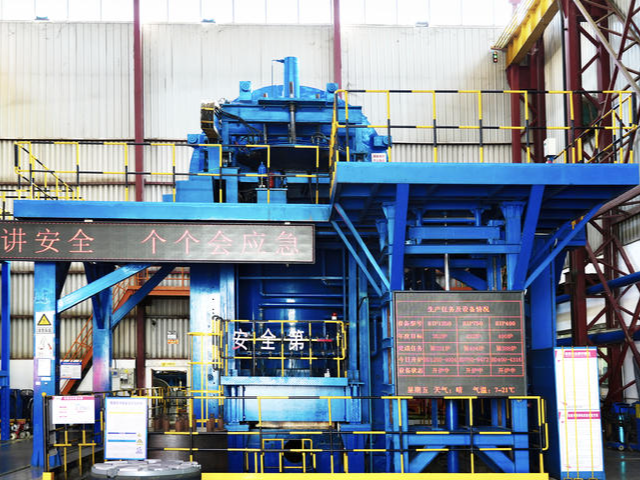
CISRI-HIPEX Technology has reported sales of more than 30 hot isostatic pressing machines during 2026, alongside continued expansion of processing services in China. The manufacturer says its network now comprises seven service centres with more than 35 presses installed and operating. It has also reported an approval milestone involving its HIPEX 300ARC machine and American Society of Mechanical Engineers requirements, while separate European conformity work remains in progress.
Hot isostatic pressing, or HIP, uses high temperature and gas pressure around a component inside a sealed vessel. With an appropriate treatment cycle, pressure and heat can promote diffusion and plastic deformation that close internal pores in certain metals. This can improve the integrity of castings and some parts made through metal additive manufacturing, where remaining porosity may reduce performance under repeated loads. The process is governed by the alloy, its original defects and a qualified treatment schedule, rather than a universal pressure setting.
Components for turbine machinery, aerospace equipment, medical devices and tooling may require HIP because internal discontinuities can serve as initiation points for fatigue cracking. The treatment cannot guarantee removal of every defect, repair an open crack that cannot bond under the selected conditions, or correct a dimensionally inaccurate part. Inspection after processing remains part of determining whether a component meets its acceptance specification. The equipment vendor’s network expansion should therefore be distinguished from a claim that any particular customer’s parts have already passed qualification.
HIPEX is a subsidiary of China Iron and Steel Research Institute Group and combines machine manufacture with contract processing. A service centre can treat work for customers that cannot justify ownership of a costly pressure vessel or need access to a particularly large working zone. The company describes its domestic equipment utilisation as high, but has not published independently audited output, material throughput or production hours for individual centres. Its count of installed presses cannot be converted into a reliable annual number of finished parts.
At Qingdao, the HIPEX 1850 has a quoted working zone of 1,690 mm diameter by 3,500 mm height. The manufacturer describes it as China’s largest operating HIP press and lists maximum operating conditions of 1,300°C and 140 MPa. Those dimensions describe space inside the treatment zone rather than the outside dimensions of the vessel or the size of every possible component load. Actual loading and treatment conditions depend on fixtures, clearance, materials and the validated thermal cycle.
A large pressure vessel must contain substantial loads while its heating elements, insulation and gas circulation systems establish the intended treatment environment. Temperature and pressure uniformity, thermocouple placement and process records can affect whether a load is acceptable for a demanding component specification. Larger capacity does not remove the need to demonstrate consistent conditions throughout the usable zone, and production planning must include the time required to load, heat, pressurise, hold, cool and unload each batch.
The smaller HIPEX 300 platform is described with a 260 mm diameter by 500 mm high working zone, maximum temperature of 2,000°C and maximum pressure of 200 MPa. The company’s 300ARC version adds advanced rapid cooling, which can change the thermal history of a part after the pressure and temperature hold. In some alloys, cooling rate influences phase development, microstructure and residual stress, so a faster controlled cooling stage may become part of an approved manufacturing route rather than simply shortening waiting time.
Combining HIP with a controlled cooling stage may reduce the need for a separate thermal operation in some production sequences, but that benefit must be established for the particular alloy and part geometry. A very large load and a small complex part may cool differently, and their resulting properties require verification. The manufacturer has not published a representative customer dataset demonstrating a universal saving in cycle time, so the significance of rapid cooling is its additional process control rather than a quantified productivity improvement.
HIPEX reports that the 300ARC has reached an approval milestone under ASME requirements. The available account does not establish the exact scope of an independently inspected certificate, nor should it be taken as approval of every part processed in the vessel. The manufacturer is separately pursuing CE-related testing and conformity assessment for equipment intended for European markets. ASME compliance and the applicable European requirements are distinct processes, and completed CE conformity cannot be inferred from the reported American milestone.
The development brings together equipment sales, a domestic contract processing network and prospective overseas market access, each with a different evidential measure. Reported sales show commercial orders; installed presses demonstrate available equipment at service sites; qualified production capacity depends on personnel, operating schedules and accepted processes. Further confirmation of machine deliveries, customer processing programmes and the scope of certification would establish how the reported expansion translates into sustained industrial output.