Italy’s Supreme Court has reserved judgment on appeals against the ordered shutdown of the former Ilva steelworks’ hot-end operations in Taranto following a hearing on 20 October. The Court of Cassation’s joint civil divisions considered the challenges but did not announce a decision, leaving the legal position of one of Europe’s largest integrated steel production sites unresolved.
The appeals were brought by Acciaierie d’Italia and Ilva, both in extraordinary administration. They contest a Milan Court of Appeal decree issued on 27 July requiring the plant’s blast furnaces, steelmaking equipment and related hot-end installations to cease production within 90 days. Reporting on the court order identifies 28 October as the implementation deadline; the Milan judges subsequently refused requests to suspend its effect, including a second refusal on 5 October.
During the Supreme Court hearing, Luigi Birritteri, representing the Prosecutor General’s Office, urged the judges to accept parts of the operators’ appeals. He challenged whether the Milan ruling had adequately established the particular health risk arising from asbestos-containing materials at the site and argued that the judgment lacked a proper assessment of health protection alongside industrial production. That argument is the prosecutorial office’s legal submission, not a decision by the court, and it does not establish that exposure risks are absent.
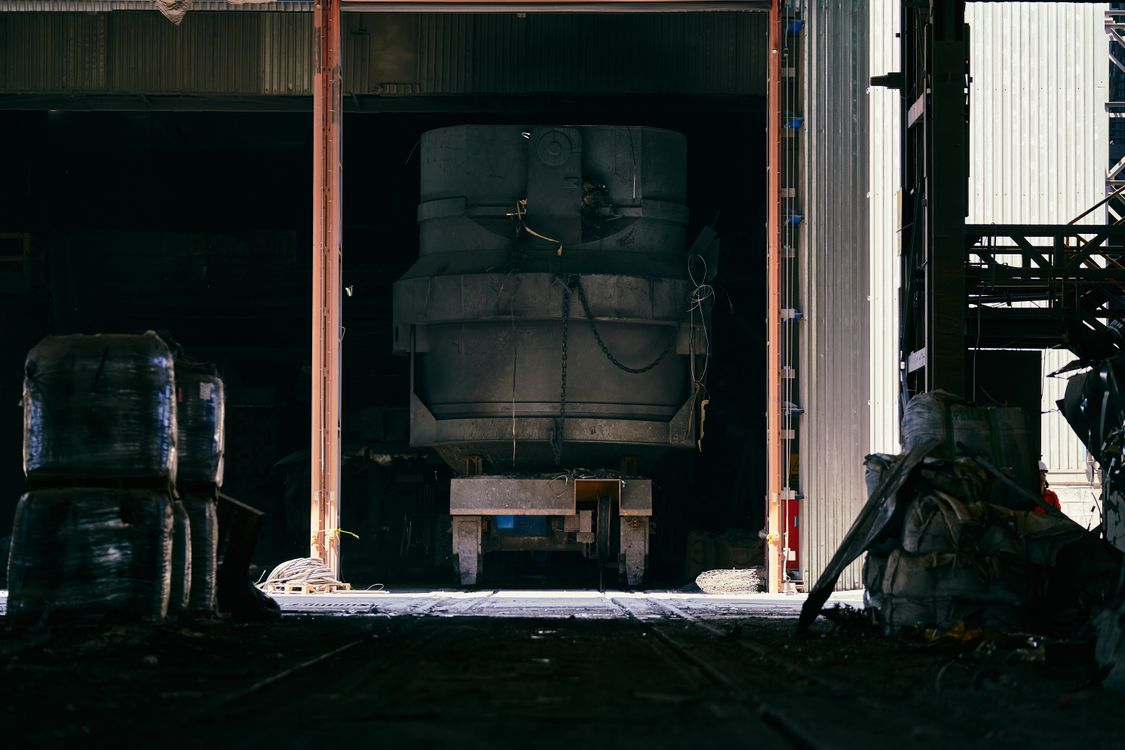
The dispute centres partly on materials and equipment associated with the blast furnace area, including hot-blast stoves, commonly called Cowper stoves. These regenerative installations preheat the air supplied to a blast furnace, reducing the fuel required to sustain the ironmaking reactions. The health assessment requires evidence about the condition of hazardous materials and the routes through which workers or nearby residents might be exposed, not merely the existence of the materials within a plant.
Italy’s Decree-Law 185 of 16 October, in force since 17 October, separately provides for equipment preservation. Article 4 authorises the extraordinary commissioners to maintain equipment in the hot-end area in a heated state to avoid irreparably compromising its functionality, pending publication of the reasons for the Cassation judgment and in any event no later than 15 December 2026. The measure concerns maintaining equipment temperature; it does not itself grant permission to resume steel production or overturn the Milan shutdown order.
Blast furnaces are designed to run continuously at high temperature as coke and preheated air support the reduction of iron ore to liquid iron, and a cold shutdown can jeopardise their lining and supporting systems. Hot metal then passes to steelmaking operations and downstream processing. A complete cool-down can affect refractory linings, heat transfer equipment and associated gas systems, making eventual recommissioning substantially different from maintaining a furnace in a controlled heated condition.
Keeping equipment warm requires heating, isolation, gas system control, environmental monitoring and maintenance, whereas production requires additional operations and legal authorisation, and a preservation measure provides no evidence that the plant can meet the conditions for renewed steel output. The available court reporting does not establish that a particular furnace has restarted or set a date for a return to normal production.
Milan’s earlier order arose from proceedings over public health and environmental protection around the Taranto works. In dismissing requests for suspension, the appeal court treated protection of health as overriding the asserted economic consequences of shutdown. The Cassation judges must address the grounds of appeal within the applicable legal framework; an appeal hearing and a prosecutor’s recommendation cannot be reported as a ruling that the previous judges were wrong.
The plant remains in extraordinary administration while the Italian authorities seek investment and a workable production plan, with potential buyers facing both legal restrictions and an ageing asset base. Reuters reported on 20 October that around 8,000 people are directly employed at the works, with further employment in contracting and supply. Potential buyers must assess the condition of the assets, environmental obligations, power and raw material requirements, and the consequences of any interruption to blast furnace output.
Workers suspended five days of protests on 16 October after the government agreed to further negotiations on 27 October. Their action had affected access to an Eni refinery in Taranto, disrupting fuel supplies in parts of southern Italy. The suspension of the protests did not settle the companies’ restructuring proposals or the employment issues facing the site.
A permanent halt to the hot end, a temporary period of heated preservation and a restart under new operating arrangements carry very different costs and engineering requirements. The plant’s remaining installations, contractor workforce and customers would be affected differently under each outcome. None follows automatically from the 20 October hearing, because the court’s reasoning and disposition of the appeals remain outstanding.
The Supreme Court’s reserved decision is to be communicated to the parties. Until a subsequent ruling is verified, the July Milan order and its previously rejected suspension requests must be distinguished from the emergency authorisation to preserve hot-end equipment in a heated state. The 27 October government talks and the 28 October court order deadline remain separate events, while the temporary statutory heating provision has an outside limit of 15 December.