Made Smarter Yorkshire has reported that one in four manufacturing businesses taking part in its leadership and Digital Champions courses have involved more than one employee over time. The findings indicate that participating companies are distributing digital knowledge between managers and people responsible for implementing changes on the factory floor, rather than relying on a single specialist to direct every project.
Some manufacturers have put as many as four employees through the programmes, either in successive years or across both training routes. Since 2021, 147 people have completed or are undertaking the relevant training, according to figures supplied by the government-backed initiative. The total counts participants, not businesses, and includes people who have yet to finish their courses.
The one-in-four proportion is likewise confined to businesses using those training programmes. It is not a survey of the whole Yorkshire manufacturing sector and provides no basis for estimating how many employers across the region have adopted the same approach. The analysis does, however, describe a change among participating firms in how responsibility for technology adoption is shared.
Four manufacturers identified in the findings are Victor Manufacturing in Keighley, Teal & Mackrill in Hull, Andel in Barnsley and Additive X in Ripon. Their operations differ, but each has used training to develop knowledge at more than one level of the business, connecting investment decisions with the work required to introduce new systems.
The courses separate two tasks that frequently become confused during a manufacturing technology project. Senior leadership must establish the operational problem, assess the likely costs and decide how a proposed change fits the company’s wider plans. Employees delivering the project then need to understand existing equipment, production constraints, available data and the practical steps required for implementation.
A decision to collect machine data illustrates the distinction. Managers may want better information about unplanned stoppages, but the engineering team must establish which signals can be obtained from the machines, whether additional sensors are required and how the information will be linked to particular operating states. A machine that is deliberately stopped for a changeover should not automatically be classified in the same way as one affected by a fault.
Data quality can become a constraint before more advanced analytics are introduced. Inconsistent cycle definitions, gaps in measurements and differences between older and newer machine controllers can distort comparisons across production lines. Employees familiar with the process are needed to establish what the information represents and whether a proposed improvement can be tested reliably.
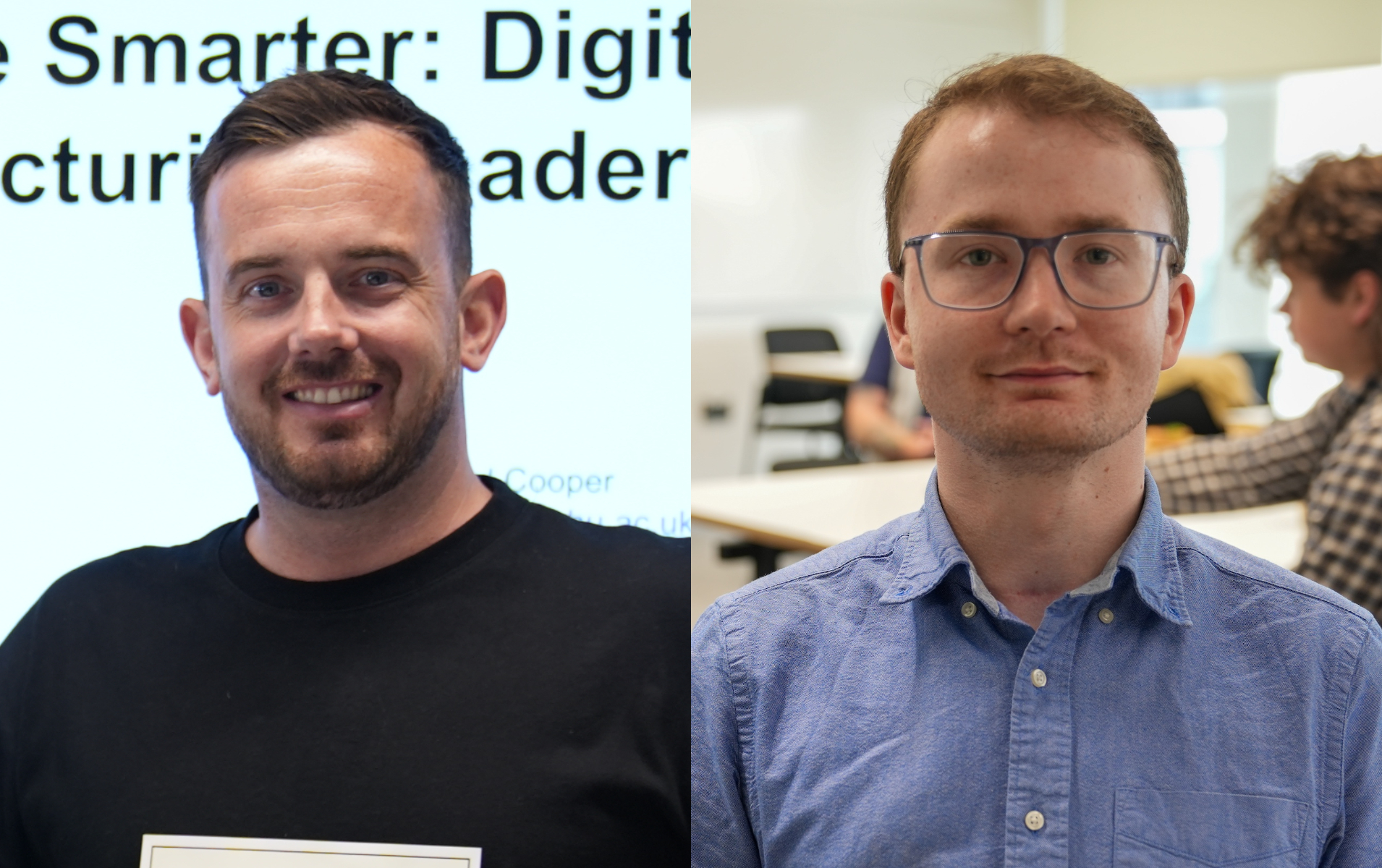
Victor Manufacturing has combined the Digital Manufacturing Leadership programme with Digital Champions training. Operations director Aaron Williams took the leadership course, while three members of the engineering department have participated in the practical programme. That combination gives managers and engineers a shared basis for discussing projects without assuming that their responsibilities are identical.
Williams said the course had helped him reassess how individuals experience change and how the company could obtain better outcomes from the way it introduces improvements. The additional engineering training is intended to build internal capability, allowing technical staff to investigate options and participate in decisions about implementation.
Technical electrical engineer Ethan Fox, one of Victor’s Digital Champions, has identified simulation software as an opportunity for research and development. Simulation may allow engineers to explore a component or process design before producing a physical prototype, but its accuracy depends on the assumptions and measurements used to construct the model.
Models of machine movement, material behaviour or production flow have different data requirements. A useful result therefore requires validation against the relevant physical process, and an apparent improvement in a simulated environment may not transfer directly to equipment operating under variable loads, wear or changing production conditions.
Victor has identified a potential area for investigation rather than reporting a completed simulation installation or a measured productivity gain. The distinction is important when assessing training outcomes: improved capability to evaluate technology is valuable, but it is separate from evidence that an investment has already improved industrial performance.
Leeds-based window manufacturer HWL is also using training across different roles. Director Graham Howatson has completed the leadership course and sales supervisor Danny Hibbert has joined the latest cohort. The company is examining factory flow mapping, machinery sensors, automation and possible uses of artificial intelligence as it develops its production and commercial plans.
HWL is targeting 20% revenue growth over the next two years, a company ambition rather than growth already achieved. The supplied material does not attribute a quantified share of that target to any particular digital project, nor does it establish that all the technologies under consideration have been installed.
Mapping the movement of materials through a window factory can reveal where work accumulates between cutting, machining, assembly and finishing operations. The resulting restrictions may arise from equipment capacity, component availability or the sequence in which orders are released. Adding automation to one operation will have limited effect if the following stage remains unable to receive its output.
Equipment sensors offer another route to understanding the process. Measurements of temperature, machine condition or operating cycles can support decisions about maintenance and throughput, provided the data is correctly associated with what the equipment is doing. Technical staff must distinguish an actual process fault from normal variation before using such information to change production schedules.
Howatson said the leadership course had helped HWL think more strategically about its processes, technology choices and management of change. The company’s plans to develop Digital Champions are intended to involve employees beyond senior management in the practical work of improvement.
The fully funded training is delivered with Sheffield Hallam University. The leadership programme covers strategy, organisational change and identification of opportunities, while Digital Manufacturing Champions focuses on implementation, planning and the skills needed to progress a technology project. Both include contact with industrial technologies as well as the organisational requirements associated with change.
Made Smarter Yorkshire offers related technical guidance and digital adoption support, but those activities should not be added to the 147 training participants as though they were part of the same measurement. Figures for grants, equipment investments and separate internship schemes describe different parts of the programme.
Jessica Armitage, programme manager for Made Smarter Yorkshire, said developing teams with the confidence to lead change could help manufacturers move from digital ambitions to practical improvements. The latest participation figures support a narrower conclusion: more than one person is receiving training at a substantial minority of the businesses attending these courses.
The effect on industrial productivity will depend on what those employees subsequently implement. Successful projects require appropriate equipment, reliable process information and enough internal expertise to operate and maintain the resulting systems. The training programme is intended to develop that expertise before businesses commit resources to individual changes.