Worley, through its Norwegian fabrication business Worley Rosenberg, has secured a subcontract from Subsea7 to manufacture subsea structures and pipe spools for the second phase of the Northern Lights carbon dioxide transport and storage development. The award extends the company’s involvement in the project following its delivery of similar fabricated components for the first phase in 2023.
The contract was announced on 14 October and concerns a defined fabrication package within the wider Northern Lights Phase II expansion. Worley Rosenberg will manufacture equipment for integration into the subsea system, while Subsea7 retains responsibility for its separately awarded offshore engineering and installation activities.
Northern Lights is owned by Equinor, Shell, and TotalEnergies and provides infrastructure for transporting captured industrial carbon dioxide to permanent geological storage beneath the North Sea. The project’s first phase began storing carbon dioxide in August 2025 and has an annual transport and storage capacity of approximately 1.5 million tonnes.
Phase II is designed to increase that annual capacity to more than five million tonnes by 2028. The expansion received a final investment decision in March 2025 and subsequent approval of its development plan from the Norwegian authorities. The October Worley Rosenberg subcontract is a later delivery milestone within that established programme, not a new investment decision for the entire development.
The operating and future capacities must also remain separate. Northern Lights has already demonstrated the transport and injection of captured carbon dioxide through its first-phase infrastructure. The additional capacity planned for 2028 depends on the completion and commissioning of new installations; it is not yet part of the system’s confirmed operating throughput.
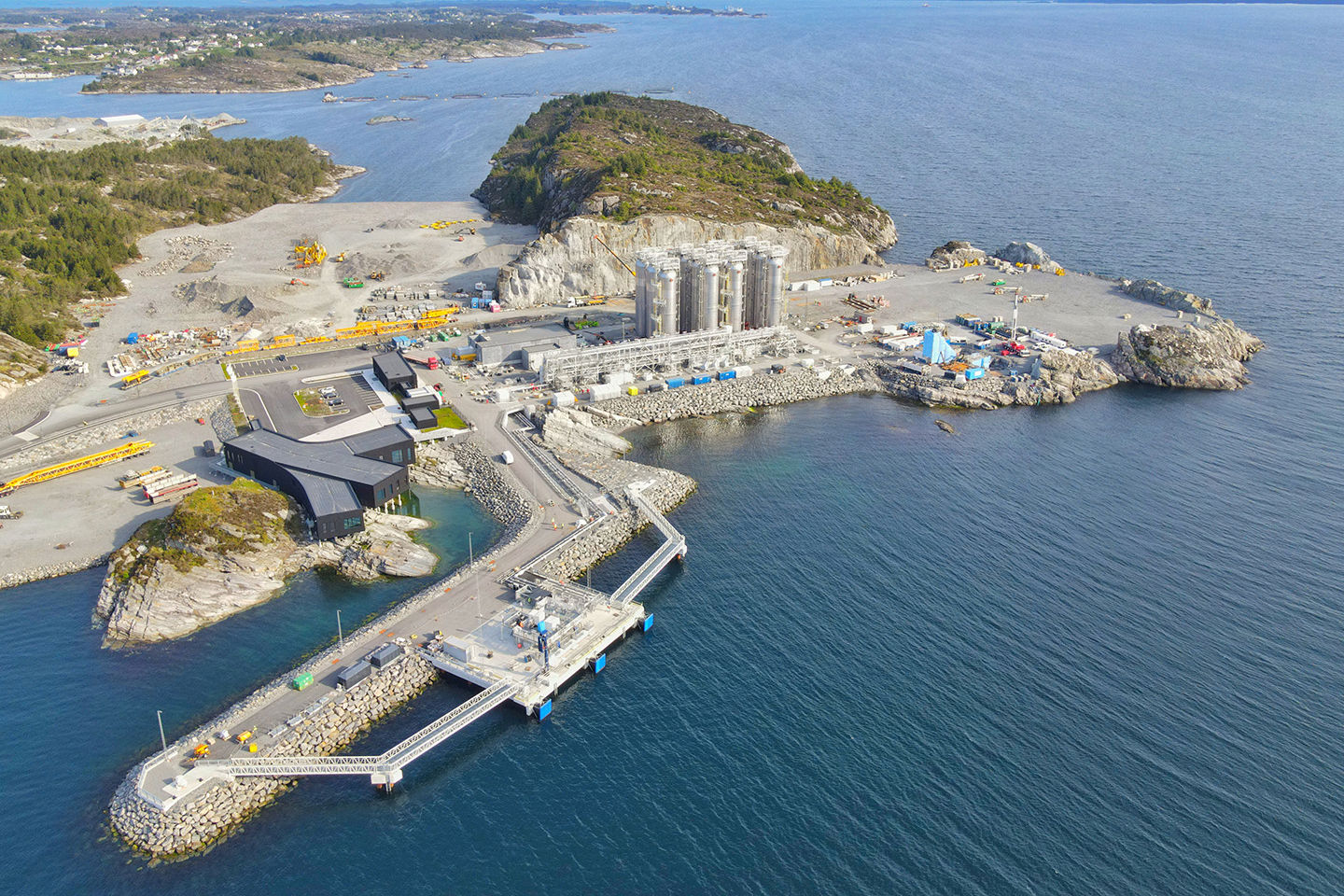
Phase II involves additional receiving and storage equipment at Øygarden in western Norway, a new jetty, further transport vessels, two additional offshore injection wells, and extensions to the subsea system. These components are being developed to handle larger volumes from Norwegian and European industrial customers.
Carbon dioxide captured at an industrial site is prepared for transport and delivered to Northern Lights’ receiving terminal by specially designed ships. The material is transferred into storage arrangements onshore before being transported through a subsea pipeline and injected into a geological reservoir approximately 2,600 metres beneath the seabed.
The transport chain depends on several distinct industrial systems. Capture equipment at the customer’s facility must produce carbon dioxide meeting the agreed specifications, ships and terminal equipment must handle the material under suitable conditions, and the pipeline and injection infrastructure must deliver it safely to the storage formation.
Worley Rosenberg’s fabrication package concerns the offshore portion of that system. Subsea structures provide mechanical support and interfaces for equipment installed on the seabed, while pipe spools form connections between pipework and individual components of the offshore installation.
Pipe spools are prefabricated assemblies manufactured to match the position and orientation of the connections they will join. Their construction can involve cutting, forming, welding, inspection, and dimensional verification, with the required tolerances determined by the approved project design and installation method.
Achieving dimensional accuracy before offshore delivery is important because the scope for adjusting components on the seabed is limited. Incorrect geometry can complicate installation or introduce unwanted loads into connected equipment. Survey information, fabrication records, and inspection therefore contribute to whether the finished assemblies can be installed as designed.
Welding procedures and material selection must also account for the operating conditions and mechanical duties of the completed system. Pressure-containing components require appropriate integrity, while structural assemblies may have to withstand lifting loads, installation forces, and environmental exposure throughout their service life.
Inspection can include dimensional checks and non-destructive examination of welds, with additional tests determined by the project specifications. The contract announcement does not disclose the detailed metallurgy, design pressures, dimensions, or acceptance criteria for the components awarded to Worley Rosenberg, so those characteristics should not be inferred from other subsea projects.
Transporting carbon dioxide introduces material and process considerations that differ from those encountered with ordinary water systems. Fluid properties change with pressure, temperature, and composition, while particular impurities can create corrosion or compatibility concerns. The requirements for the subsea equipment will depend on the specified operating envelope and the quality of the carbon dioxide entering the system.
Maintaining suitable conditions across the transport network involves coordination between pumps, tanks, pipelines, valves, and monitoring equipment. A component that performs satisfactorily under one pressure and temperature regime may be unsuitable for another, making the design and qualification of the complete process important.
The fabrication work also has to be integrated into the offshore installation schedule. Subsea7’s separate Phase II responsibilities include pipeline and related construction activities, as well as the equipment needed to connect new offshore infrastructure. The availability of fabricated spools and structures must therefore be coordinated with survey, vessel, and installation programmes.
Worley Rosenberg’s Stavanger facilities provide established fabrication capability for offshore energy projects. Its earlier Northern Lights Phase I delivery gives the company experience with the development’s engineering and quality arrangements, although the Phase II components must still satisfy their own project-specific designs and acceptance requirements.
The new award also differs from the wider industrial investment in Northern Lights’ receiving terminal. Construction work at Øygarden includes additional tanks, pumps, and facilities for handling greater shipment volumes, while offshore fabrication supports the pipeline and injection part of the expanded system. Completion of the onshore works does not establish that the subsea extension has been installed.
The expansion is supported by demand from industrial emitters, including customers in Norway and other European countries. Northern Lights has signed agreements involving companies such as Yara, Ørsted, and Stockholm Exergi, with the availability of expanded transport and storage capacity influencing when additional captured carbon dioxide can be accepted.
The project also depends on vessel capacity and coordinated operating arrangements. Transporting larger quantities requires sufficient shipping availability, receiving capacity, and injection capability. Increasing one part of the chain without matching the others would constrain the amount of carbon dioxide the complete system can handle.
Worley has not disclosed the monetary value of the fabrication subcontract or an exact date for completing its structures and spools. The award therefore confirms a defined industrial workload but does not support an estimate of the revenue it will generate or a claim that the components are already installed offshore.
The next milestones will involve fabrication, inspection, delivery, and integration of the new subsea equipment into Subsea7’s wider work. Northern Lights is targeting more than five million tonnes of annual transport and storage capacity by 2028, with the final result dependent on commissioning the interconnected onshore, marine, and offshore facilities required for Phase II.