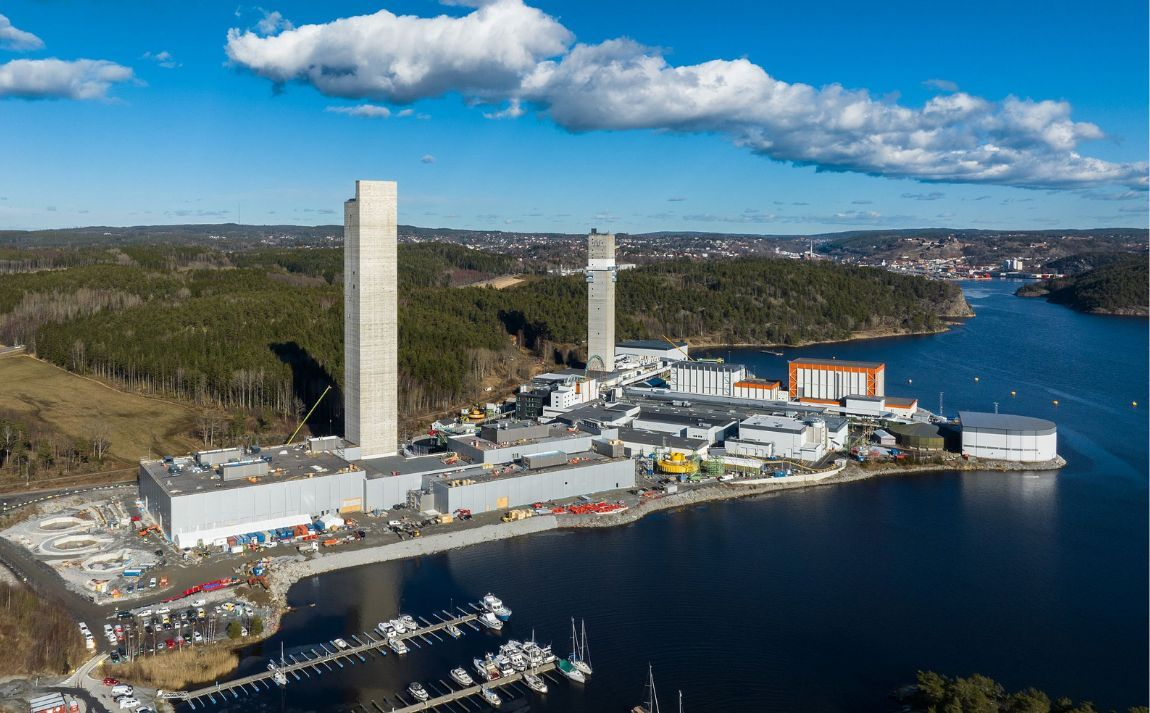
Nexans has begun industrial-scale manufacture of its 525kV high-voltage direct current subsea cable technology at Halden in Norway, marking a new production stage for TenneT’s LanWin2 offshore grid connection in Germany. The work is the first industrial-scale application of Nexans’ qualified 525kV HVDC system using cross-linked polyethylene insulation.
Announced on 16 October, the production start follows technology qualification and moves the LanWin2 project into the manufacturing and delivery stage of its cable programme. Installation and electrical commissioning remain future activities, with the offshore grid connection currently targeted to enter operation in 2031.
LanWin2 is part of TenneT’s programme to provide high-capacity connections between offshore wind generation in the German North Sea and the onshore transmission network. The project is designed to transmit up to 2GW of electricity towards Heide in Schleswig-Holstein, where the power will enter the wider German grid infrastructure.
The cable manufacturing milestone follows an earlier contract award. Nexans secured the LanWin2 engineering, procurement, construction, and installation package in January 2025 under a framework agreement established with TenneT in 2023. That award was valued at approximately €1 billion, and the October production announcement does not represent a second contract of the same value.
The framework agreement was intended to secure specialist cable manufacturing capacity over several major offshore transmission projects. High-voltage subsea cables require substantial factory infrastructure and lengthy production campaigns, making availability of manufacturing capacity an important factor in the timing of individual grid connections.
Industrial production at Halden now provides a tangible milestone within that delivery programme. Equipment must manufacture long cable sections with consistent electrical and mechanical characteristics, while factory controls verify that the finished product meets the requirements established during design and qualification.
A high-voltage cable contains a conductor surrounded by insulation and additional layers that support its electrical and mechanical performance. In the Nexans system, cross-linked polyethylene forms the principal solid insulation. The material must maintain its dielectric properties under the electrical stresses associated with 525kV direct current operation.
The insulation is manufactured under controlled conditions because local defects, contamination, or inconsistencies can affect electrical stress distribution. The properties of the interfaces between the conductor, semiconducting layers, and insulation are also important. A defect embedded within a long completed section can create a significant quality problem, particularly when the cable is intended for installation beneath the sea.
Manufacturing control therefore extends beyond checking the nominal cable dimensions. Material cleanliness, processing temperatures, extrusion consistency, and the condition of individual layers can influence the finished system. Inspection and testing provide evidence that the manufacturing process reproduces the characteristics established when the technology was qualified.
Qualification and industrial production represent different stages of development. Qualification testing establishes that a cable design can meet specified requirements under defined conditions. Manufacturing must then reproduce that performance consistently across production lengths and batches, while accounting for the handling and installation demands of a commercial offshore project.
The mechanical construction of a submarine cable must also allow it to withstand transport and deployment. Protective layers may be required to manage moisture, handling loads, and external contact, with the final arrangement determined by the cable design and installation environment. Bending limits and allowable tension become critical when the cable is loaded aboard a vessel and laid onto the seabed.
High-voltage direct current transmission is used for major offshore connections because it can move substantial electrical power over long distances without the continuous capacitive charging current associated with alternating current transmission cables. In long AC cable systems, that charging current can occupy part of the available current capacity and increase the need for compensation equipment.
A direct current cable avoids that particular operating constraint, but the wider transmission system requires converter equipment. Electricity generated by offshore wind turbines must be converted into the form required for the HVDC link and subsequently converted back for connection to the onshore alternating current network.
The offshore converter platform and onshore facilities consequently remain essential elements of LanWin2. Their construction and testing must be coordinated with the cable system, because completion of one part of the transmission infrastructure does not establish that the complete connection can be energised.
The project also involves demanding installation activities. Survey information is needed to select and prepare the cable route, while specialised vessels control cable tension and bending during offshore laying. Landfall works and onshore sections introduce additional interfaces, each requiring suitable protection and connection arrangements.
Installation equipment and procedures must account for seabed conditions, the proximity of other infrastructure, and the mechanical limits of the cable. Factory testing reduces the risk of latent defects, but inspection and electrical tests are also required after installation to establish that the system has not been damaged during handling and deployment.
Nexans’ Halden facility forms part of the company’s dedicated high-voltage manufacturing capability. The official production announcement includes a photograph of the cable-laying vessel Nexans Electra at the site, illustrating the relationship between cable manufacture and the specialist marine equipment used during delivery. The presence of the vessel does not establish that LanWin2 cable installation has already begun.
The transition into industrial production also supports TenneT’s broader 2GW offshore connection programme. Standardising key electrical and engineering parameters across projects can provide greater consistency in procurement and production, although individual connections still require their own construction schedules, route engineering, testing, and commissioning.
Nexans has identified BalWin3 as another project expected to use the qualified 525kV HVDC XLPE technology. Installation activities in the Wadden Sea and nearby coastal areas are planned for 2027 under that separate programme. The BalWin3 schedule should not be transferred to LanWin2 or treated as evidence of work already completed on the latter connection.
The two projects also illustrate the difference between manufacturing readiness and operational capability. A qualified technology and an active production line demonstrate important progress, but grid availability depends on completed cables, successful installation, converter integration, and satisfactory commissioning of the complete transmission system.
Nexans and TenneT describe the LanWin2 project as remaining on schedule, with commissioning expected in 2031. An earlier project announcement referred to 2030, but the current manufacturing update uses 2031. The revised date is therefore the appropriate forward target, not evidence that the connection has already entered service.
The start of manufacture at Halden establishes that the qualified cable design has progressed into industrial delivery. The next measurable milestones will concern completed production lengths, factory acceptance, cable installation, and integration with the converter infrastructure required to transfer offshore wind electricity into Germany’s transmission network.