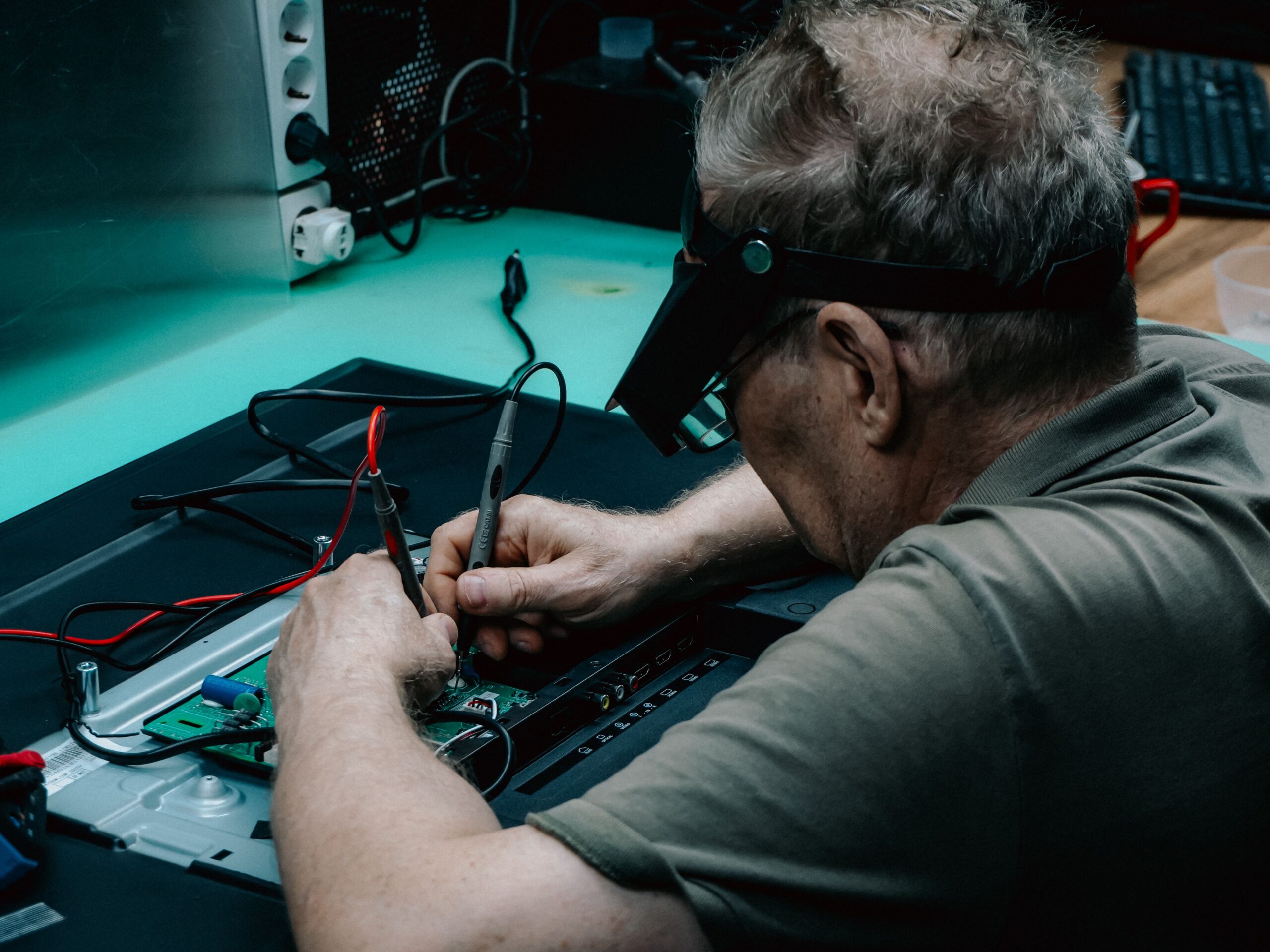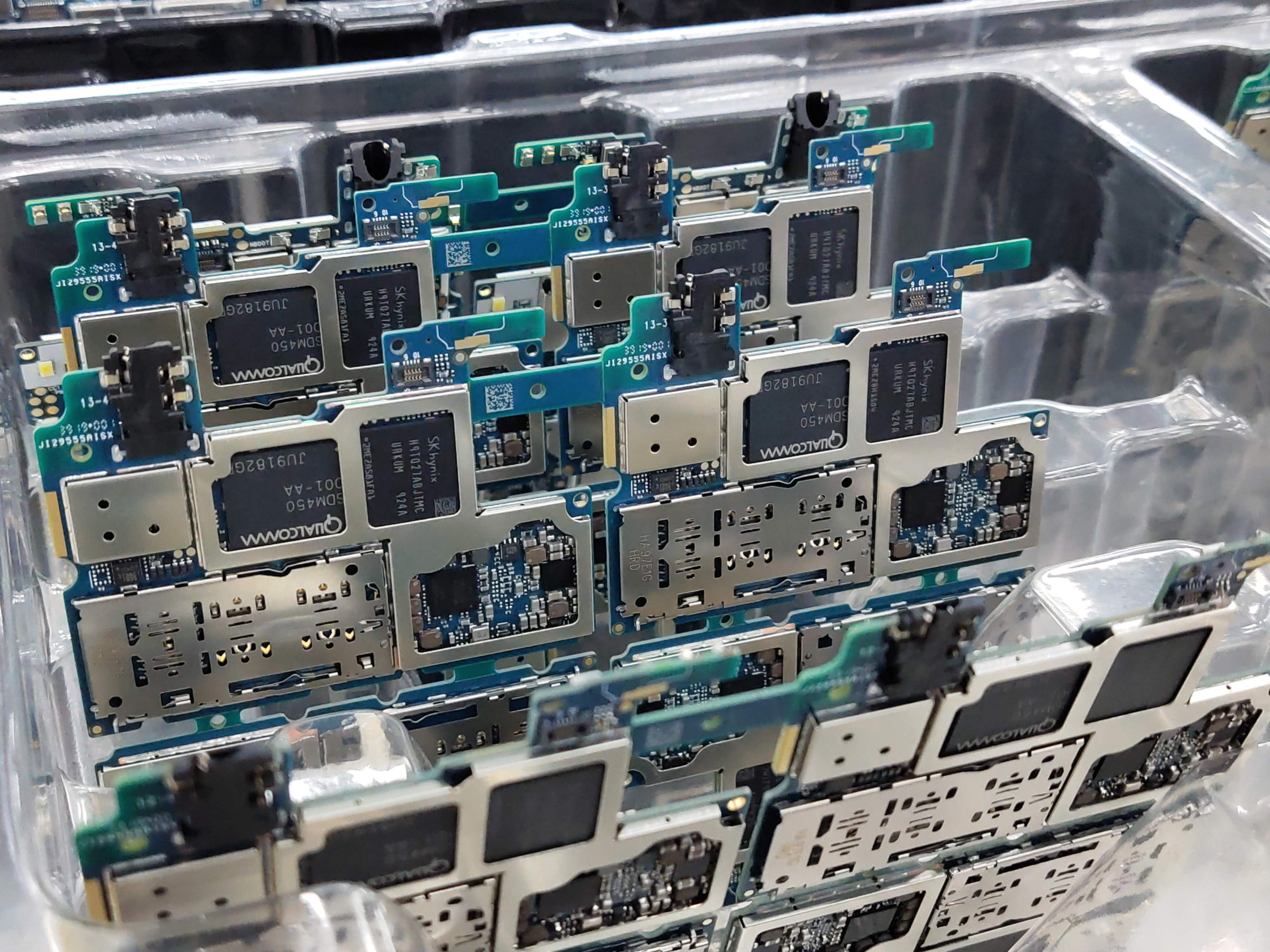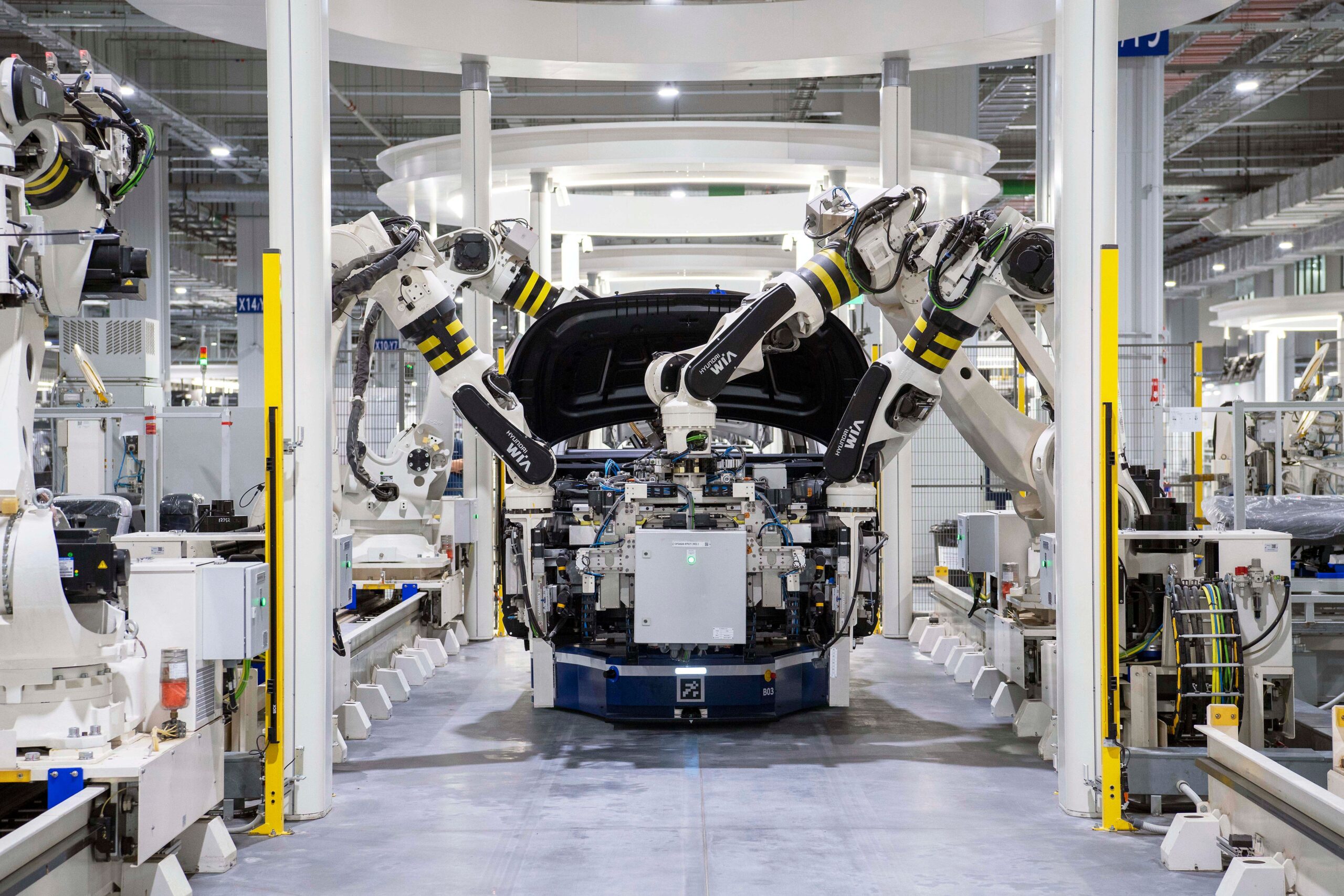
Automotive Cells Company (ACC) has produced its five-millionth lithium-ion battery cell at its gigafactory in Billy-Berclau/Douvrin, northern France, marking another stage in the industrial ramp-up of a European-owned supplier to electric vehicle manufacturers. The company is presenting the milestone at the 2026 Paris Motor Show alongside the French automotive industry association PFA.
ACC says its cells and modules have already been fitted to nearly 40,000 vehicles. That is a cumulative deployment measure, not the number of complete battery packs leaving the factory in any particular month. Different battery configurations require different numbers of cells, and the production milestone cannot by itself be converted into a current daily output rate.
ACC says the factory’s first production block is now running a 5×8 shift pattern across all seven days of the week. Scrap rates are moving towards internal targets, although the company has not published those targets or an independently verified yield figure. Its September module output was close to the number of modules produced during the whole of 2025, a comparison that illustrates faster throughput from a plant still working through its industrial ramp-up.
A longer operating week expands available machine hours, but consistently saleable cells depend on stable coating, drying, assembly and formation processes as well as inspection yield. ACC has reported a strong September comparison against 2025 production, without releasing the daily output rate or overall equipment effectiveness needed to calculate current annualised capacity. Those measurements will determine how reliably the line can supply contracted vehicle programmes.
ACC supplies cells and modules used in eight long-range electric vehicle models sold by Stellantis brands. They include the Peugeot E-3008 and E-5008, Jeep Compass, Lancia Gamma, DS N°7 and N°8, Citroën C5 Aircross and Opel Grandland. The company says it is supplying Stellantis in accordance with the production plans agreed between the businesses; those schedules do not necessarily represent the vehicle maker’s maximum desired volume.
The available battery supply has already affected customers’ production planning. On 29 September, Stellantis announced temporary stoppages scheduled for 22–30 October at Rennes and 23–30 October at Sochaux, citing insufficient batteries for certain long-range electric models. Other announced factory stoppages had different causes and should not all be attributed to ACC. Rising September module production can therefore coexist with delivery constraints for particular vehicle programmes.
Battery cell production requires several tightly coupled processes. Electrode materials are coated onto current collectors and dried to controlled specifications before the electrodes are assembled with separators, electrolyte and electrical connections. Formation, conditioning and testing subsequently occupy equipment for defined periods. Poor coating consistency, contamination or moisture can lead to rejection even after much of the material and processing energy has already been committed.
Higher output requires these stages to remain balanced as operating hours increase. Coating and assembly lines can create work in progress faster than downstream formation or testing can release it, making bottleneck management central to an effective ramp-up. Traceability is equally important: a defect discovered after module assembly can otherwise be harder to isolate to a particular cell batch, material supply or machine setting.
Module assembly introduces another set of requirements. Cells must be grouped, electrically connected, mechanically secured and integrated with arrangements for monitoring and thermal management according to the customer’s design. A cell plant can reach a headline production milestone while module throughput still depends on its own assembly lines, component availability and release tests. The two operations must expand at compatible rates if vehicle plants are to receive usable battery systems.
ACC’s next major capacity project is a second production block at Billy-Berclau/Douvrin, rated at 12.9GWh, which the company plans to start operating in 2027. That block is intended to supply batteries for Mercedes-Benz electric vehicles. Its stated capacity is a design measure; actual output will depend on commissioning, production yield and the operating schedule once the new equipment is brought into service.
After shelving plans for separate gigafactories in Germany and Italy, ACC is concentrating further industrial investment on its existing French operation. The additional block will have to be integrated with utilities, material supply, maintenance and quality systems already supporting the first line. Commissioning an expansion while sustaining deliveries from operating equipment creates a different challenge from increasing shift coverage on a single established line.
Local cell manufacturing can reduce some transport distances and support closer engineering exchanges between factories and vehicle assembly plants. Yet the supply of precursors, processing chemicals and specialised equipment can still depend on international markets. Manufacturing battery cells in France creates European production capacity without demonstrating that every upstream stage is located in Europe.
The cumulative five-million-cell count, seven-day operations and September module comparison offer evidence of progress, but ACC has not disclosed the detailed data needed to calculate cell yield, production cost per kilowatt-hour or reliable monthly output at full specification. Those figures are especially consequential when a vehicle plant depends on timely delivery of batteries configured for particular models and ranges.
The immediate test for ACC is whether the higher rate of cell production produces a dependable flow of approved modules for each vehicle programme. Output will need to remain consistent across coating, formation, inspection and module assembly, particularly when manufacturing demand changes between models. The next production disclosures will give a better indication of how reliably the factory can maintain its reported September improvements.