The University of Bristol will lead a £9.8 million Greater South West robotics programme intended to help organisations assess and deploy automation. Operating through Bristol Robotics Laboratory with a 23-partner consortium, the hub combines £7.2 million from Innovate UK with £2.6 million in partner contributions. Its full service is expected to become operational in January 2027.
The regional hub brings together universities, manufacturers, systems specialists, local authorities and professional advisers, including 15 businesses. Bristol Robotics Laboratory is a partnership between the University of Bristol and UWE Bristol, while NCC will lead a business advisory service intended to help companies assess applications and develop investment cases. The funding supports a network of adoption services, rather than a single robotic production line.
Participating businesses will be able to seek individual advice, observe equipment through demonstrations, and explore proof-of-concept trials before committing capital to a full installation. The announced programme also intends to connect potential adopters with suppliers and integrators. None of those services should be counted as a completed factory deployment or evidence of productivity improvement before participating companies carry out their projects.
Selected from 76 national applications, the South West proposal was one of eight robotics hubs awarded funding after 24 submissions reached interview. The national network has already been announced; Bristol’s award provides the specific regional funding, partners and service structure. Each hub’s actual industrial outcomes will depend on the businesses that use it and the suitability of their proposed applications.
Among the South West partners are GKN Aerospace Services, Loop Technology, Applied Automation, LG Motion, the University of Bath, the Centre for Modelling & Simulation, Somerset Council and South Devon College. Their respective backgrounds cover manufacturing, industrial automation, engineering analysis, education and regional business support. The consortium aims to make that range of expertise accessible without requiring every smaller manufacturer to assemble a separate advisory network.
Food and drink production in Cornwall and Gloucestershire, aerospace component manufacture in Somerset, maritime infrastructure in Devon, and maintenance of energy assets around the Solent are examples of sectors the hub intends to support. Different workpieces, site conditions and assurance requirements make a common equipment specification unlikely. The examples describe prospective use cases, not confirmed installations or named customer orders.
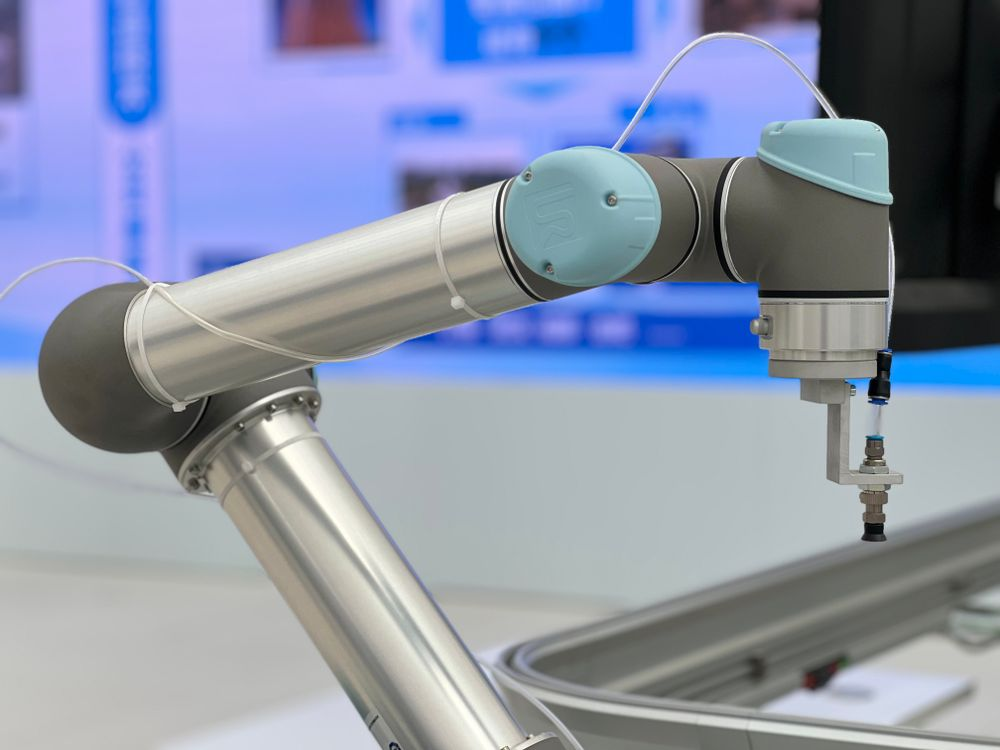
Selecting a robot for a production cell begins with the physical characteristics of the work. Component orientation, variation between incoming parts, cycle time and access to existing machinery can be as decisive as the robot’s reach or payload. Tooling must grip products without damage, while sensing and controls must establish how the system responds when an expected part or operating condition is missing.
An apparently repetitive loading task may still be a poor automation candidate if the upstream process varies or the machine being served has little spare capacity. A demonstration using consistent test pieces may conceal the cost of handling normal product variation, fault recovery or additional guarding. The trials envisaged by the hub can help establish those requirements before capital is committed, though they cannot eliminate later site-specific engineering.
NCC’s advisory service is intended to help businesses identify applications, consider implementation plans and find appropriate sources of support or finance. Demonstrations and proof-of-concept work can then test whether a proposed process is technically viable under controlled conditions. The university has not specified a standard grant amount payable to individual companies adopting robotics through the programme.
Worker safety and operating responsibilities also need to be designed around the entire installation, including grippers, conveyors, adjacent machinery and access for maintenance. A collaborative robot does not automatically make a process safe without assessing the task, tooling and exposure. Commissioning arrangements should address abnormal operation and fault recovery, while operators and maintenance teams need training for the actual system installed.
Arthur Richards, Professor of Robotics at the University of Bristol and project lead, described the proposed hub as a shared point of entry for advice spanning design, procurement, safety and cybersecurity. Those subjects sit alongside mechanical integration because even a small automated cell may need communications, functional safety assessment, data access and ongoing software support.
The programme is organised around three strands: direct business advice, demonstrations and visits, and an ecosystem linking users with suppliers and specialists. Taken together, these could produce better evidence for procurement decisions, although the consortium has not published a target number of successful deployments or a measured regional productivity gain. The commercial outcomes will emerge through individual businesses’ subsequent investments.
The Greater South West initiative is designed to serve a large and varied area, with the announced reach extending from Gloucestershire to the Solent and the Isles of Scilly. That range makes the proposed combination of regional advisers, industrial sites and technology suppliers consequential: a food processing operation, a marine maintenance project and a precision aerospace production line rarely have interchangeable automation requirements.
The hub is scheduled to become fully operational in January 2027. Its initial advisory sessions and technical demonstrations should establish which regional processes can be trialled and what integration work is needed before procurement. Subsequent trials and commissioned robotic cells will provide evidence of practical adoption, alongside the safety and maintenance arrangements established for each site.