Innovate UK has opened a £5 million battery innovation competition that combines research grants with private investment for UK small and medium sized enterprises. Applications opened on 5 October and close at 11am on 25 November 2026. An approved investor partner must invite each applicant to take part, and the agreed private investment must be secured before an awarded research project can begin.
The competition forms part of the Battery Innovation Programme, which supports research capable of advancing battery technology towards commercial use in the UK. Projects must address eligible technological development rather than routine operations or the purchase of large production facilities. Research proposals can cover materials, components or manufacturing methods, provided the applicant identifies the technical uncertainty to be resolved and a credible route towards commercial application.
Because grant eligibility and commercial finance are assessed separately, a technically credible proposal must also satisfy the investment conditions. Innovate UK evaluates the research against the competition criteria while the approved investor conducts its own commercial due diligence and agrees to invest in the business. The grant finances eligible research expenditure, whereas the investor’s capital supports the company and its wider development plans.
Feasibility studies can cost between £50,000 and £300,000 and run for six to twelve months, allowing companies to establish whether a concept can meet a defined technical objective. Industrial research projects range from £100,000 to £1 million over six to 24 months, while experimental development covers projects between £250,000 and £2 million lasting twelve to 24 months. The three categories reflect successive stages of development, with different budgets and durations applying to each.
For feasibility studies and industrial research, micro and small businesses can receive grants covering up to 70 per cent of eligible costs, compared with 60 per cent for medium sized companies. In both categories, the aligned private investment must be at least equal to the grant. These percentages represent maximum funding rates, with the actual award determined through the assessment of eligible expenditure and the proposed work.
For experimental development, the grant ceiling falls to 45 per cent for micro and small companies and 35 per cent for medium sized enterprises, reflecting the later stage of the work. The investor must commit at least twice the grant value, so the financing obligation increases as the proposed technology approaches commercial use. Applicants must also demonstrate that they can fund expenditure beyond the grant contribution, including the costs of delivering the research programme.
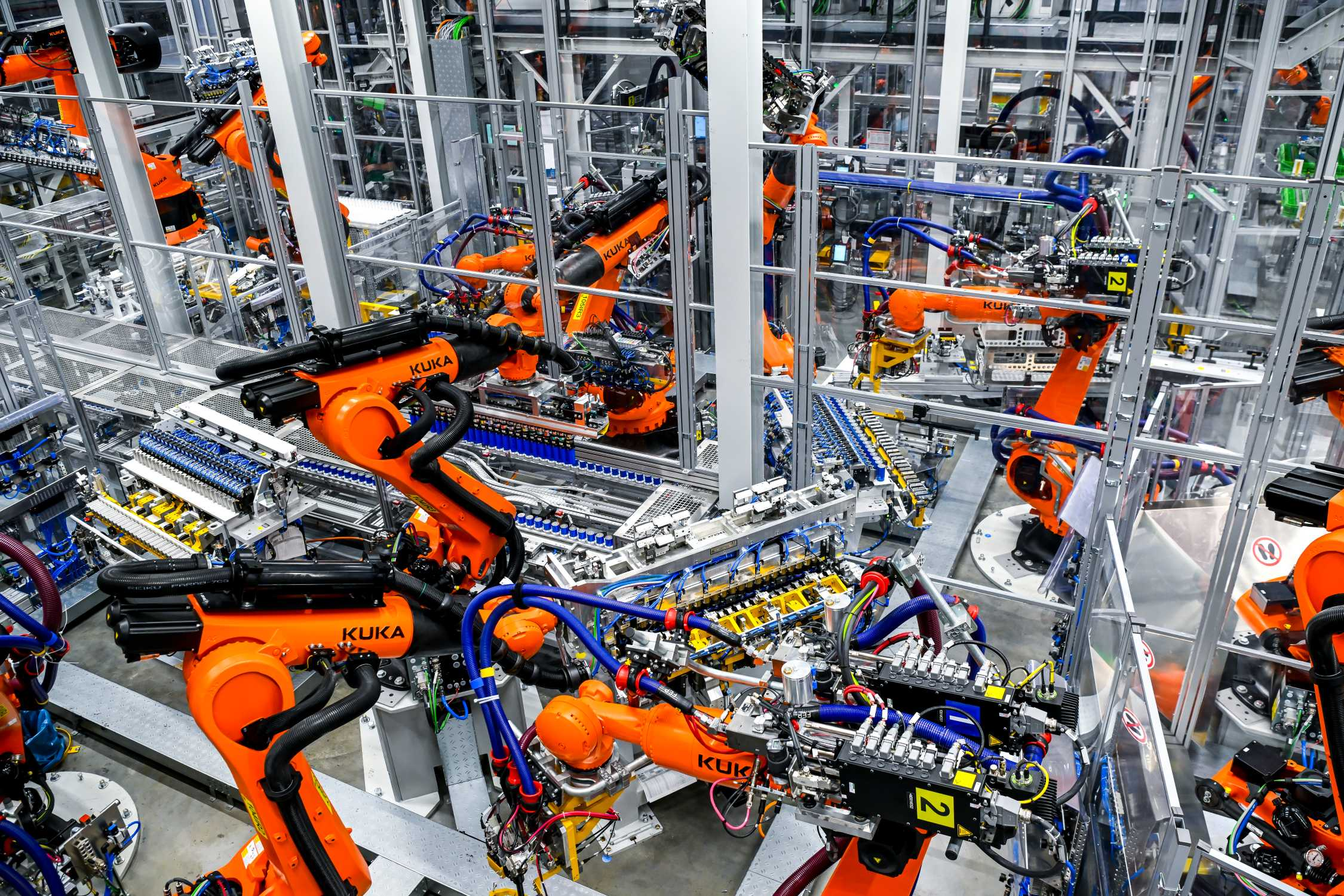
A battery technology moving from laboratory investigation towards reproducible manufacturing encounters different process and quality constraints. A material may demonstrate promising electrical behaviour in a small test cell, yet variation in powder properties, coating thickness or drying conditions can change its performance once electrodes are produced at greater scale. Establishing robust process windows and inspection methods is consequently part of demonstrating that a proposed material can support industrial production.
Battery management electronics, thermal control, charging arrangements and materials recovery offer additional fields for eligible research. Their requirements differ by application: a stationary storage installation, electric vehicle and industrial machine can each impose distinct combinations of power demand, operating temperature, durability and safety constraints. The funding competition provides a route to investigate those technologies, with specific projects and recipients still to be selected.
Where electrode coating or assembly defects cause battery cells to be rejected, engineers must isolate the process variables responsible and verify that corrective adjustments remain effective across repeated production runs. Measurement systems, material traceability and equipment repeatability provide evidence of manufacturing performance rather than relying solely on results from laboratory samples. Research into battery recycling may likewise need to establish recovered material quality alongside the consistency of its separation process.
Eligibility is restricted to individual UK registered micro, small and medium sized businesses, with joint applications from research consortia excluded. The applicant must undertake the funded work in the UK and intend to exploit the results from or within the country. Each business may submit one application, and the project plan must account for costs that will remain outside grant support.
Having obtained an invitation from an approved investor partner, the applicant must put in place qualifying equity or convertible debt finance before starting an awarded project. That investment goes into the business, while the grant reimburses or supports eligible research costs under the funding agreement. Treating the two sources as distinct allows the technical project and the company’s wider commercial development to be financed for their respective purposes.
Innovate UK’s assessment will examine the technical innovation, the company’s delivery capability and the route towards a market for the resulting product or process. Battery customers may require evidence of repeatable performance, manufacturing quality, safety and relevant certification before adopting a new technology. Research plans that establish how those requirements will be evaluated can reduce uncertainty during later industrialisation, although commercial performance will depend on subsequent development.
After the 25 November closing date, decisions are expected by 26 January 2027, with successful projects required to start by 1 May 2027 once investment and grant conditions are satisfied. The £5 million allocation is therefore available for eligible proposals, while the eventual distribution between particular battery technologies will be determined through assessment and completed financing arrangements.