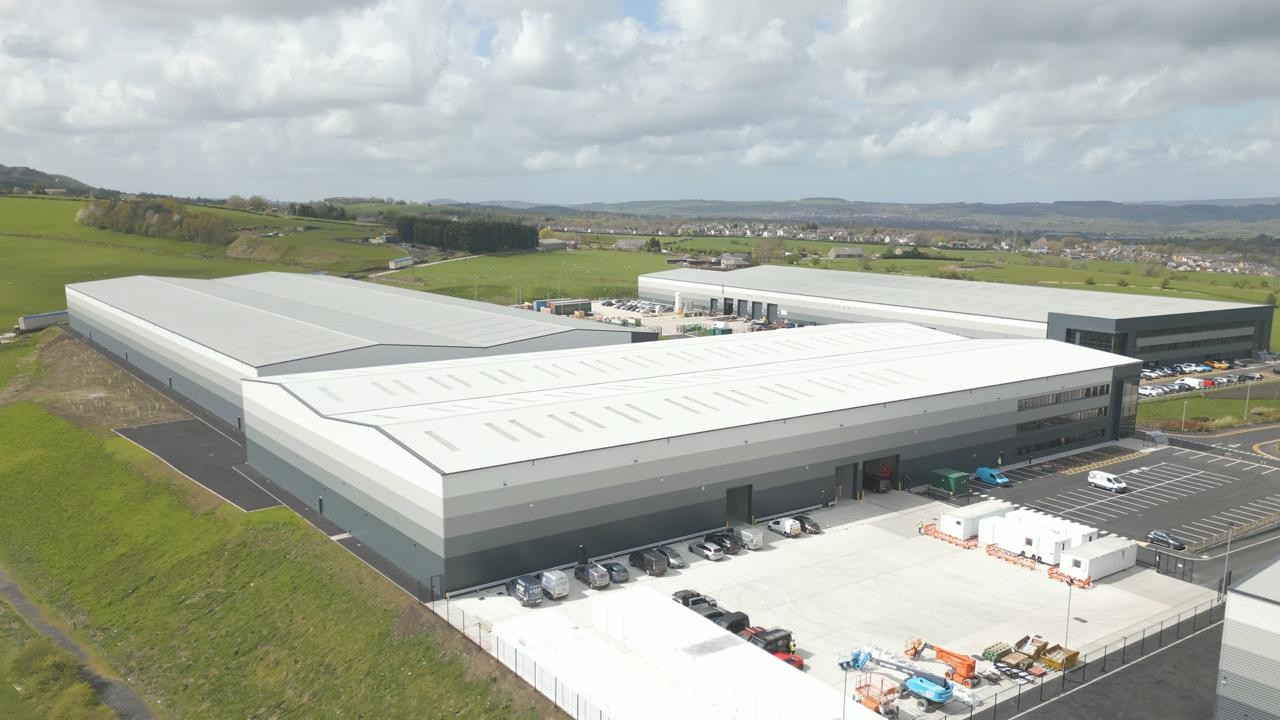
CRC Evans has opened its expanded Pioneer House Centre of Excellence in Burnley, doubling its local footprint to 90,000 sq ft and bringing manufacturing, engineering, specialist welding, protective coating and digital capability together at one site. The facility will support energy and critical infrastructure projects across Europe, the Middle East, Africa, Asia, Australasia and Latin America.
The centre also serves as an EMEAA headquarters and adds capacity for procedure qualification, testing and technical validation before welding and coating methods are deployed on customer projects. Two firing lines in the procedure qualification testing area were already operational ahead of the formal opening, with the first customer qualification programme under way.
That qualification work is central to the Burnley expansion. Pipeline welding procedures have to demonstrate that materials, heat input, joint geometry and process parameters can meet project requirements before production begins. The same principle applies to protective coating systems, where the selected material and application process must match the temperature, environment and service conditions expected during operation.
Pioneer House combines those activities with manufacturing rather than separating development, qualification and equipment delivery between different sites. That can shorten the path between engineering changes and practical testing, while giving project teams direct access to the people responsible for specialist welding, coating and associated manufacturing systems. It also places more of the technical record for a project inside one controlled operation.
Protective coating forms a substantial part of the new capability. CRC Evans is expanding its work in injection moulded polypropylene for pipeline field joints used in high temperature and deepwater applications. The centre also supports multi-layer epoxy and polyurethane systems, high temperature finishes, thermal metal spray, advanced polymer coatings and intumescent fire protection.
Field joints are a critical part of pipeline integrity because factory applied pipe coating has to be restored after sections are welded together. A mechanically sound weld can still become a weak point if the field joint does not receive equivalent corrosion protection or thermal insulation. Offshore installation makes that requirement more demanding because access for repair can become difficult and expensive once the pipeline has been laid.
The Burnley site is also configured for specialist alloys and projects requiring tighter contamination control. CRC Evans lists corrosion resistant alloys, duplex materials, Hastelloy, Monel, stainless steel, aluminium and manganese steels among the materials supported across its wider capability. Segregated work areas allow those materials to be processed without mixing them unnecessarily with conventional carbon steel operations.
The company’s established market remains energy pipeline infrastructure, but the centre is intended to support a wider range of sectors. CRC Evans identifies renewable energy, nuclear, defence, aerospace, petrochemical and strategic infrastructure among the areas that can use its welding, coating and qualification expertise. Those applications vary considerably, yet all depend on controlled processes, documented procedures and material integrity.
That breadth makes flexible engineering capacity more useful than adding floor space alone. Qualification rigs and manufacturing areas may need to accommodate different diameters, alloys, coating systems and customer specifications from one programme to the next. The operational value of Pioneer House will therefore depend on how efficiently those areas can be reconfigured without weakening traceability or allowing processes that require separation to interfere with one another.
The centre also strengthens Burnley’s role inside CRC Evans’ international operating network. The company has facilities in locations including Scotland, the Netherlands, North America, Brazil, India and Saudi Arabia, while the new UK headquarters is positioned to support a broad EMEAA territory. Procedures developed and qualified in Lancashire can consequently feed into project delivery elsewhere, provided the approved method is transferred accurately into field operations.
Digital capability becomes relevant at that point because project execution depends on more than the original qualification test. Welding parameters, inspection results, equipment settings and coating records have to remain traceable as work moves from controlled development into production. A central engineering site can establish the process, but repeatability ultimately depends on how well those requirements are carried into the project environment.
The 24 September opening marks the point at which the expanded site moves from construction into routine engineering work. Its first qualification activity was already under way before the formal launch, providing a clearer indication of industrial readiness than the building completion alone. With the footprint doubled and specialist processes brought together, the next measure will be the volume and complexity of customer programmes that Pioneer House can qualify and support without creating new bottlenecks of its own.