MathWorks has released R2026b across the MATLAB and Simulink product families, adding dedicated tools for product variant management, industrial visual inspection and automated embedded software testing alongside wider updates in AI, perception, aerospace and hardware development.
Three new products sit at the centre of the release. Simulink Variant Manager provides an environment for managing design alternatives across large models, Visual Inspection Toolbox supports the development and testing of machine vision inspection applications, and Polyspace Test Server allows C and C++ tests and structural coverage analysis to run on automation servers.
Variant management becomes increasingly difficult when one engineering platform has to support several products, markets or technical configurations. Variant blocks, parameters and transitions can be distributed across a large model hierarchy, making it difficult to establish which combination is active, whether a proposed configuration is valid and how one product version differs from another.
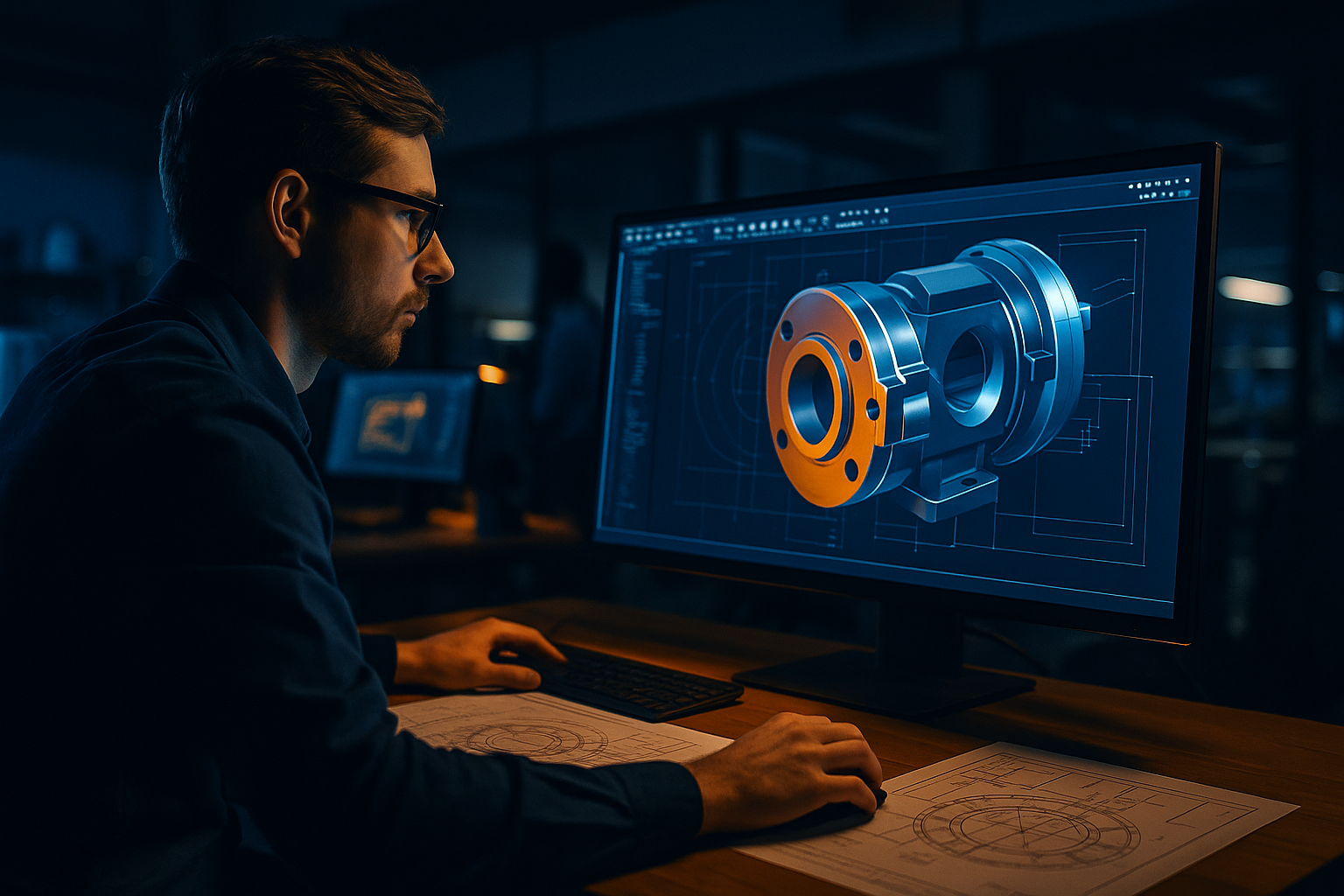
Simulink Variant Manager brings those choices into a central interface. Engineers can visualise variant elements across the model hierarchy, capture combinations as named configurations and validate them before simulation or code generation. The approach is relevant to product families where one model may represent different motors, electrical systems, control strategies, regulatory requirements or regional specifications.
The aim is not to remove configuration complexity but to make it more traceable. Creating a separate model for every finished product can introduce duplicated engineering work and make changes difficult to propagate consistently. Keeping alternatives inside a shared architecture can reduce that duplication, provided teams can still identify exactly which design choices belong to each production configuration.
Visual Inspection Toolbox addresses a different manufacturing problem. MathWorks has designed it for developing and testing visual inspection and analysis applications using image processing and artificial intelligence. Industrial inspection projects frequently combine image acquisition, preprocessing, labelled examples, model development and deployment, so bringing more of that workflow into one environment can reduce the custom interfaces required between separate engineering tools.
Machine vision is increasingly used for tasks including surface inspection, assembly verification and dimensional or presence checks, but building a reliable production system requires more than training an AI model. Lighting, image quality, defect rarity, false positives and changes in products or materials can all affect performance. A development tool therefore has to support repeated testing and analysis rather than treating a successful demonstration as proof of production readiness.
Perception engineering has also been expanded through Point Cloud Toolbox. The software supports point cloud data from lidar, RGB-D and stereo cameras and millimetre-wave radar, alongside workflows including SLAM, photogrammetry and structure from motion. Those capabilities have applications in robotics, automated vehicles, mapping and inspection systems that need a spatial representation of their surroundings.
Polyspace Test Server moves another part of engineering towards automated infrastructure. The product can execute C and C++ tests and analyse structural coverage on automation servers, allowing software verification to form part of continuous integration workflows rather than depending entirely on manual execution from an engineer’s workstation. Unit and integration testing can therefore be repeated as code changes instead of being concentrated near a formal release point.
That is particularly relevant to embedded systems, where software development now runs alongside mechanical and electrical engineering rather than following hardware design at the end of a programme. Automated execution can reveal regressions earlier, while structural coverage provides evidence of how much of the software has actually been exercised by the available tests.
R2026b also extends MathWorks’ AI tooling. New MATLAB, Simulink and Polyspace Agentic Toolkits sit alongside enhancements that allow Simulink Profiler to use Simulink Copilot to explain simulation bottlenecks and generate solver profile summaries. Deep Learning Toolbox adds a Time Series Modeler application and supports co-execution of PyTorch models from MATLAB and Simulink.
Several less conspicuous changes address collaborative engineering. MATLAB projects can use a human-readable TOML configuration file, while Simulink data dictionaries can be stored as JSON to make source control differences easier to inspect. Published Simulink models can also be reused without rebuilding, reducing repeated preparation when stable subsystems are referenced inside larger simulations.
Aerospace and hardware design receive further additions. Aerospace Toolbox expands orbit propagation, manoeuvre modelling and lunar mission workflows, while Aerospace Blockset adds capabilities across aircraft, rotorcraft and spacecraft modelling. SoC Blockset for AMD extends development and verification workflows for AMD adaptive SoCs and FPGAs used in communications, vision, deep learning and control systems.
Statistics and Machine Learning Toolbox now includes interactive applications for design of experiments and Gage R&R studies. The latter has a direct manufacturing application because measurement variation has to be separated from actual process variation before inspection data can be used confidently for production decisions.
The common thread across the release is the increasing integration of software, electronics, AI and conventional engineering. Product variants have to remain controlled, visual inspection systems need a route from development to deployment, and embedded software requires repeatable verification as part of the engineering process rather than as a separate final activity.
R2026b does not make complex engineered systems simple, but it moves more configuration, testing and analysis into connected workflows. The practical measure will be whether engineering teams can reduce duplicated models, manual hand-offs and late verification as software and AI account for a larger share of the functionality inside industrial products.