ASTA Energy Solutions will invest around €17 million in a new copper recycling platform at its Oed headquarters in Lower Austria, bringing production of copper wire from secondary material deeper into its own manufacturing chain.
The company plans to order the first machinery during 2026 and begin production towards the end of 2029. Copper scrap will come from ASTA’s own operations as well as customers and suppliers, with material-supply agreements expected to develop alongside the staged installation of the new equipment.
ASTA manufactures precision copper winding and conductor products used in electrical infrastructure including transformers, generators, and other power equipment. Its customers include major electrical-engineering groups, making both copper availability and conductor quality central to its manufacturing operation.
The Oed investment is intended to reduce reliance on externally processed copper wire rather than simply add another recycling activity to the site. By taking suitable scrap through processing and back into wire production internally, ASTA can control more of the route between recovered metal and finished conductors.
The company wants recycled copper to account for 70% of its production by 2030. The project forms part of its Low Carbon Copper initiative and builds on recycling experience already developed at its Brazilian operations.
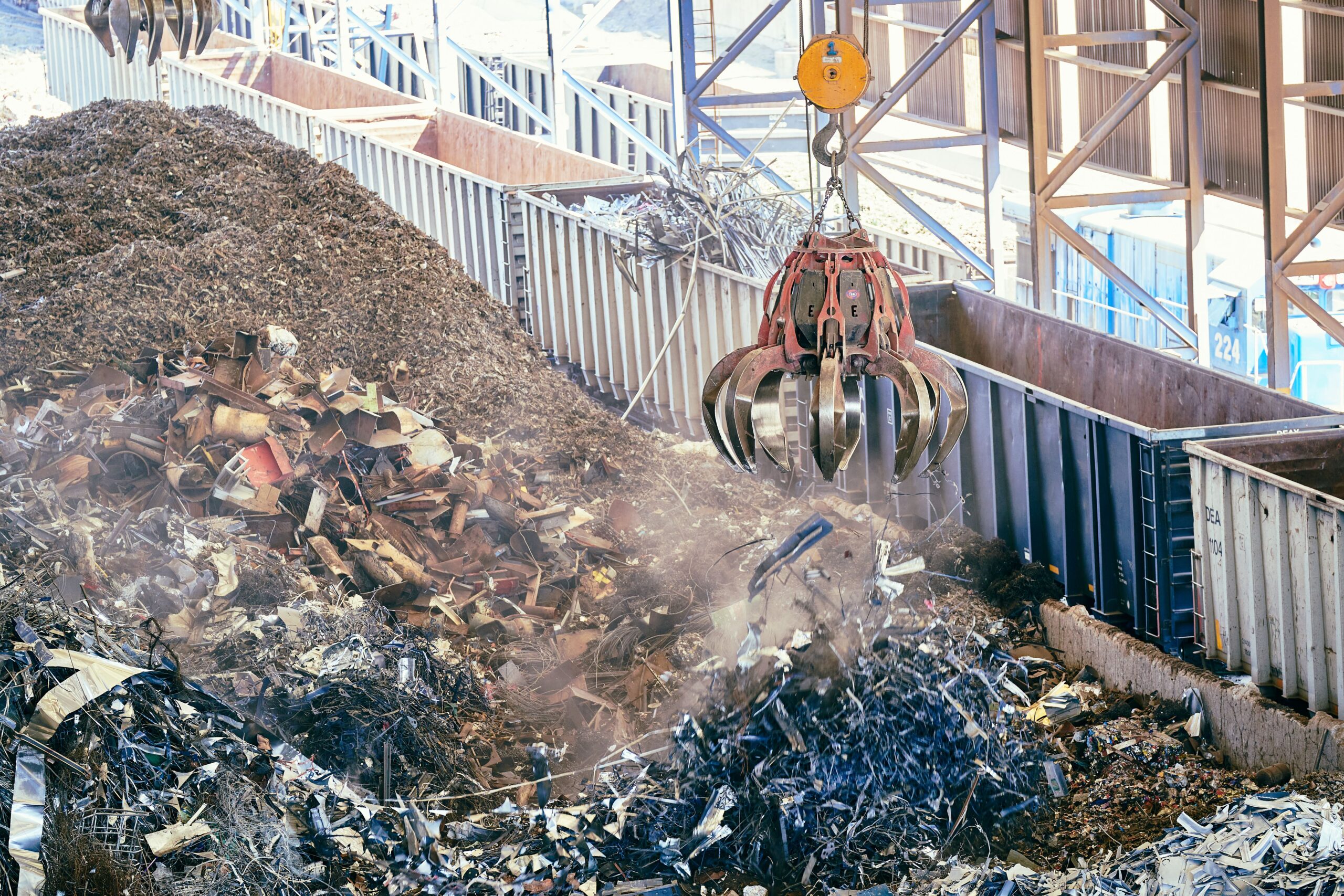
Copper is particularly suited to closed-loop industrial recovery because it can be remelted repeatedly without the fundamental degradation associated with some composite materials. The more difficult engineering task is separating useful copper from insulation, coatings, fasteners, oils, other metals, and mixed scrap streams before it reaches the furnace.
Production scrap generated within ASTA’s own factories has a relatively well-understood origin and composition. Customer returns and external scrap may require more inspection, sorting, and preparation before they can enter a process intended to make high-conductivity electrical products.
That quality requirement distinguishes conductor recycling from simple metal recovery. ASTA’s products need controlled electrical conductivity, surface condition, dimensional accuracy, and mechanical properties, so secondary feedstock cannot be treated as an undifferentiated commodity.
Scrap has to be sorted, treated, remelted, refined, cast, and converted into wire with sufficiently consistent chemistry for later forming and insulation processes. Contaminants that would be tolerable in lower-value applications can be unacceptable where resistance, winding behaviour, or long-term transformer performance is affected.
Traceability therefore has a direct manufacturing value. If ASTA knows the origin and alloy condition of material returning into its system, it can decide where that copper can be reused and what additional processing is required before it re-enters production.
The investment comes as European electricity infrastructure requires increasing quantities of conductive material. Grid reinforcement, transformers, generators, electric motors, charging infrastructure, renewable generation, and data-centre power systems all add to demand for copper.
ASTA sits directly inside that expansion through its transformer and generator conductors. Increasing the amount of secondary copper available to its factories gives the company another route to material supply as electrical-equipment manufacturers work through long order books.
Europe remains dependent on imported copper and copper-containing products despite a substantial recycling sector. ASTA says roughly half of the copper currently used in Europe already comes from recycled material, but rising electrification increases the value of retaining existing metal within regional industrial loops.
Recycling will not remove the need for primary production. Material is lost during collection and processing, some scrap is exported, and certain applications require chemistry that cannot always be achieved economically from available secondary feedstock alone.
The 70% target therefore represents a substantial increase in recycled content rather than independence from the broader copper market. Primary and externally purchased metal will continue to play a role where quality or supply conditions require it.
ASTA’s main opportunity is to reduce the number of external processing stages between scrap generation and finished conductor production. Each additional stage introduces transport, processing cost, inventory, and dependence on third-party capacity.
Bringing more of that conversion into Oed should give the company better visibility over material quality and availability while allowing recovered copper to move more directly into its own manufacturing system.
The long implementation timetable reflects the scale of the change. Ordering equipment in 2026 for production towards the end of 2029 gives ASTA time to configure machinery, redesign material flows, qualify secondary wire, and establish the scrap-supply agreements needed to keep the new line utilised.
The project will ultimately be judged by the quality of the copper loop rather than the headline recycling percentage alone. Recovering metal is useful; returning it to demanding electrical applications without compromising conductivity or process consistency is where the industrial value is created.