Pinta Energy has acquired seven UK anaerobic digestion facilities from Generate Capital, adding an established portfolio of waste-processing and renewable-energy assets to a British biogas platform that is already expanding.
The acquisition forms the UK part of Generate Capital’s disposal of Generate Upcycle, its 12-site organic-waste platform. Vanguard Renewables is separately acquiring five facilities in the US and Canada, while Pinta has taken the complete seven-site British portfolio. Financial terms for the UK transaction have not been disclosed.
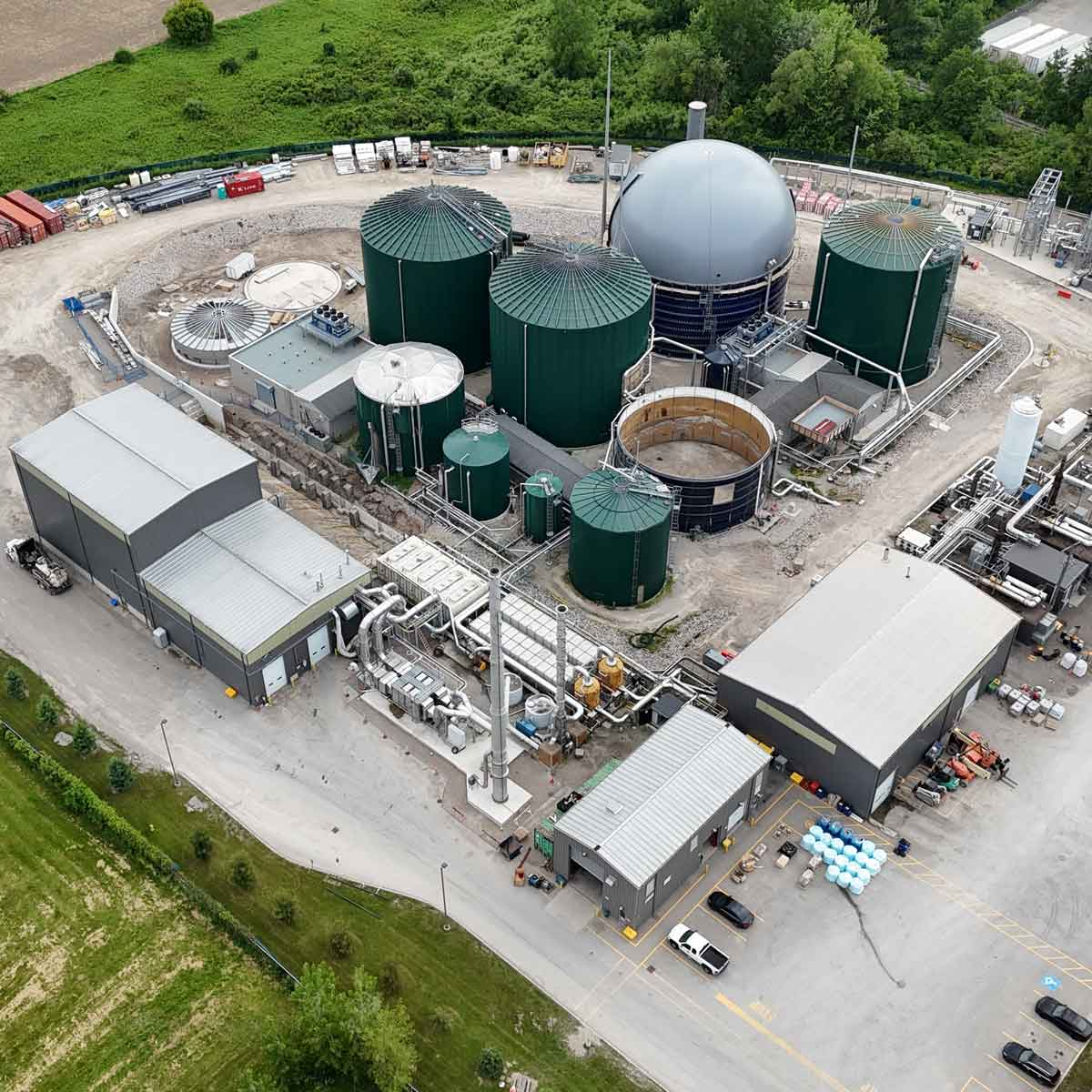
The assets are AVG Imperial in Middlesbrough, Biopower in Hartlepool, Buchan in Blackhills, Fernbrook in Kettering, Corner in Norfolk, Fraddon in Cornwall, and Stafford in Norfolk. The UK plants process combinations of food waste, agricultural residues, and energy crops to produce renewable energy and biofertiliser, with some sites also being developed to increase renewable natural gas output.
Pinta is part of ABIO Group, a pan-European biogas platform backed by Asterion Industrial Partners. The transaction gives the group a larger operating base in the UK rather than a portfolio made up only of projects awaiting construction.
Pinta had already announced the acquisition of Brains Farm Renewable Energy in Somerset earlier in September. That plant produces around 50GWh of gas annually for injection into the UK network, so the Generate Upcycle deal materially increases the number and geographical spread of operating assets under Pinta’s control.
Generate has spent a decade building its organic-waste business. It says the wider 12-site Upcycle platform processed more than 871,000 tons of food and agricultural waste during 2025 and generated more than 365,000MWh of renewable energy, including 1.1 billion cubic feet of renewable natural gas. Those figures cover the full UK and North American portfolio rather than the seven British sites alone.
Anaerobic digestion plants combine waste handling, biological processing, gas treatment, and distributed energy production. Feedstock is received, checked, and prepared before entering digesters, where biological conversion produces methane-rich biogas. Depending on the site configuration, the gas can be burned in combined heat and power equipment or upgraded by removing carbon dioxide and contaminants to produce biomethane suitable for the gas grid.
The remaining digestate can be processed for agricultural use where specifications and regulation allow. That makes operating performance dependent on several outputs rather than electricity or gas alone, with feedstock quality affecting biological stability, gas yield, digestate quality, and equipment wear.
Variability is one of the principal operating challenges. Changes in food waste or agricultural material can alter the behaviour of the digesters, while contamination can damage preprocessing equipment or reduce the value of the digestate. Reliable pumping, mixing, heating, gas treatment, and process control are therefore as important as headline plant capacity.
Portfolio ownership creates opportunities to standardise maintenance, procurement, monitoring, and engineering across several plants, but the seven sites cannot be operated as if they were identical. Feedstock contracts, local planning conditions, grid connections, digestate outlets, and plant designs differ by location.
The geographical spread gives Pinta access to several waste catchments while making integration more complex. Central procurement and common maintenance practices can reduce costs, but biological process control remains dependent on what each plant receives and how consistently operators manage loading rates, retention time, temperature, and equipment availability.
Generate Upcycle has also been investing in renewable natural gas capability at parts of the UK portfolio, including infrastructure development at Fernbrook and Buchan. That gives Pinta the option to increase the proportion of output converted into grid-quality biomethane where upgrading equipment, grid connections, and commercial contracts support the economics.
The choice between power generation and biomethane is an asset-level decision. Combined heat and power can provide useful electricity and thermal energy, while gas upgrading allows energy to be injected into the network and used elsewhere. The best route depends on equipment already installed, grid capacity, gas quality, subsidies, feedstock supply, and local energy demand.
Generate Capital said the sale allows it to recycle capital towards power infrastructure for large energy users while placing the Upcycle assets with operators focused on their next phase of development. For Pinta, attention now moves from transaction completion to plant availability, feedstock security, and the scope for further biomethane investment.
The assets are already operating, so their contribution will be measured through reliability rather than the pace of planning approvals. The acquisition gives Pinta immediate production and a larger position in UK anaerobic digestion, but it also inherits seven sets of biological, mechanical, commercial, and local operating conditions.
Integration will therefore depend on how much common engineering and commercial practice can be introduced without losing the site-specific feedstock relationships on which anaerobic digestion depends. If Pinta can lift availability and expand higher-value gas production where it is technically justified, the acquired plants provide a substantial base for the group’s UK biogas strategy.