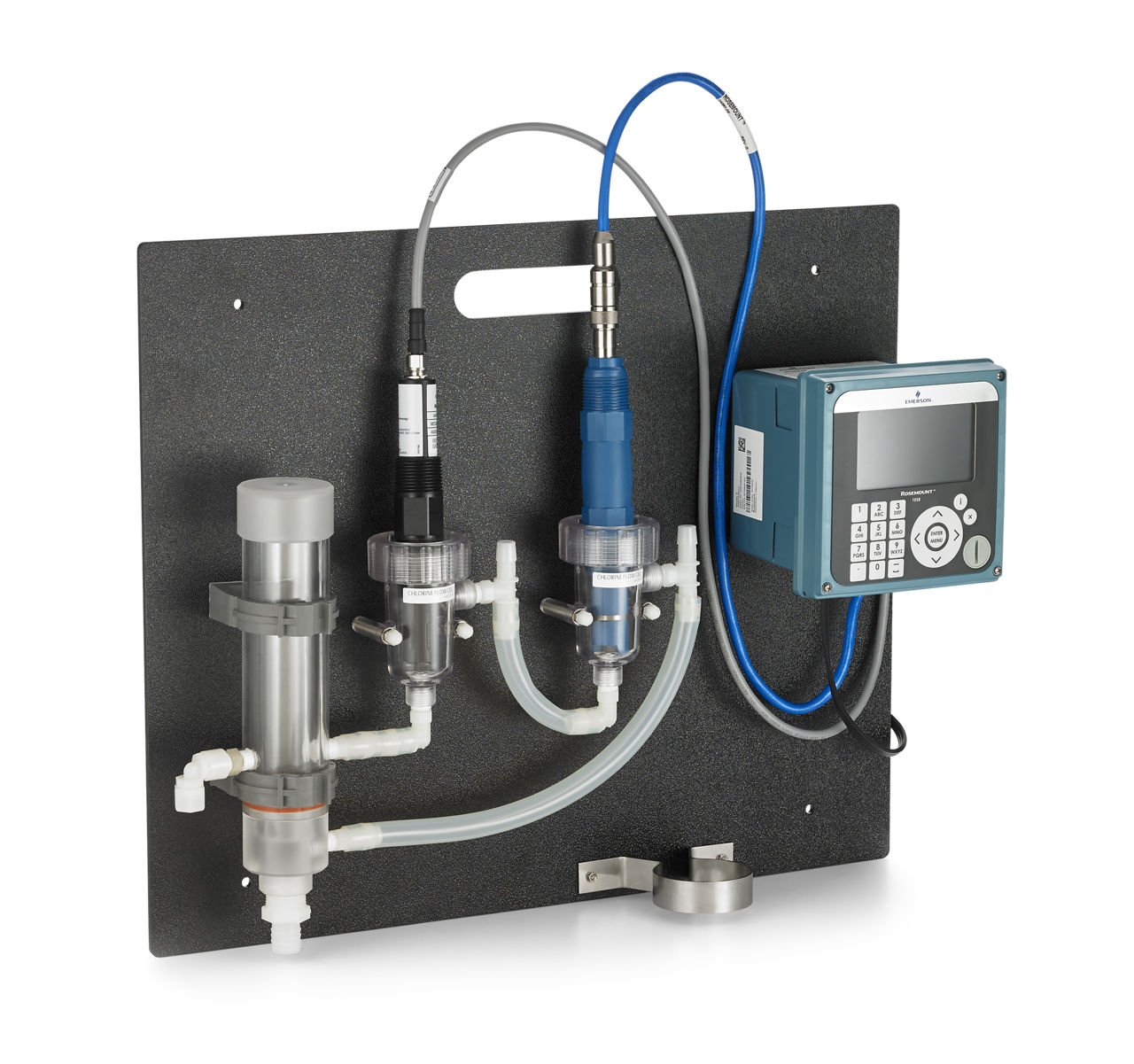
Emerson has launched the Rosemount 105P Standard Liquid Panel Systems, introducing a configurable range of pre-engineered assemblies intended to reduce the engineering and field work required for common water-quality measurements. The panels combine transmitters, sensors, cabling, flow cells and flow-control hardware into factory-built systems rather than requiring each element to be specified and assembled individually on site.
The architecture is aimed at measurements including pH, oxidation-reduction potential, dissolved oxygen and chlorine. Emerson is positioning the 105P between loose components assembled by a contractor or plant engineering team and a fully bespoke analytical-panel project.
That distinction addresses a routine but often underestimated part of process instrumentation. Liquid analysis can appear straightforward because the final output may be a single pH, oxygen or chlorine value, but the reliability of that measurement depends on more than the sensor itself.
Sample flow, mounting, transmitter configuration, cabling, fittings and the physical environment around the measurement can all affect performance. A poorly engineered sample arrangement can undermine an otherwise capable instrument, while small differences between installations can make maintenance progressively harder across a large site.
Field-built systems also introduce variation. Two plants may specify the same analytical measurement but assemble it using different valves, flow cells, mounting layouts and cable arrangements. The first installation may work correctly, but repeated one-off engineering creates several versions of what is nominally the same measurement point.
The Rosemount 105P is intended to reduce that variation by using a repeatable physical architecture. Sensors, transmitters and flow components arrive as an integrated assembly, allowing organisations to define an approved configuration and reproduce it across several applications or sites.
Emerson says the approach can reduce specification, ordering and assembly work and shorten the route from project definition to commissioning. Its internal estimate suggests engineering and assembly time can be cut by as much as 90% on repeat deployments compared with comparable field-built systems.
The figure is explicitly based on Emerson’s own comparison and will vary with application, configuration and site conditions. A simple panel assembled by an experienced site team presents a very different baseline from a complex installation requiring substantial custom design.
Peyton Munoz, global product manager for liquid analysis at Emerson, said: “The Rosemount 105P panel systems give customers a standardised option between loose components and fully custom-engineered panels, helping them standardise common water quality applications while maintaining flexibility for their measurement needs.”
Factory assembly also changes where common commissioning problems are addressed. Emerson says the panels are assembled, tested and documented before shipment, providing a more consistent sample environment and reducing field work around fittings, component placement and basic configuration.
The advantage becomes more significant where the same analytical requirement appears repeatedly. A manufacturer operating several process-water, treatment or utility systems may otherwise engineer each measurement point independently, creating small differences that later complicate spares, training and fault finding.
A repeatable panel gives engineering teams a defined starting point while still allowing the measurement technology to be selected for the process. Standardisation therefore applies to the deployment architecture rather than forcing every application to use the same sensor.
The product does not remove the maintenance associated with liquid analysis. Sensors remain exposed to process conditions and can require cleaning, calibration or replacement according to the measurement method and sample environment.
Flow cells can foul, lines can block and measurement performance can drift over time. Standard hardware makes those interventions more consistent, but it does not make the analytical system maintenance-free.
That distinction is particularly important where measurements support process control or regulatory compliance. A plant still has to define calibration intervals, alarm limits, verification procedures and the response to sensor failure. If a pH, chlorine or oxygen measurement controls dosing or demonstrates discharge compliance, reliability carries an operational consequence beyond the instrument itself.
The Rosemount 105P can support up to two sensors within a panel configuration, giving users a route to combine analytical measurements without moving immediately into a larger custom system. Emerson is targeting industrial and municipal water applications, where the same measurements are commonly repeated across treatment stages and utility systems.
There is also a procurement benefit. Buying one configured assembly reduces the number of separate line items that have to be specified, ordered, received and checked. On larger programmes, that can remove a substantial amount of administrative work around what would otherwise be several individually managed components.
For engineering contractors and system integrators, the same approach can shift effort towards application design rather than physical assembly. Selecting the correct measurement location, materials and sensor technology remains necessary, but less time has to be spent reproducing a standard mechanical arrangement.
The potential saving increases when the same configuration is used repeatedly. Standardised panels are less compelling for a unique analytical installation but more attractive where plants want a common design that can be installed several times with predictable documentation and maintenance requirements.
The Rosemount 105P is available now. As deployment moves beyond initial orders, the useful evidence will come from repeat projects where users can compare engineering hours, commissioning variability and maintenance effort against their previous field-built arrangements.
Emerson’s 90% figure sets an ambitious reference point, but the more durable advantage may be less dramatic: removing repeated engineering from measurements that are commonplace enough to be standardised, yet important enough to cause operational problems when every installation is built slightly differently.