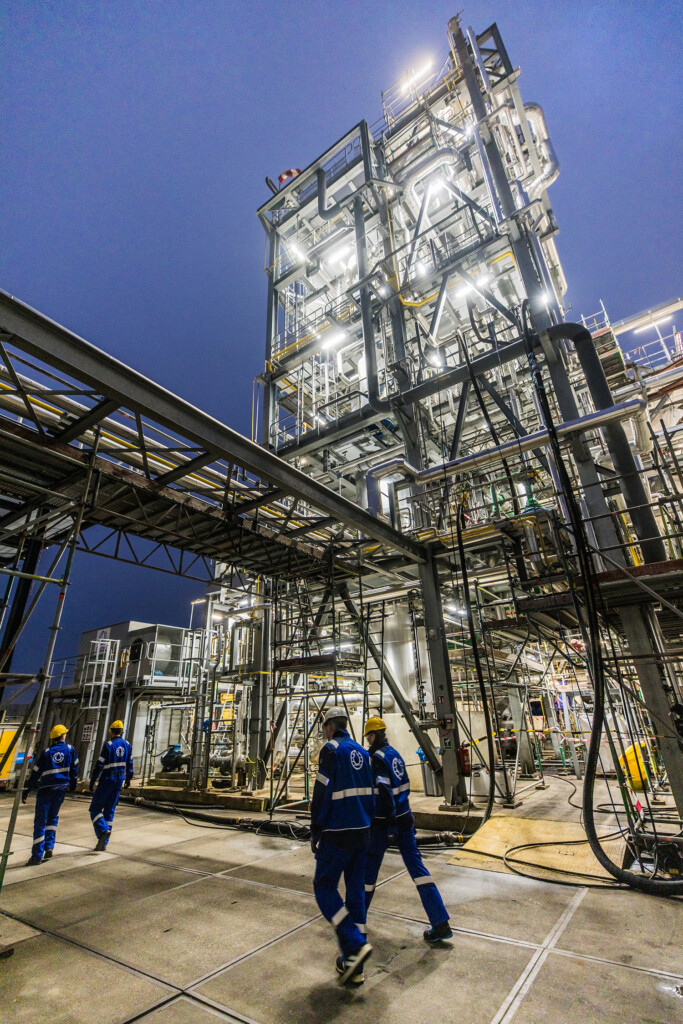
EMV Capital has acquired the Pryme One plastic chemical recycling plant at the Port of Rotterdam through newly formed subsidiary Winalot BV, with approximately £6 million of additional investment proposed to return the facility to commercial operation.
The plant was developed at a reported capital cost exceeding €50 million and reached mechanical completion in 2023. Commissioning followed in 2024, with the facility producing and selling pyrolysis oil before operations stopped in March 2026 following critical problems with its reactor technology.
Winalot has acquired the plant and associated intellectual property from members of the Pryme group for an undisclosed consideration. EMV Capital says the acquisition itself was debt funded, while a separate financing package will be required for the proposed engineering work and restart.
The proposed modification centres on technology developed by DeepTech Recycling, another EMV Capital portfolio company. DTR has developed a proprietary fluidised-bed reactor which it believes can be retrofitted into the Rotterdam plant to replace the process equipment associated with its previous operating problems.
Winalot estimates that the facility could return to operation within approximately 18 months if funding is secured, commercial terms with DTR are agreed, and the retrofit performs as expected. Each of those conditions remains material to the timetable.
The existing infrastructure is central to the economics of the proposal. Building a chemical processing plant from an undeveloped site requires civil works, storage, utilities, environmental permits, safety systems, process equipment, trained operators, commissioning, and connections to suppliers and customers.
Pryme One already occupies an industrial site in Rotterdam’s Botlek area alongside refineries and chemicals producers. Shared utilities, operating support, environmental infrastructure, and logistics reduce the amount of supporting equipment that must be recreated before the recycling process itself can be restarted.
The planned £6 million retrofit is therefore small compared with the reported original development cost, although the figure does not remove the technical risk associated with replacing a critical part of an integrated process plant.
For DeepTech Recycling, a successful retrofit would create a commercial-scale reference installation. EMV Capital holds a direct interest in DTR and manages an additional interest for third-party investors, while Winalot now controls the physical facility proposed for the deployment.
Chemical recycling has attracted industrial investment because pyrolysis can process plastic streams that are difficult to return to useful material through conventional mechanical recycling. The process heats hydrocarbon-based waste in the absence of oxygen, creating oils and other fractions that can potentially return to petrochemical production.
Commercial performance is less straightforward than the underlying chemistry. Mixed plastic waste introduces variation in composition, contamination, moisture, additives, halogens, and particle size. Plant economics then depend on reactor availability, energy consumption, feedstock preparation, maintenance, product yield, and the consistency of the resulting oil.
An installation can therefore demonstrate that it is technically capable of producing pyrolysis oil without operating reliably enough to become an economic industrial plant. Extended downtime, unstable feed, maintenance problems, and inconsistent product quality can quickly overwhelm the value recovered from waste material.
Pryme One is an unusually direct test of that divide. The surrounding plant has already been built and commissioned, and commercial product was produced before the reactor problem stopped operation. Winalot is not attempting to demonstrate every stage of the process from laboratory scale; it is attempting to replace a specific technical constraint within an existing industrial system.
The Botlek location provides another advantage through proximity to chemical customers, feedstock sources, logistics infrastructure, and industrial services. Pyrolysis oil has more value when it can move readily into an established petrochemical chain rather than requiring a separate transport and processing network to be created around it.
Funding remains unresolved. EMV Capital has indicated that the restart could draw on debt, equity, grants, or other non-dilutive support, while definitive commercial arrangements with DTR still have to be completed.
Installation will then require the new reactor to be engineered around equipment designed for a different system. Interfaces covering feed handling, heat transfer, controls, product recovery, utilities, emissions, safety systems, and maintenance access will determine whether the retrofit can behave as part of the existing plant rather than as an isolated piece of equipment.
The proposed 18-month programme consequently remains a target rather than a commissioning date. Successful execution would give EMV Capital an operating recycling asset and DTR a full-scale reference plant. Failure would leave the project with much the same problem that stopped a €50 million-plus facility before the acquisition.