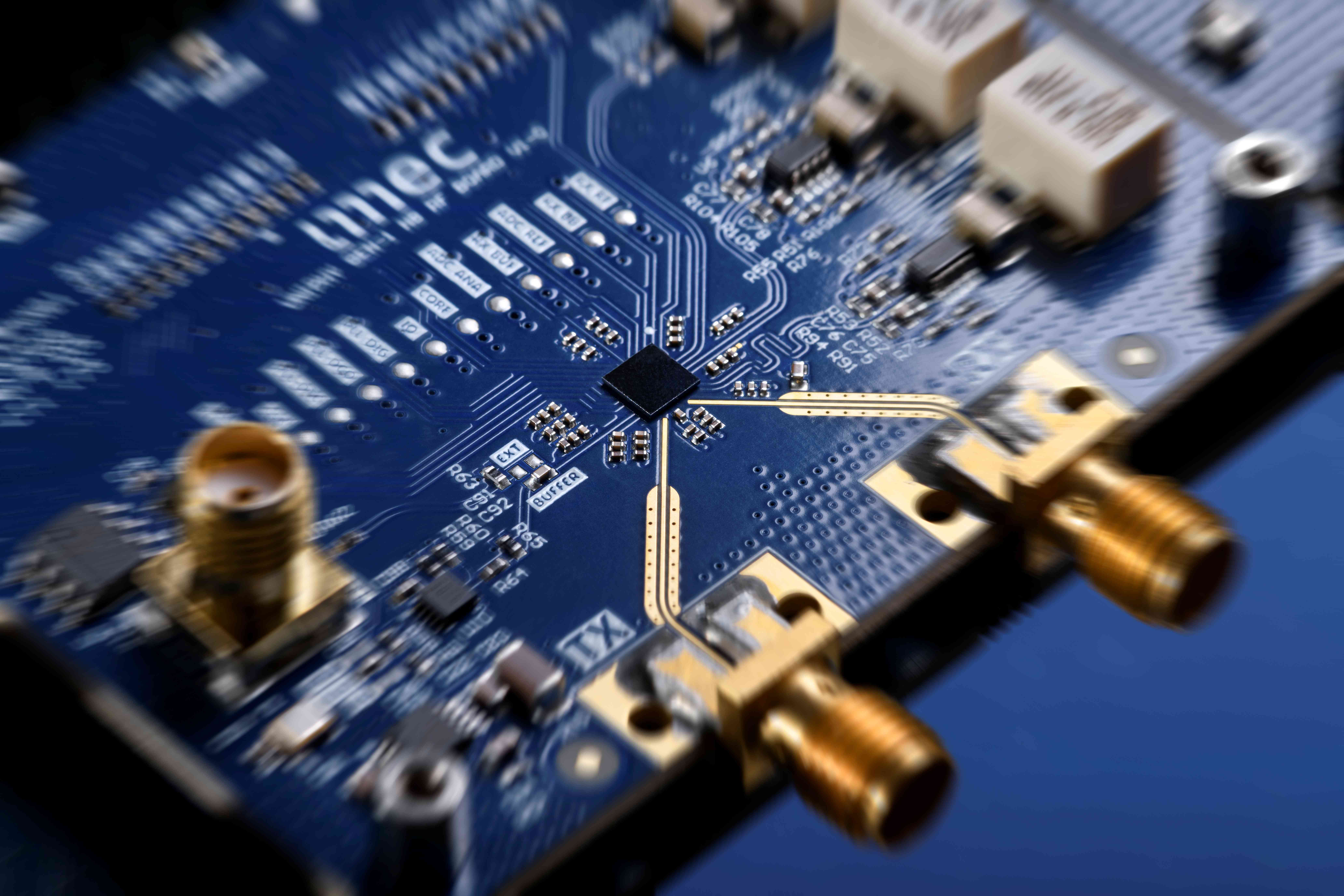
Sivers Semiconductors is investing $30 million to expand its indium phosphide manufacturing operation in Glasgow, increasing internal production capacity for lasers used in AI data-centre and optical-networking applications.
The expansion is scheduled to begin during the second half of 2026 and become operational in the fourth quarter of 2027. Sivers expects the enlarged facility to support annual production of more than 100 million continuous-wave distributed feedback lasers, while adding process capability, automation, and manufacturing flexibility.
The programme also marks a change in the company’s production structure. Sivers is shifting its photonics business from a fab-lite model towards what it calls hybrid manufacturing, combining a larger internal production base with foundry, packaging, and manufacturing partners outside the company.
External capacity will remain central to that strategy. Sivers already works with manufacturing partners in Asia and said in its second-quarter update that its longer-term objective is to maintain roughly twice as much partner-foundry capacity as internal capacity for indium phosphide lasers. Glasgow is therefore being expanded as part of a broader supply network rather than developed as a self-contained replacement for contract manufacturing.
The investment arrives as several Sivers customer programmes approach production decisions. Product revenue increased 18% year on year on a constant-currency basis during the second quarter, while the company’s stated opportunity pipeline reached $1.2 billion at the end of July. That pipeline is non-binding, but it gives some indication of the volume of prospective programmes the company is attempting to support.
Sivers has already secured production orders in other parts of the business, including an $8.2 million order from ALL.SPACE and an initial $3 million order from Tachyon Networks. In photonics, an initial $3.4 million programme with SemiNex is targeting indium phosphide light sources for AI data-centre applications, while its work with Jabil is expected to reach beta builds during the fourth quarter of 2026.
The latter programme is due to move through customer qualification before anticipated production orders in the first half of 2027 and a production ramp later that year. That timetable overlaps closely with the Glasgow expansion, leaving Sivers to add manufacturing equipment and qualify processes before final customer volumes are fully established.
Vickram Vathulya, president and chief executive officer of Sivers Semiconductors, said: “Our customers need significantly more laser production capacity and, just as importantly, the confidence that supply will be there when their programs ramp.”
Manufacturing capacity in compound semiconductors cannot normally be added at the point a customer asks for volume. Equipment has to be installed and commissioned, processes stabilised, production yields established, and output qualified before a new line can contribute consistently to commercial deliveries.
Those constraints become more pronounced when an internal factory and external foundries are expected to manufacture related devices. Process control, material specifications, test methods, and quality systems need to produce sufficiently consistent output across sites if customers are to treat the combined capacity as one dependable supply base.
The Glasgow investment is being aimed particularly at continuous-wave DFB lasers. These devices provide the optical source for communications architectures where wavelength control and stable output are required, and Sivers is positioning them across pluggable optics, near-packaged optics, and co-packaged optical systems.
Its recent commercial activity reflects the variety of architectures still being developed for AI infrastructure. Sivers said in August that it had sampled customers using 70mW and 100mW continuous-wave lasers and arrays, while it is also working on higher-power devices for systems intended to place optical functions closer to GPUs and switching silicon.
The company has already broadened its approach once as optical architectures have evolved. During 2025, Sivers expanded its focus beyond co-packaged optics to support pluggable products, and it now reports customer engagement in near-packaged optical configurations as well. That creates a manufacturing requirement for flexibility as well as headline capacity: a plant built around one product assumption can become an expensive constraint if customers converge on another.
A separate Sivers and SemiNex programme is already working towards production-oriented indium phosphide light sources, adding another possible demand stream for the Glasgow operation as customer sampling progresses.
The immediate industrial question is therefore not whether demand for AI infrastructure exists, but how much of Sivers’ prospective optical pipeline converts into qualified orders and how closely those ramps match the arrival of new manufacturing capacity.
More than 100 million lasers a year is a substantial stated capability. By the fourth quarter of 2027, the more useful figures will be qualified output, production yield, external-foundry utilisation, and the volume of repeat customer orders flowing through Glasgow.