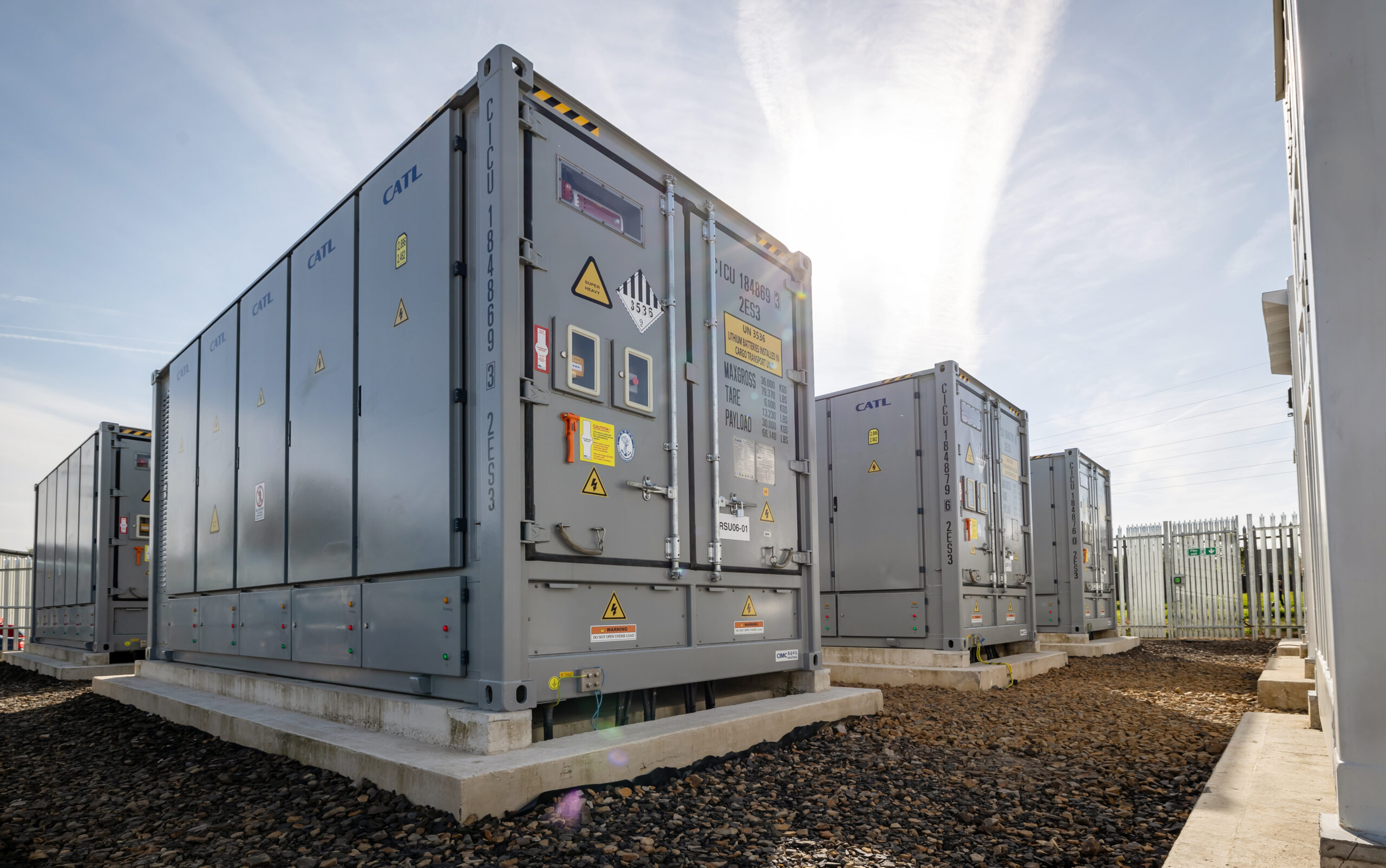
UK energy technology platform iON+ has formed a partnership with ACCURE Battery Intelligence to simplify the transfer of high-frequency operating data from battery energy storage systems into independent analytics, with corrected values able to flow back towards asset-management and trading systems.
The agreement addresses a practical integration problem across battery portfolios. Owners can operate assets built around different battery management systems, energy management systems, power conversion equipment and original equipment manufacturers, leaving data in different formats and at different levels of granularity before portfolio-wide analysis can begin.
iON+ was developed by Conrad Energy and combines monitoring, dispatch, optimisation and analysis functions for flexible generation, renewable energy and storage assets. Under the partnership it will provide data services and support to ACCURE customers, acting as a bridge between site-level systems and the battery analytics platform.
The companies say the connection can extract and record high-frequency BESS data and transfer it to ACCURE in near real time. The bridge can also return corrected values such as State of Energy, giving asset owners another input for dispatch and trading decisions rather than leaving the analytics in a separate diagnostic environment.
State of Energy is related to, but not identical with, State of Charge. SoE expresses the usable energy expected from a battery, usually in energy units, while SoC describes charge level relative to a defined capacity. Both depend on estimates derived from measurements and models, and both can become less reliable as cells age, operating conditions change or racks diverge from one another.
That distinction matters because the commercial example used to support the partnership comes from ACCURE’s State of Charge correction work at Gore Street Capital’s Dogfish battery in Texas. The 75MW, one-hour system operates in ERCOT, where dispatch instructions and prices can change quickly enough for a modest estimation error to affect the amount of energy offered into a valuable interval.
ACCURE analysed operating data from June to August 2025 and identified one discharge opportunity in which 3.8MWh of tradable energy remained unused because the reported SoC did not reflect the battery’s true deliverable capacity. The company estimates the missed revenue from that single event exceeded $1,000.
Based on the historical analysis, ACCURE projects an annual financial benefit above $110,000 from improved SoC accuracy at Dogfish, equivalent to a little over 5% of average BESS trading revenues under the benchmark used in its case study. Corrected values went live at the site in July 2026 without additional hardware.
Those figures are company estimates rather than an independently audited forecast, and ERCOT’s five-minute Security-Constrained Economic Dispatch market cannot be mapped directly onto Great Britain or other electricity markets. The operating principle is broader: if a battery’s control and trading systems have an inaccurate view of usable charge or energy, operators can either leave capacity idle or commit more than the asset can deliver.
The first outcome sacrifices revenue, while the second can create dispatch errors or penalties. Across a portfolio, small errors repeated through thousands of intervals can become material even when no individual battery has suffered a conventional equipment failure. Better data quality therefore has a commercial role alongside the more familiar safety and maintenance uses of battery analytics.
ACCURE describes its platform as OEM-agnostic and says it supports more than 24GWh across more than 100 BESS sites. It analyses data from battery management, energy management and power conversion systems down to individual unit or cell level, looking for changes in availability, efficiency, degradation, safety and charge behaviour that may not be obvious from higher-level plant dashboards.
iON+ approaches the same asset from a different layer. Conrad Energy uses the software to monitor assets, dispatch them remotely, support trading strategies and combine operating information into a common view. Its value in the partnership is therefore less about creating another battery-health model and more about acquiring, normalising and moving data between systems that owners already use.
Rhys Kirk, chief technology officer at iON+, said the two companies had already worked together and that ACCURE’s analytics had been tested through that relationship. Yannick Gindroz, head of partnerships at ACCURE, said iON+ brought experience in extracting and transferring high-granularity data, reducing the integration burden for customers.
Integration is often the less visible part of digital asset management. A sophisticated analytics model is of limited use if engineers have to export files manually, if data arrives too slowly for operational decisions or if each site requires a bespoke connector that becomes another maintenance liability. Conversely, a fast data bridge does not create value unless the analysis returned through it is reliable enough to influence real dispatch and maintenance decisions.
The partnership therefore sits between two established software functions rather than claiming to replace either. iON+ handles operational and portfolio data alongside dispatch and optimisation; ACCURE focuses on battery condition and performance. If the interface works as intended, owners should be able to move from a detected battery discrepancy to an operational response with less manual translation between systems.
That becomes more important as storage portfolios grow. Large BESS projects continue to add installed capacity, but commissioned megawatt-hours only earn when they remain healthy, visible and dispatchable. A data bridge cannot repair a weak cell or increase the nameplate rating of a site. It can, however, determine whether the control and trading systems have an accurate enough picture of the battery to use the capacity that is already there.