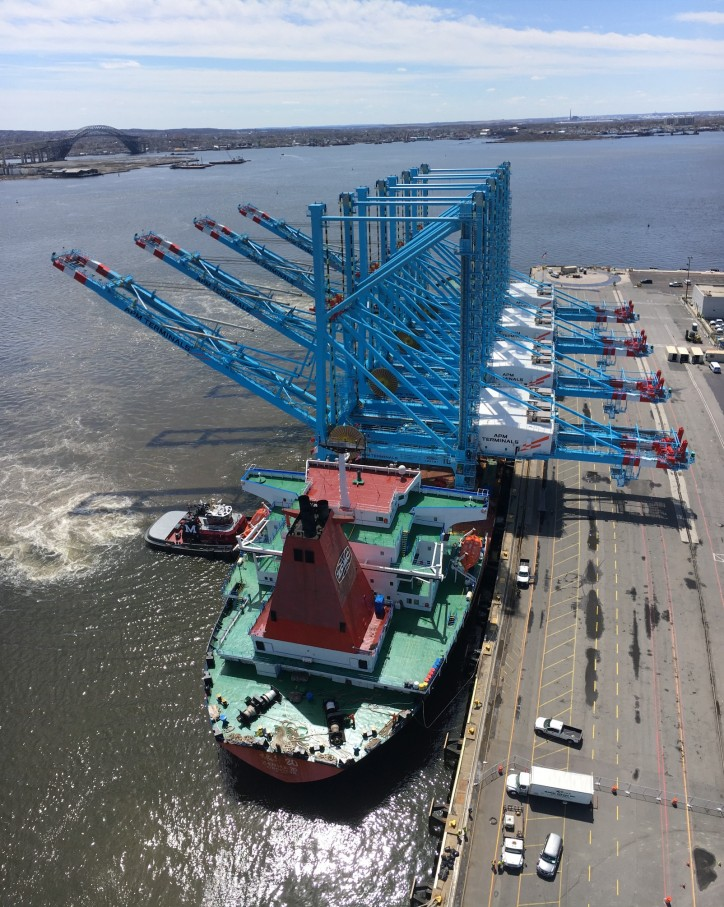
Konecranes will supply 34 battery-electric rubber-tyred gantry cranes to APM Terminals Elizabeth in the Port of New York and New Jersey, with an option covering six further machines. Deliveries are scheduled in stages through the end of 2028 as the terminal increases yard capacity and replaces more of its container-handling equipment with electrically powered systems.
The order was booked during the second quarter of 2026 and covers E-RTGs using onboard battery packs rather than the diesel generating sets traditionally fitted to rubber-tyred gantry cranes. APM Terminals is incorporating the fleet into a wider programme intended to improve container flow, equipment reliability, operational flexibility, and site capacity.
RTGs work inside the container yard, lifting boxes between stacks and the trucks or terminal vehicles moving them around the site. Their rubber tyres allow them to move between operating lanes, giving terminals greater flexibility than fixed rail-mounted yard cranes, but conventional machines have historically carried their own combustion engines to generate electrical power.
Battery operation changes that architecture. Hoisting, trolley movement, steering, travel, auxiliary equipment, and controls still require substantial energy, but electricity is stored onboard rather than generated continuously at each crane. Local exhaust emissions and diesel-engine fuel consumption are removed during normal electric operation, while batteries, chargers, power electronics, and grid infrastructure become more prominent parts of the system.
For an individual machine, that transition can be described mainly in terms of the powertrain. Across a confirmed fleet of 34 cranes, it becomes an infrastructure project. Charging has to be coordinated with yard operations, peak electrical demand has to remain manageable, and enough cranes must stay available while others replenish their batteries.
That makes charging strategy an operational issue rather than a separate utility concern. Container terminals are built around continuous equipment flows, and a crane unavailable at the wrong time can affect truck queues, stack access, and vessel operations elsewhere in the terminal. Electrification has to fit the handling process rather than forcing the process around the charging system.
The staged delivery programme through 2028 provides time for the terminal to introduce equipment progressively. It also reduces the risk of replacing a large part of the yard fleet at once, allowing operating practices, maintenance routines, charging schedules, and workforce training to develop as more machines enter service.
Konecranes and APM Terminals Elizabeth have worked together for more than 20 years, and some of the earliest equipment supplied under that relationship remains in operation. That service history is important because port cranes are long-lived capital assets exposed to heavy duty cycles, weather, structural fatigue, repeated lifting, and a demanding maintenance environment.
Electrification does not change those mechanical requirements. Structures, wheels, hoists, brakes, spreaders, and lifting systems still have to deliver the same fundamental work, but the change in power architecture introduces a new lifecycle question around batteries and electronic systems whose service lives may differ substantially from the crane structure.
A terminal buying battery-electric equipment therefore has to consider replacement strategies well before the steel structure reaches the end of its useful life. Battery packs may need renewal, charging standards may evolve, power electronics can become obsolete, and control systems will pass through software and hardware updates while the mechanical crane continues operating.
That is a familiar problem across industrial electrification. Mining trucks, heavy road vehicles, construction equipment, and port machinery are all moving towards power systems in which electrical and software components develop on faster cycles than the underlying machine. Asset management increasingly has to accommodate both.
The Elizabeth order is significant because its scale moves the technology beyond a single demonstration unit. One battery-electric RTG can establish whether the concept works; 34 machines change the terminal’s electrical load, spare-parts inventory, technician training, charging behaviour, operating procedures, and dependency on a common equipment platform.
Standardisation across the fleet can reduce some of that complexity. Common components and diagnostic systems can simplify maintenance and training, while operators gain more experience with a consistent control environment. The trade-off is greater exposure if a common battery, software, or component issue affects multiple machines simultaneously.
The option for six additional cranes would take the programme to 40 units, although those machines are not yet part of the confirmed order. Even without them, the project represents a sizeable manufacturing and commissioning programme extending over more than two years.
Installation is only one element. Each crane has to be shipped, assembled or commissioned as required, tested against lifting and safety requirements, integrated into terminal operating procedures, and supported once in service. Charging equipment and electrical distribution also have to be available on the same timetable.
For APM Terminals, the expected benefits extend beyond emissions. Electric drive systems can reduce some engine-related maintenance while providing the precise control already associated with electrically driven crane functions. The more important operational measure will be whether the fleet delivers the availability required during busy yard periods without charging becoming another constraint on equipment scheduling.
The project therefore links port decarbonisation with conventional industrial questions about utilisation, maintenance, infrastructure, and lifecycle cost. Replacing diesel generation with batteries changes the source of energy, but it does not reduce the terminal’s requirement for cranes that are ready when containers need moving.
By the end of 2028, Elizabeth should have enough battery-electric RTGs in operation for that performance to be judged at fleet scale. The real measure will not be the number of engines removed from the yard, but whether the new electrical system can support the same relentless requirement placed on the old one: lift the box, move it, and be ready to do it again.