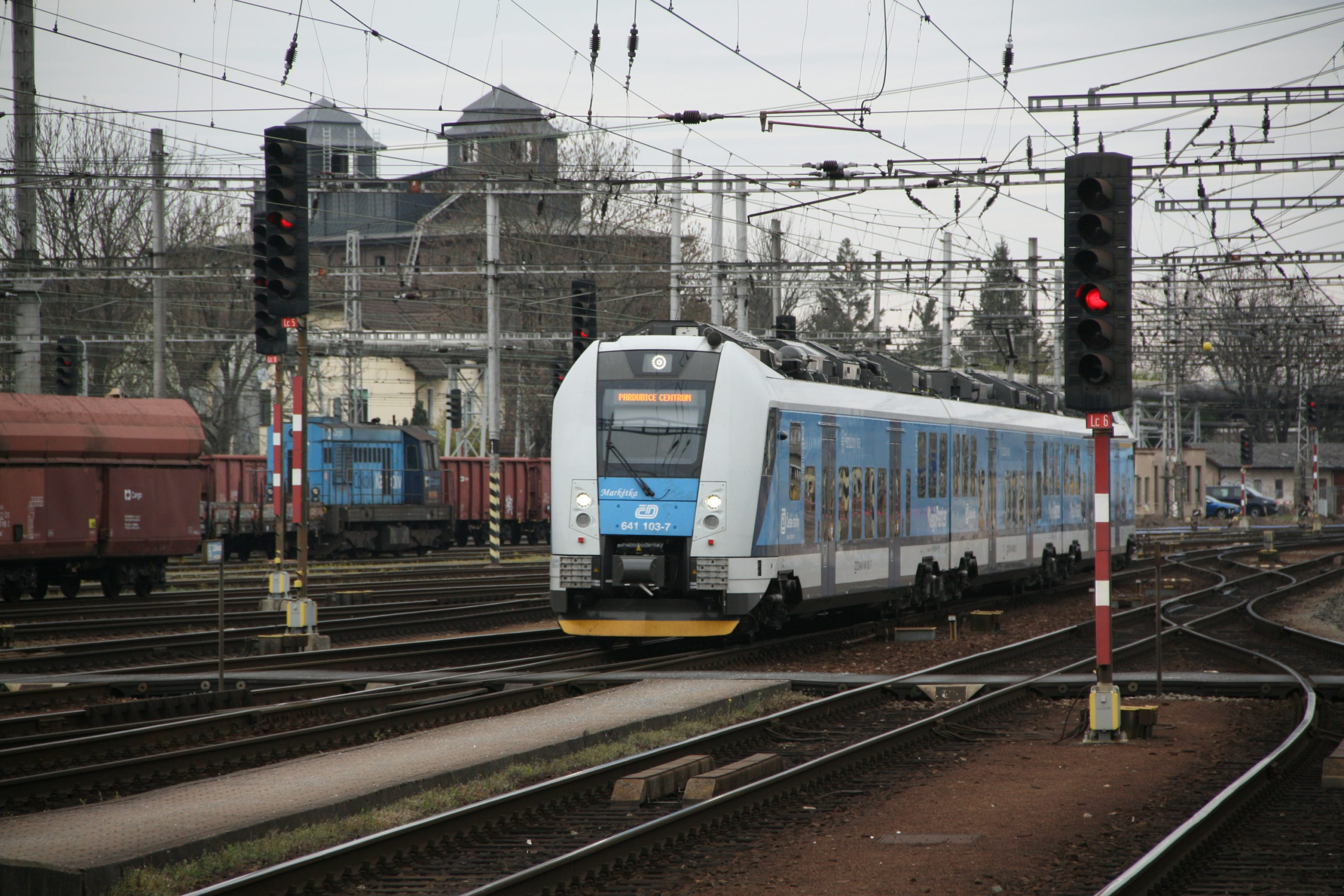
Italy’s rail safety regulator ANSFISA has authorised the first Stadler SRBe 312 battery-electric trainset for passenger service on the 950 mm gauge network operated by Ferrovie Appulo Lucane, moving the seven-unit programme from testing towards regular operation in southern Italy.
The train built by Stadler is expected to operate primarily on the 27.4 km Altamura–Matera route, where battery traction allows electric operation without continuous overhead electrification. Fast-charging infrastructure is being developed at Altamura and Matera as part of the programme.
Ferrovie Appulo Lucane ordered seven tailored battery trains during 2023 and 2024. The first unit was unveiled at EXPO Ferroviaria in Milan in October 2025 before entering the testing required for ANSFISA authorisation. The regulatory clearance is therefore a distinct programme milestone rather than another presentation of the same rolling stock.
Each two-car train is 36.5 m long and 2.5 m wide, with capacity for 164 passengers, including 87 seated. Stadler manufactured the vehicles at its Bussnang site in Switzerland and designed them around the constraints of FAL’s narrow-gauge network rather than adapting a standard-gauge train without substantial changes.
Battery equipment is installed above the motor bogie, an arrangement Stadler says is intended to support traction performance while fitting the storage system within the vehicle envelope. The company has not published a single operating-range figure in the project material used for this package, although it describes the batteries as having high specific energy, short charging times and sufficient autonomy for the planned service.
The absence of continuous electrification shifts part of the engineering problem from trackside catenary to energy storage and charging. Operators still need grid connections, charging equipment and a timetable that gives trains enough opportunity to replenish energy between journeys. Battery capacity must then cover traction, auxiliary loads and operating margins when temperatures, delays or service patterns differ from the nominal plan.
That balance is especially important on a narrow-gauge railway. Vehicle width, axle load and equipment space are more constrained than on many standard-gauge regional trains, leaving less freedom to add large battery packs when more range is required. The storage system has to coexist with passenger space, traction equipment, braking hardware and maintainability requirements inside a comparatively compact vehicle.
The project partners expect the seven trains to reduce carbon dioxide emissions by more than 1,300 tonnes a year compared with the diesel trains they are intended to replace. The wider €63 million investment includes funding from Italy’s National Recovery and Resilience Plan, its complementary fund and the PON-PAC 2014–2020 programme.
Those figures place the train within a broader regional decarbonisation programme, but the operating case depends on more than emissions. Diesel traction brings fuel storage, engines, exhaust systems and associated maintenance, while battery-electric equipment replaces those systems with high-voltage storage, power electronics, cooling and battery management. The maintenance burden changes rather than vanishing.
Battery condition will also become an operational variable over the life of the fleet. Usable capacity declines as cells age, so operators need enough initial energy margin and charging flexibility to maintain the timetable without treating a new battery pack as the baseline forever. Thermal management and charging strategy affect both daily performance and long-term degradation.
Regional railways are increasingly testing battery traction where full electrification is difficult to justify. Continuous overhead equipment requires structures, substations, protection systems, clearances and long-term inspection across the route. A battery train can avoid some of that capital work where service distances are manageable and reliable charging locations can be established at terminals or other regular stopping points.
It is not a universal substitute. Routes with long non-electrified sections, high speeds, heavy gradients or limited turnaround time may demand storage capacity that becomes difficult to package or charge economically. The technology is therefore more convincing when it is matched to a defined operating pattern rather than presented as a general replacement for diesel.
FAL’s Altamura–Matera corridor provides such a test. The route is short enough for terminal charging to form part of the operating concept, while the seven-train fleet gives the operator enough vehicles to move beyond a one-off demonstrator. ANSFISA authorisation now allows the engineering work to be tested against the less forgiving requirements of a passenger timetable.
Commissioning the charging infrastructure and bringing the remaining trains through acceptance will determine how quickly the programme reaches full operation. Staff training, maintenance procedures, spare parts and operating rules all have to mature alongside the vehicles. The authorisation removes a major regulatory barrier, but it does not remove the day-to-day work needed to make battery traction dependable.
Stadler presented the first train publicly almost a year ago. The more useful milestone arrives now: Italy has cleared the SRBe 312 for service, and the project can begin showing whether a purpose-built narrow-gauge battery fleet works reliably outside exhibitions and test runs.