MDA Space has increased its Telesat Lightspeed manufacturing contract by C$474 million after the operator expanded the fully funded low Earth orbit constellation from 156 to 225 satellites. The award adds 27 MDA AURORA spacecraft to the 198 satellites already under contract and includes military communications modifications and long-lead items.
Telesat’s overall expansion comprises 69 additional satellites, but the increase is divided across its supply arrangements. For MDA Space, the immediate industrial consequence is a larger production run at its high-volume Montréal facility, where the company will build and test the additional digital satellites.
The contract uplift also covers the addition of 500 MHz of military Ka-band spectrum to Lightspeed satellites already being manufactured, replacing the same amount of commercial Ka-band capacity. Every MDA AURORA satellite produced for the constellation will carry the military allocation alongside commercial Ka-band spectrum.
The change follows a strategic partnership between MDA Space, Telesat, and Canada’s Department of National Defence for the Enhanced Satellite Communications Project-Polar. The programme is intended to improve secure connectivity across the Canadian Arctic, where terrestrial coverage is limited and high-latitude communications have operational importance.
Mike Greenley, chief executive of MDA Space, said: “Reliable military communication in the Arctic is a necessity for protecting Canadian sovereignty, maintaining situational awareness, coordinating joint operations with allies, and responding quickly to emergencies in a region where every minute counts.”
The manufacturing requirement is therefore more complex than adding identical commercial spacecraft. Payload configuration, security, verification, and programme assurance must absorb the defence allocation while preserving enough commonality for a high-volume production line to remain efficient.
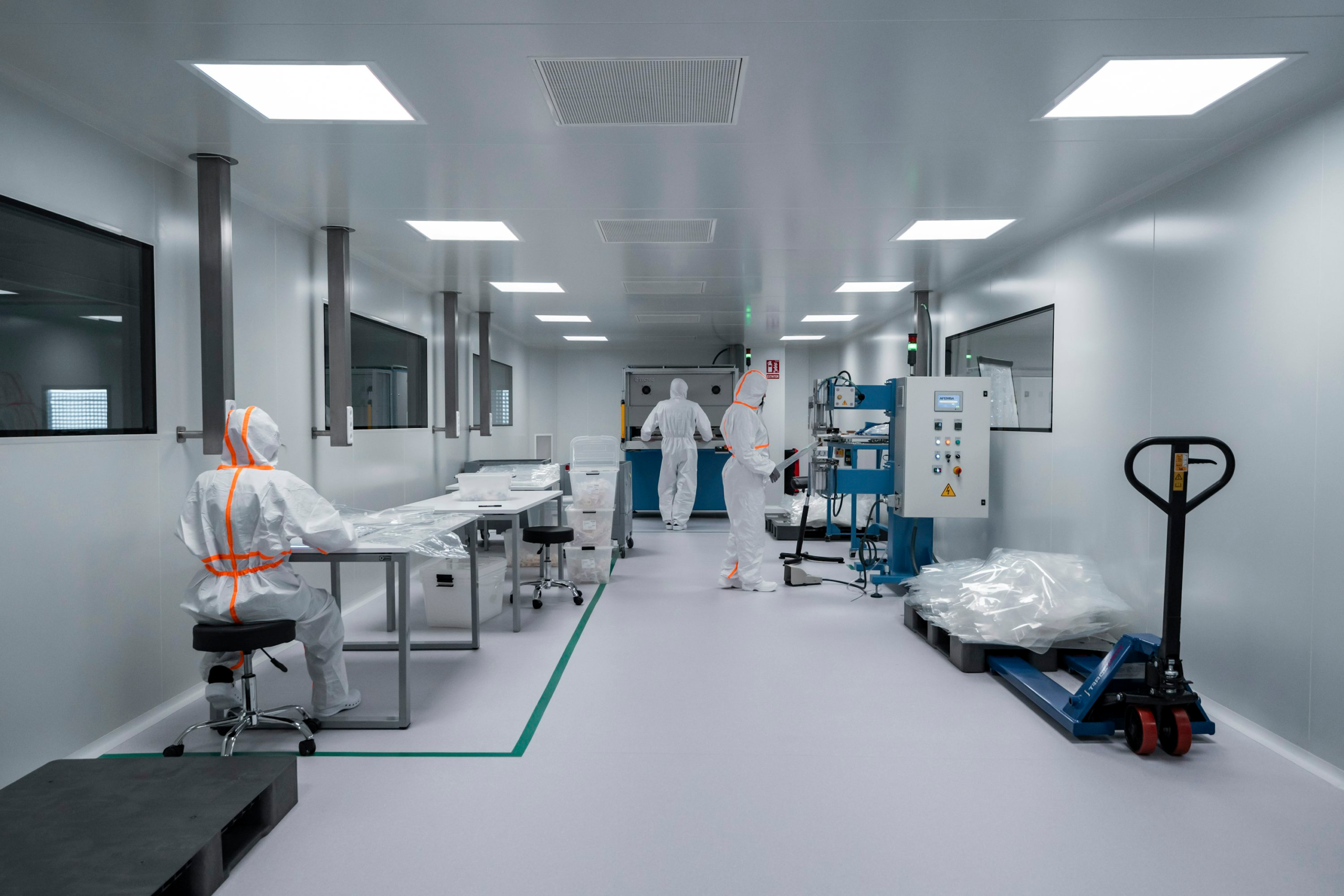
MDA Space inaugurated its expanded Montréal factory in May. The 185,000-square-foot development doubled the company’s manufacturing floor space and moved from groundbreaking to operational clean rooms in less than two years.
The facility is designed to assemble, integrate, and test several MDA AURORA satellites continuously rather than treat each spacecraft as a largely bespoke project. Automated equipment and augmented-reality systems assist technicians with repetitive tasks, while proprietary test technology is intended to reduce validation time and strengthen quality assurance.
MDA Space says the operating model can support up to 400 satellites a year. That figure is stated production capacity rather than guaranteed annual output, which will depend on product mix, customer schedules, component availability, and first-pass performance through integration and test.
Constellation manufacturing changes the economics and risk profile of satellite production. Repeated designs allow tooling, work instructions, and test procedures to be standardised, but a small defect can propagate across many units if configuration control or inspection fails. The production system must increase speed without allowing repetition to multiply error.
Software-defined payloads and dynamic beamforming add another layer to the factory process. They give operators flexibility to change coverage and capacity in orbit, but place greater emphasis on digital payload integration, software assurance, antenna performance, and secure configuration management before launch.
The contract also includes long-lead items, some of which had already entered MDA Space’s backlog before the latest award. Satellite programmes depend on specialised electronics, RF hardware, mechanisms, structures, and thermal components that cannot always be procured against a short final-assembly schedule.
The majority of the C$474 million increase is expected to enter the company’s backlog during the third quarter of 2026. That larger base load should improve utilisation at the newly expanded facility, although it also increases pressure on suppliers to deliver qualified parts at the cadence required by a continuous production line.
Canada’s polar communications programme will also include secure Ultra-High Frequency and X-band services through a medium Earth orbit constellation. The government has selected MDA Space as prime contractor for end-to-end mission delivery, with Telesat expected to serve as a subcontractor, although contract negotiations for that element remain under way.
Supplier quality will be as important as internal assembly speed. Constellation output relies on qualified components arriving in sequence, supported by documentation that can survive customer, defence, and launch-assurance scrutiny. A production line cannot recover lost cadence by fitting an unqualified substitute when a specialised part arrives late.
The Montréal expansion was built to move satellite production towards factory methods, and the Lightspeed increase gives it a substantial early test. The useful measures will be takt time, first-pass test performance, configuration stability, and delivery against the constellation schedule. Space manufacturing has adopted the language of volume production; orbital programmes still impose a very expensive penalty when the line repeats the wrong thing.