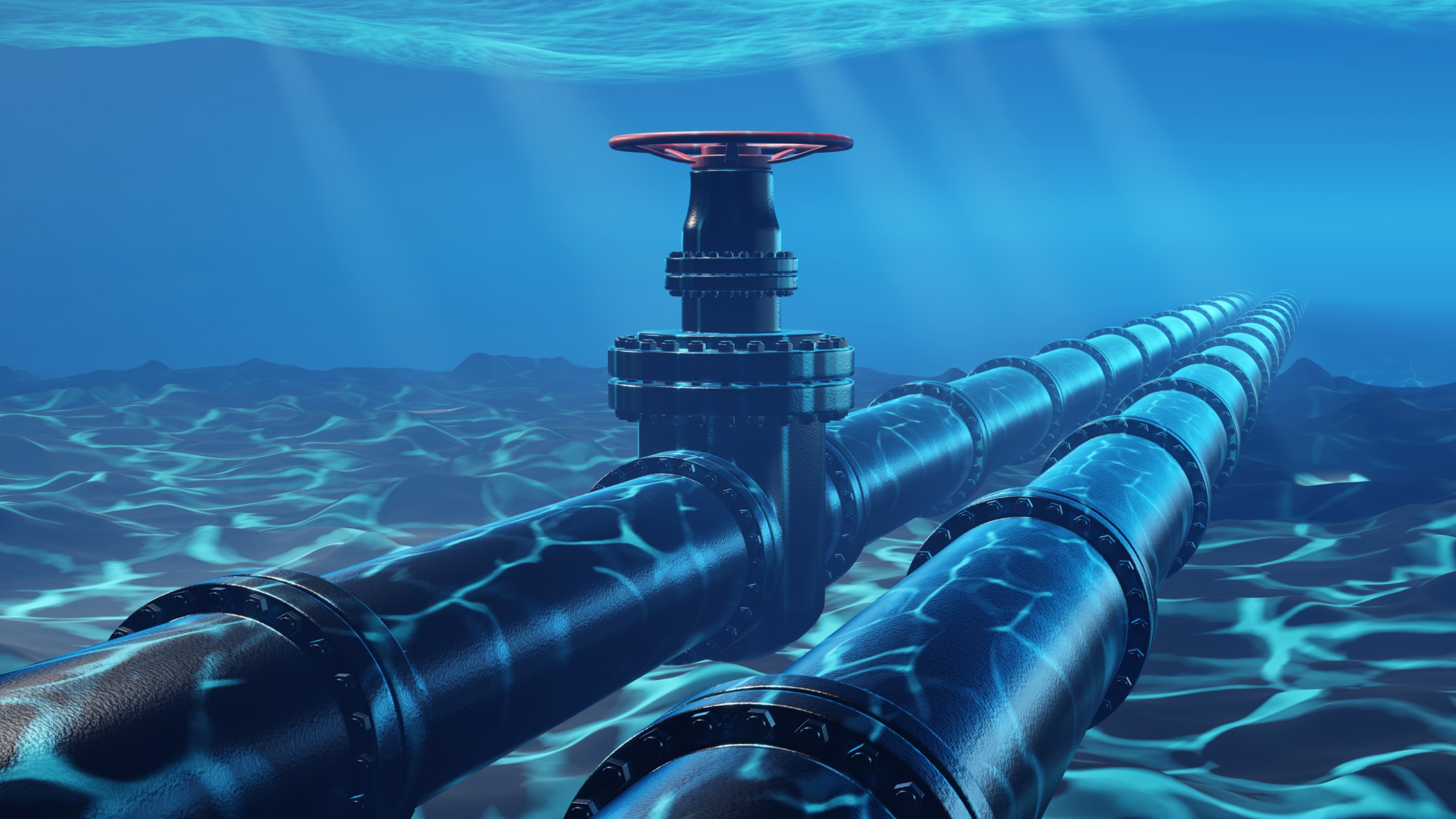
The North Sea Transition Authority has published two technical studies addressing the design of new offshore carbon dioxide pipelines and the potential reuse of existing hydrocarbon infrastructure.
Penspen and DNV produced the reports as the UK prepares for a larger carbon capture, transport, and storage industry requiring pipelines between industrial emitters, coastal gathering systems, and permanent storage sites beneath the seabed.
Penspen examined new offshore transportation systems, including contaminant management, fracture control, long distance subsea tiebacks, metering, and flow modelling. Its study found no significant hardware blockers preventing construction at scale.
Operational experience remains limited because few complete offshore carbon dioxide pipeline networks have worked at the scale now envisaged. Engineers are therefore drawing heavily on hydrocarbon pipeline knowledge, supported by modelling, material testing, and component qualification.
That experience provides a strong starting point, but carbon dioxide cannot be treated as a direct substitute for natural gas. Pressure, temperature, water content, impurities, phase behaviour, decompression, corrosion, and fracture propagation can interact across the complete transportation system.
Penspen identified further work around system integration, validation, and the alignment of technical, commercial, and regulatory interfaces. Those disciplines determine how individual assets combine into infrastructure capable of receiving carbon dioxide from several emitters and delivering it reliably to an offshore store.
DNV’s study considered whether existing offshore hydrocarbon pipelines and associated equipment could be converted for carbon dioxide service. It provides an evaluation method and two case studies showing how operators can assess candidate assets.
Repurposing can be technically feasible and less expensive than new construction, provided the condition and characteristics of the infrastructure suit the proposed duty. Running ductile fracture is a central consideration for dense phase systems because rapid decompression can drive a fracture along the pipeline.
Material toughness, wall thickness, operating conditions, and fracture arrest behaviour must therefore be assessed together. Existing pipelines were designed around their original fluids and pressure envelopes, so some may be suitable for dense phase operation, others may be restricted to gas phase service, and a further group will require replacement.
Asset history becomes central to the evaluation. Corrosion, fatigue, dents, weld condition, previous repairs, coating performance, free spans, crossings, and remaining design life must all be examined before a pipeline is assigned a new service.
Conversion can reduce construction time, but it may still require alterations to compressors, pumps, valves, seals, meters, control systems, pressure protection equipment, landfalls, and terminal facilities even where the main pipeline remains suitable.
Ernie Lamza, technology manager at the NSTA, said: “The NSTA is committed to supporting the growing carbon storage industry and this work is intended to help licensees, potential licensees and the supply chain in a critical part of their business.
“These reports, produced by external consultants, and freely available from them, will help existing and future developers look at the potential for repurposing existing pipelines and installing new infrastructure.”
The findings arrive as physical construction begins on the UK’s first carbon transport networks. A 149km offshore pipeline campaign mobilising through Hartlepool is already combining domestic linepipe, port logistics, marine construction, and geological storage infrastructure.
The NSTA has also issued guidance covering safe, effective, and transparent delivery of storage projects. Its second carbon storage licensing round opened in December 2025, and bids submitted in March 2026 are now being evaluated.
Future networks may serve several emitters with different gas compositions and operating profiles. A cement plant, waste to energy facility, hydrogen producer, or power station can deliver carbon dioxide containing different impurities and at different rates.
Commercial agreements must define who controls those limits, how material outside specification is managed, and where responsibility sits if one emitter disrupts a shared system. Metering must also support custody transfer, regulatory reporting, and the allocation of transportation and storage charges.
Long subsea tiebacks create further questions around pressure management and transient operation. Start up, shutdown, changing injection rates, and interruptions at an emitter or storage site can move the fluid between operating regions that differ from steady state design conditions.
The studies define those uncertainties more clearly and provide a basis for common engineering practice, project specifications, and supplier investment. Large scale carbon transport will depend on validated system behaviour, controlled impurities, proven fracture management, disciplined asset assessment, and commercial rules that work across complete networks.