Rosenxt has acquired Houston based subsea technology specialist Zupt, expanding its capabilities in metrology, positioning, three dimensional inspection, survey engineering, and autonomous systems.
The transaction was completed through Rosenxt’s United States business and takes effect immediately. Financial terms have not been disclosed.
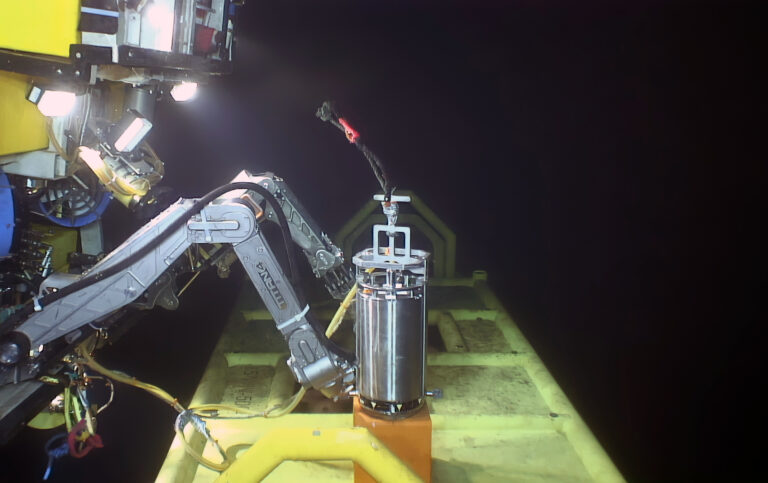
Zupt was established in 2005 and provides systems and engineering services for subsea positioning, navigation, dimensional control, and inspection. Its work supports offshore construction, oil and gas infrastructure, renewable energy installations, and other projects requiring accurate measurement below the waterline.
Subsea metrology determines the precise position and orientation of assets before connections, spools, jumpers, structures, or pipelines are manufactured and installed. Small measurement errors can create major problems where fabricated components must fit between equipment already placed on the seabed.
The acquired company also provides three dimensional inspection capability, allowing operators and contractors to create detailed records of subsea structures. Those datasets can support assessments of damage, deformation, movement, marine growth, and changing condition over time.
By adding Zupt to its inspection and integrity technology business, Rosenxt extends its offering into a wider range of offshore survey and installation work while increasing the group’s presence within the Gulf Coast engineering market.
Offshore operators increasingly seek contractors able to combine inspection equipment, positioning, survey design, analysis, and decision support rather than delivering an isolated dataset. Bringing those disciplines together can shorten the route between detecting an issue and defining an intervention.
Inspection results must be interpreted against design records, operating history, material condition, environmental loading, and the tolerances required for repair or replacement. Measurement quality therefore depends on both the equipment deployed offshore and the engineering used to process and assess the resulting data.
As offshore equipment becomes more complex, testing and verification capacity are expanding across the subsea sector, with additional high pressure testing facilities strengthening the onshore evidence needed before connectors, controls, and other equipment are committed to campaigns.
Subsea work carries a high cost of error because vessel time, remotely operated vehicles, divers where applicable, weather windows, lifting equipment, and project personnel create substantial daily expenditure.
Accurate metrology reduces the risk that a manufactured spool or connection reaches the seabed and fails to fit. Improved navigation helps vehicles and tools return to defined locations, while better three dimensional records can reduce repeated survey work and support planning before a vessel mobilises.
Autonomous capability is likely to become a larger part of the combined offering. Resident vehicles, uncrewed surface vessels, and automated inspection tools can collect data more frequently than conventional campaigns, but they require reliable positioning, communications, mission planning, and data quality controls.
More frequent inspection only improves integrity management when datasets use consistent reference frames, traceable calibration, controlled processing, and methods that distinguish genuine asset change from differences in survey conditions or equipment.
Beyond conventional oil and gas, offshore wind farms contain foundations, cables, substations, protection systems, and buried or exposed interfaces requiring inspection, while carbon storage projects will add pipelines, wells, injection infrastructure, and long monitoring obligations.
Those sectors share technology but differ in risk, regulation, contracting, and asset life. Rosenxt will need to integrate Zupt’s specialist capability without losing the flexibility that allows a smaller engineering organisation to respond quickly to unusual project requirements.
Common systems, compatible equipment, coordinated commercial teams, and retained technical expertise will determine how effectively the acquisition creates an integrated service rather than a broader list of separate capabilities.
When software, vehicles, or contractors change, survey results must remain accessible across engineering, operations, and integrity teams, with enough metadata to preserve later comparison and support decisions across the asset life.
Zupt’s Houston base gives Rosenxt direct access to an established offshore engineering cluster serving the Gulf of Mexico and international projects. The group also gains specialist people at a time when subsea construction, inspection, and life extension activity are competing for experienced resources.
Subsea measurement depends on field judgement as well as sensors, software, and formal procedures, making the retention of experienced Zupt engineers central to the integration.
Although the acquisition immediately broadens Rosenxt’s technical portfolio, its longer term value will depend on connecting metrology, inspection, positioning, autonomy, and integrity analysis into a continuous engineering service across the complete operating life of a complex offshore energy infrastructure asset worldwide.