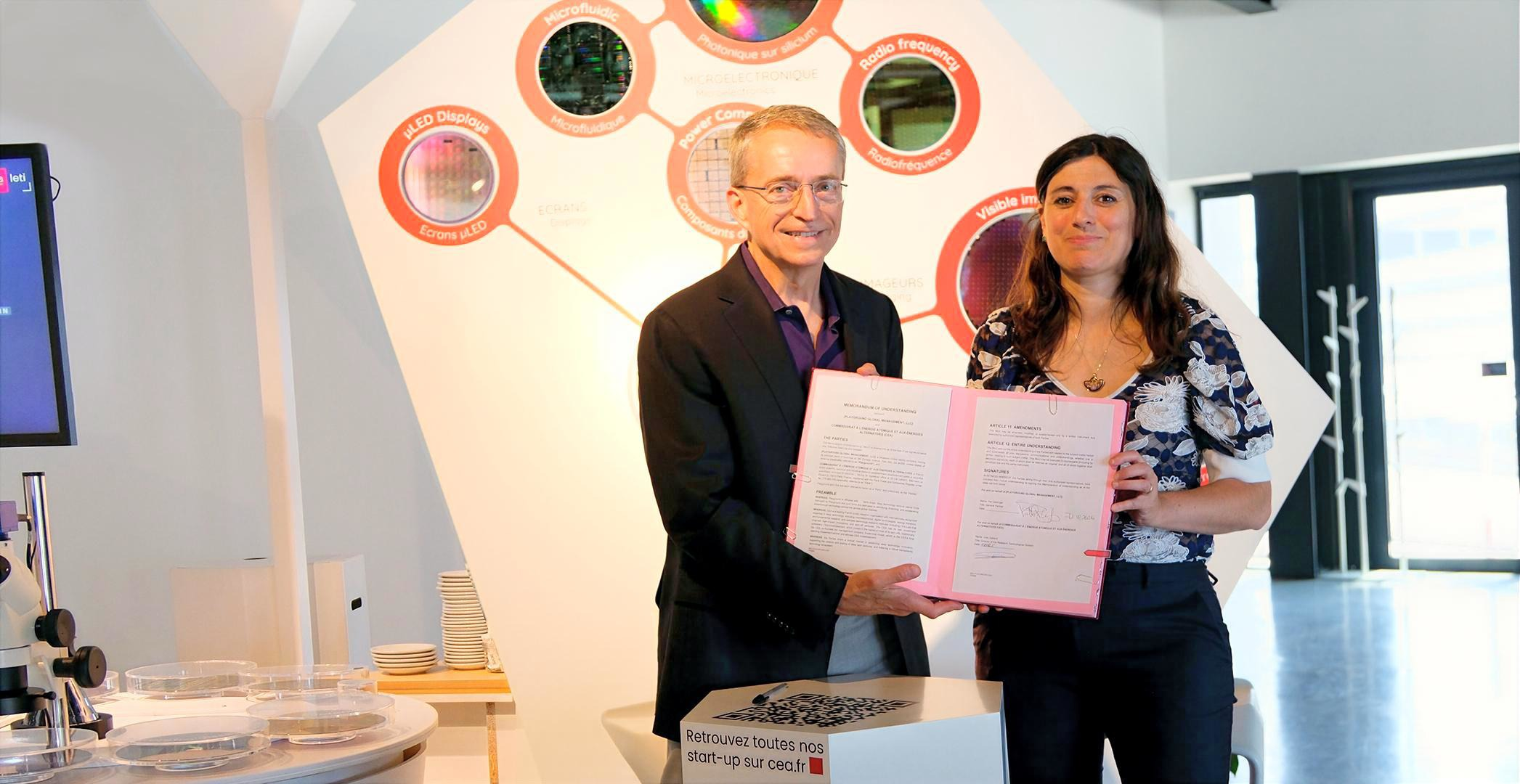
The French Alternative Energies and Atomic Energy Commission and Playground Global have signed a memorandum of understanding to explore closer cooperation around the commercialisation and scaling of deep technology developed in research laboratories.
The proposed collaboration will cover advanced computing, microelectronics, artificial intelligence, quantum technology, energy, biotechnology, and other strategically important sectors.
Two principal workstreams are being considered. CEA institutes, including semiconductor research organisation CEA-Leti, could undertake research and development with early-stage companies in Playground Global’s portfolio.
The organisations also plan to evaluate projects and start-ups emerging from CEA laboratories, with Playground contributing venture-building, investment experience, commercial strategy, and access to international industrial networks.
No funding commitment, individual company programme, or implementation timetable has been disclosed. The memorandum establishes a framework for possible collaboration rather than a completed investment vehicle or guaranteed route to market.
“The CEA brings recognised expertise across microelectronics, digital technologies, photonics, health and the energy transition,” said Julie Galland, Director of the Technological Research Division of the CEA. She said Playground’s experience in financing and accelerating companies could extend the reach of the research organisation’s innovation ecosystem.
CEA’s technology research structure includes CEA-Leti, focused on semiconductors and microelectronics, and CEA-List, which works across software, digital systems, artificial intelligence, robotics, and advanced manufacturing. Regional hubs connect research capability with smaller industrial companies across France.
The organisation already supports spin-outs through CEA Investissement and was a co-founder of Supernova Invest. Supernova manages more than €800 million and has completed more than 100 investments across over 70 companies.
Playground Global is a Silicon Valley venture capital business specialising in technically demanding companies. It announced a US$475 million fourth fund in May 2026, targeting foundational technologies in computing, semiconductor materials, energy, infrastructure, and science-led industrial markets.
Pat Gelsinger, General Partner at Playground Global, said scientific achievement alone did not guarantee global impact. He added that the combination of CEA’s technical depth and Playground’s company-building experience could help transform promising research into businesses capable of defining new markets.
Research laboratories can demonstrate devices, materials, processes, or architectures that outperform established technology, although commercialisation requires a much broader industrial system. Manufacturing, qualification, customer development, capital, and supply assurance must progress alongside the core invention.
A semiconductor project, for example, must move from device physics through process integration, design tools, packaging, testing, reliability, and repeatable manufacturing. Significant capital is required long before meaningful production revenue begins.
CEA-Leti has been developing that transition through pilot lines and industrial partnerships. Its 2026 technology summit focused on sustainable chips, AI hardware, pilot production, and laboratory-to-market commercialisation, reflecting the pressure to connect European research with manufacturable platforms.
The institute has also been working with GlobalFoundries through the FAMES programme. Their extended FD-SOI development activity links advanced low-power semiconductor research with a commercial manufacturing technology used in automotive, communications, industrial, and edge systems.
Venture support can help a spin-out recruit leadership, secure early customers, define a product, and finance development. It cannot remove the need for technical validation, manufacturing yield, certification, and a supply chain capable of supporting the product after launch.
Deep technology companies also face timing risk. A technically superior platform may arrive before customers are prepared to redesign their systems, or after an incumbent standard has become too deeply embedded to displace economically.
Research institutions and investors must therefore assess market requirements early without narrowing the science prematurely. Industrial partners can introduce realistic constraints around cost, reliability, qualification, and integration, while laboratories retain room to develop performance beyond the existing product roadmap.
Intellectual property arrangements will become important if the memorandum develops into working programmes. Ownership of background patents, newly created results, licensing rights, geographic restrictions, and access for multiple partners must be sufficiently clear to support later investment.
European policy is directing substantial public funding towards semiconductor, quantum, energy, and biotechnology capability. Industrial return depends on whether projects continue beyond the funded research stage and establish production, engineering, and commercial functions within the region.
Playground’s international network could give CEA spin-outs access to customers and capital beyond France, although overseas investment can also move decision-making, intellectual property, or later manufacturing away from the original research base. Partnership terms will need to balance global scale with European industrial value.
The memorandum provides a basis for identifying projects and testing joint activity. Its significance will be determined by the ventures, research programmes, and manufacturing commitments that follow, because promising science reaches the market only when capital, engineering, and customers can sustain the long route to industrial production.