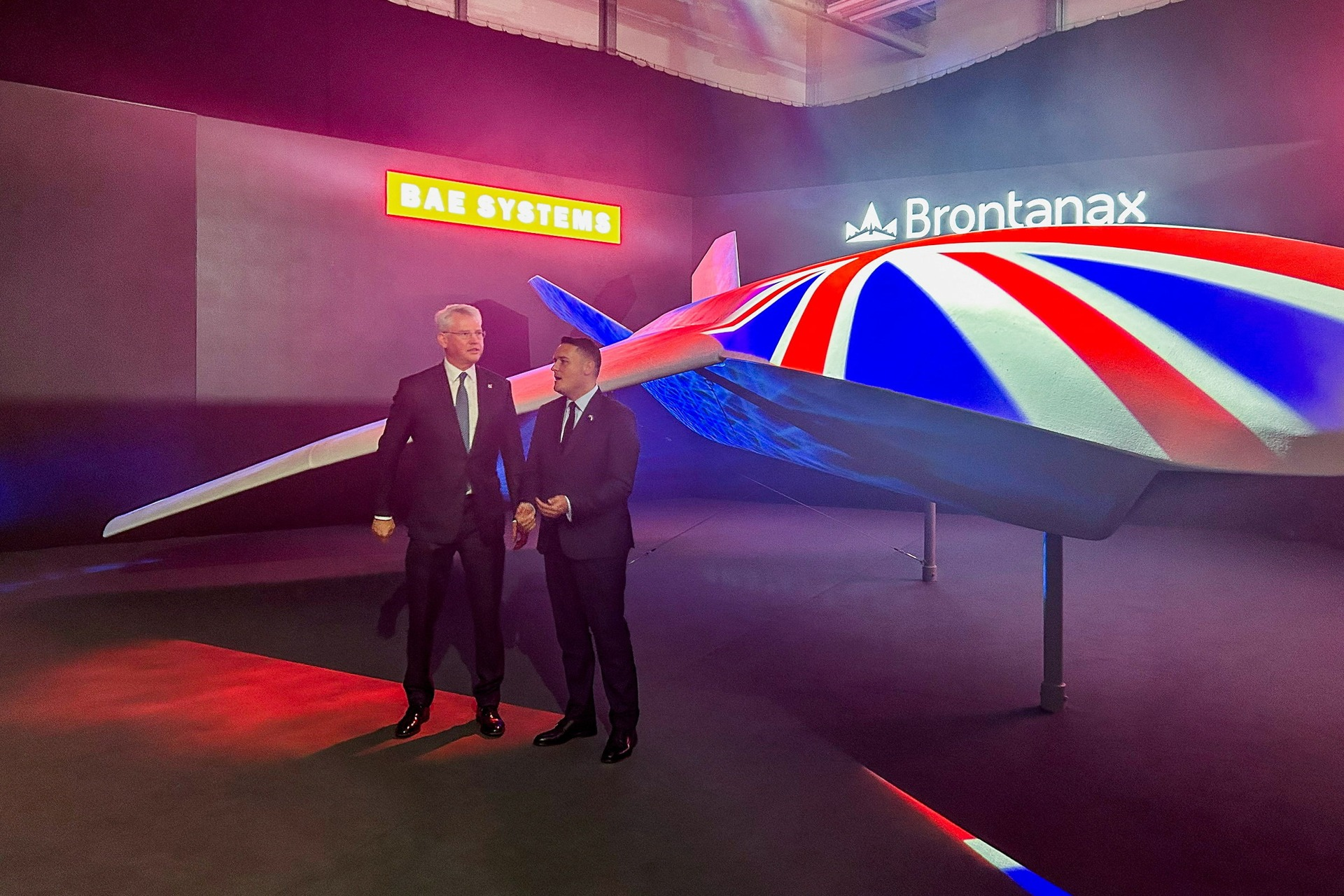
BAE Systems has unveiled Brontanax, a British-designed uncrewed combat aircraft intended to operate alongside crewed fighters while conducting electronic warfare, surveillance, and precision strike missions.
Designed and built at the company’s Warton site in Lancashire, the Hawk-sized aircraft will begin with ground testing before entering a planned UK flight programme in 2027. BAE Systems aims to make the platform available for service before the end of the decade, although flight clearance, mission-system integration, weapons testing, and production readiness must all advance before an operational fleet can be established.
More than 500 BAE Systems employees have worked on Brontanax, supported by over 75 larger companies and small and medium-sized businesses. Development has so far been funded through the company’s research and development expenditure, alongside the wider direction established by the UK Government’s £300 million Storm Fighter programme.
Rather than developing a fixed configuration around one mission, BAE Systems has based Brontanax on an open architecture capable of accepting different sensors, communications equipment, electronic warfare systems, and weapons. Standardised physical, electrical, and digital interfaces should allow equipment to be upgraded as threats and technology change, without requiring the complete aircraft to be redesigned.
Modularity brings its own engineering discipline, since every new payload affects electrical demand, cooling, electromagnetic compatibility, structural loading, aerodynamics, software assurance, and data exchange. The interfaces must be defined tightly enough for new equipment to enter the aircraft without producing unpredictable effects elsewhere in the system.
BAE Systems expects the aircraft to operate under the direction of a Typhoon pilot or another mission commander positioned away from the vehicle. Brontanax will therefore need to manage navigation, sensor processing, formation behaviour, threat response, and elements of mission execution without relying on continuous manual control.
Secure communications will connect the aircraft with crewed platforms, ground stations, weapons, and other assets, yet the autonomous systems must remain effective when bandwidth is restricted or a hostile force attempts to jam, intercept, or deceive the network. Mission software will need defined behaviour for degraded communications, including the limits within which the aircraft may continue operating without further human instruction.
Autonomy enters the combat-air production system
Collaborative combat aircraft are intended to distribute sensing, electronic warfare, and weapons across a formation while reducing the number of pilots placed directly within heavily defended airspace. They may carry additional payloads, extend the reach of a crewed fighter, or present an opponent with more targets than a conventional formation could economically provide.
Although these aircraft are often discussed in terms of lower cost and greater numbers, a vehicle exchanging classified information, carrying weapons, and flying beside a crewed fighter still requires dependable structures, propulsion, flight controls, electronics, actuators, and environmental protection. Safety and mission assurance remain demanding even where the aircraft is designed to accept greater operational risk than a piloted platform.
The pilot’s interface will become particularly important when one crewed aircraft supervises several autonomous collaborators. BAE Systems’ Project Intuity helmet demonstrator is already examining how head tracking, spatial audio, wide-area displays, and autonomy controls could present information from several aircraft without overwhelming the wearer.
Adding uncrewed systems cannot simply add another screen and another stream of alerts. Information must be prioritised according to mission phase, urgency, confidence, and threat, while control authority has to pass between human and machine without ambiguity. When communications degrade, the pilot must also understand what each aircraft is doing, what information it has lost, and which decisions remain available.
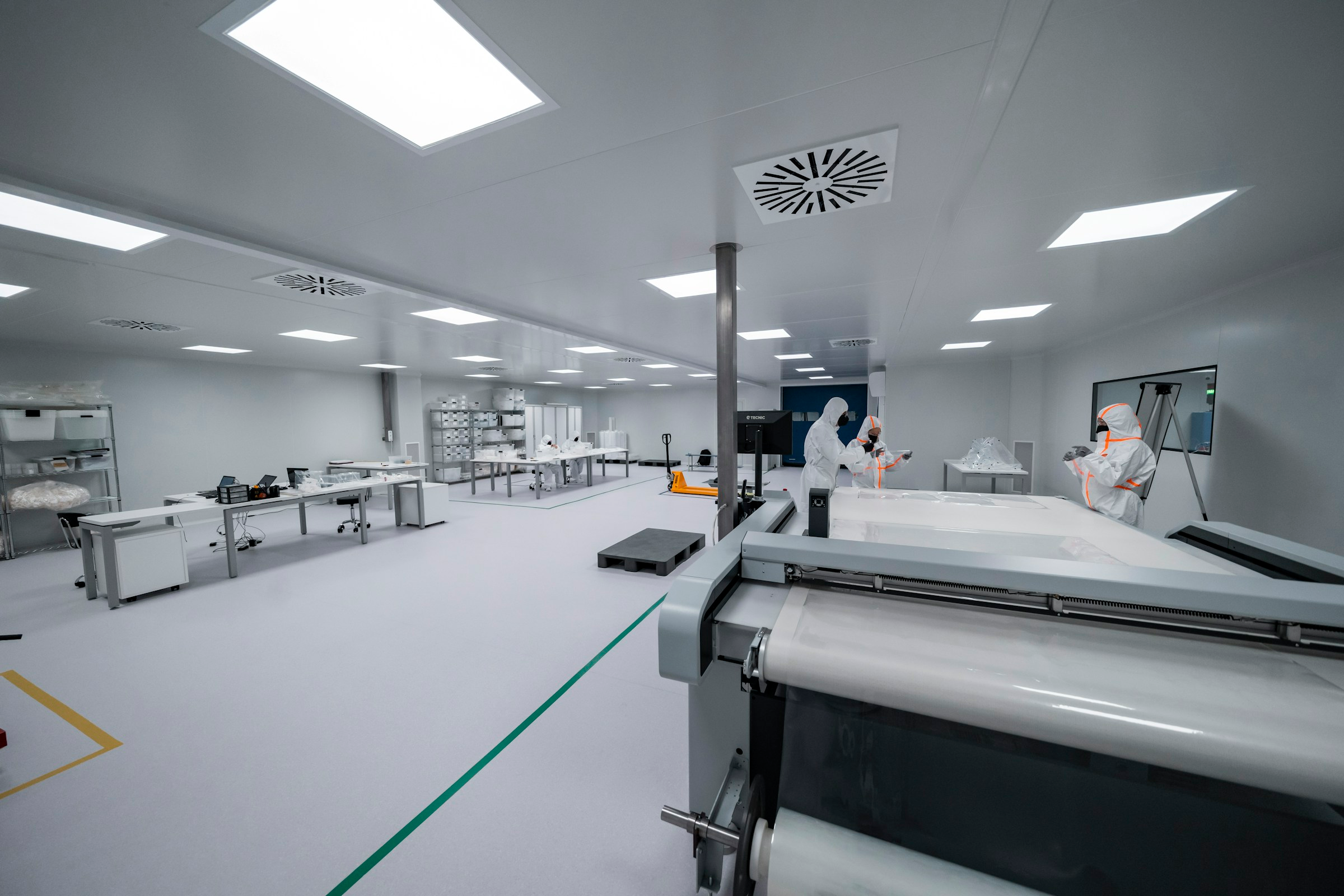
Manufacturing cost will determine how much operational mass Brontanax can provide. An aircraft priced close to a crewed fighter would be difficult to procure in the quantities required for dispersed operations, yet aggressive cost reduction cannot remove the inspection, traceability, and qualification associated with safety-critical structures, propulsion, flight controls, secure electronics, and weapons integration.
Digital design, automated inspection, common assemblies, and modular mission equipment can reduce some cost and lead time, particularly where several configurations use the same airframe and production route. Greater commonality also simplifies training, repair, spares, and configuration management, provided that successive equipment upgrades do not fragment the fleet into numerous poorly supported variants.
Production planning will extend beyond final assembly at Warton. Propulsion hardware, actuators, processors, sensors, communications equipment, specialist electronic assemblies, and advanced materials are already required across civil and military aerospace programmes, leaving suppliers exposed to capacity constraints and long qualification cycles.
Higher output will require suppliers to invest before firm fleet quantities are known, while BAE Systems will need enough design stability to establish repeatable tooling, inspection, and assembly processes. Prototype aircraft can absorb intensive engineering attention, but operational fleets require predictable cycle times, interchangeable parts, documented software loads, and maintenance arrangements that do not depend on the original development team.
Brontanax must also fit within the UK’s wider combat-air architecture, including Typhoon, F-35, future combat aircraft, weapons, sensors, and command systems. Open interfaces can ease that integration, although security, data ownership, sovereign control, and export restrictions will influence which technologies can be shared across platforms and international partners.
The planned 2027 flights will initially establish basic handling, propulsion, and aircraft-system performance, before progressively more complex autonomy and mission functions can be assessed. Reliable collaboration with crewed aircraft, secure operation under degraded communications, and repeatable manufacture will provide the more demanding measure of whether Brontanax can move from a rapid demonstrator into an operational fleet.