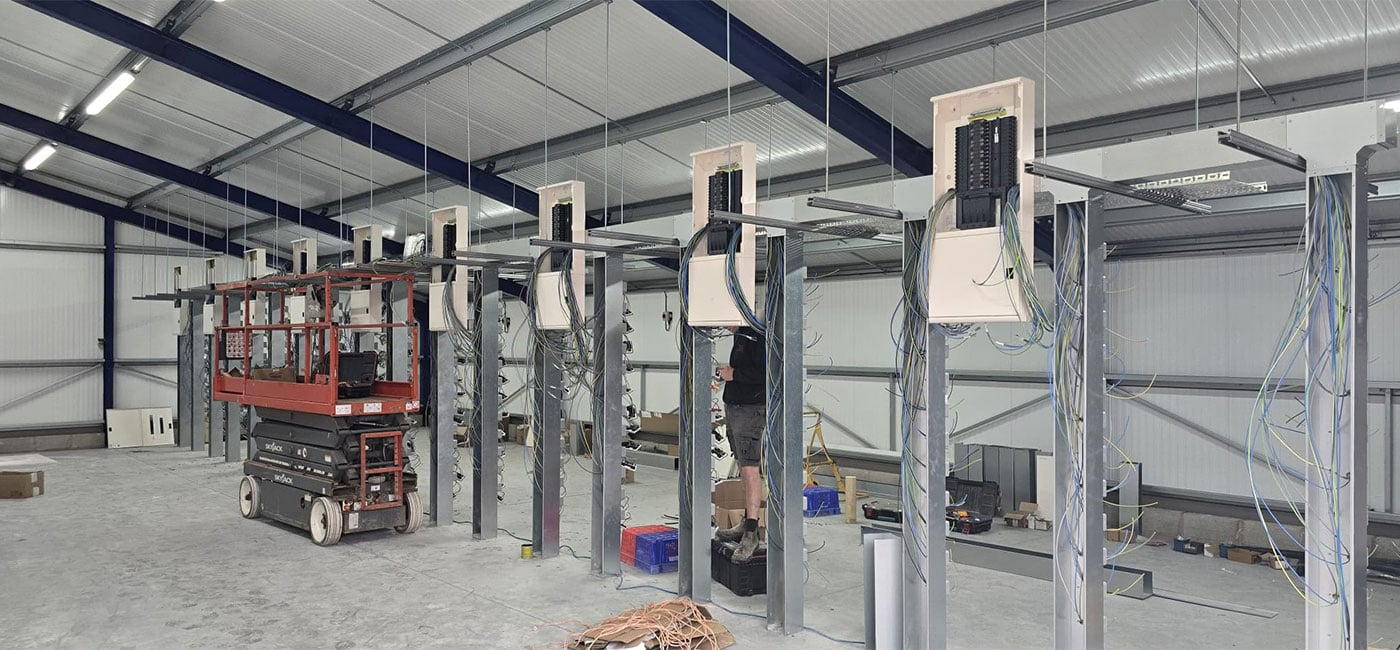
Easy Compute has installed high performance computing equipment at a pig farm in north-west England, using electricity generated from slurry through an anaerobic digestion plant.
The project redirects part of the farm’s locally produced electricity into computing hardware connected to the Green Compute network. Instead of exporting all surplus power, the system uses generation close to its source for artificial intelligence and other computational workloads.
Anaerobic digestion breaks down organic material in a controlled, oxygen-free environment, producing biogas that can be burned in a combined heat and power engine or upgraded for injection into the gas network. Farm feedstocks can include manure, slurry, crop residues, and purpose-grown material.
Electricity produced by the engine is normally consumed onsite or exported. Export income can be limited where an installation operates under older contractual arrangements or faces restrictions on how much power the local network will accept, creating an incentive to find higher-value uses behind the meter.
Easy Compute says exported electricity may earn approximately 8p to 12p per kilowatt hour in some cases and argues that computing can generate a higher return. Overall performance will depend on workload demand, utilisation, hardware depreciation, maintenance, connectivity, cooling, and the commercial terms of the processing platform.
Anaerobic digestion offers a more controllable operating profile than solar or wind because a well-supplied digester and engine can produce output for extended periods. That consistency suits computing equipment, which operates more efficiently when loaded steadily rather than repeatedly stopping in response to intermittent generation.
The electrical interface still requires careful design. Computing racks need stable voltage, protection, monitoring, and sufficient capacity to accommodate rapid changes in demand, while backup arrangements may be required if the biogas engine stops during an active processing job.
Cooling can consume a substantial share of the electricity available to the installation. Processors used for artificial intelligence generate concentrated heat and may require forced air or liquid cooling, depending on equipment density and operating load.
A farm environment also introduces dust, moisture, temperature variation, insects, and potentially corrosive gases. Enclosures, filtration, ventilation, cable routes, and maintenance procedures must therefore be designed for conditions that differ considerably from those inside a conventional data centre.
Waste heat could provide an additional source of value where a suitable use exists nearby. Digesters require controlled temperatures, while agricultural buildings, drying operations, offices, and water systems can consume low-grade heat if the operating profiles and distances are compatible.
The installation forms part of a wider movement towards decentralised energy systems, supported by controllers, storage systems, converters, and microgrid platforms that coordinate generation and flexible loads behind the meter.
Computing introduces a potentially dispatchable source of demand. Jobs that are not time critical could be scheduled when surplus electricity is available, while urgent workloads could draw from the grid or another supply where the connection permits.
Distributed installations will still compete with large data centres that benefit from dedicated fibre, professional maintenance, sophisticated cooling, security, and economies of scale. Smaller sites are more likely to succeed where dependable low-cost energy, constrained grid export, and appropriate workloads coincide.
Connectivity can become a limiting factor because artificial intelligence workloads may involve moving substantial datasets before processing begins. Rural fibre capacity, latency, resilience, and backup communications need to be considered alongside the electrical system rather than added after the hardware has been installed.
Cybersecurity and data governance add further requirements. Remote equipment must be monitored and updated without giving external users access to farm controls or energy systems, while commercially sensitive workloads may require assurances covering data location, encryption, physical security, and equipment disposal.
The environmental assessment also extends beyond using renewable electricity. Feedstock source, methane leakage, engine efficiency, hardware life, cooling demand, and the location of the displaced computing load all influence the final carbon balance.
Operating data from the installation should reveal whether revenue remains attractive after availability, cooling, maintenance, network performance, and equipment replacement are included. Peak returns from individual jobs will offer a less useful measure than sustained utilisation over several operating cycles.
If those figures remain favourable, anaerobic digestion plants could host a defined class of distributed computing. The strongest locations will combine dependable generation, limited export capacity, robust connectivity, and enough technical support to operate digital infrastructure without disrupting the primary agricultural and energy processes.