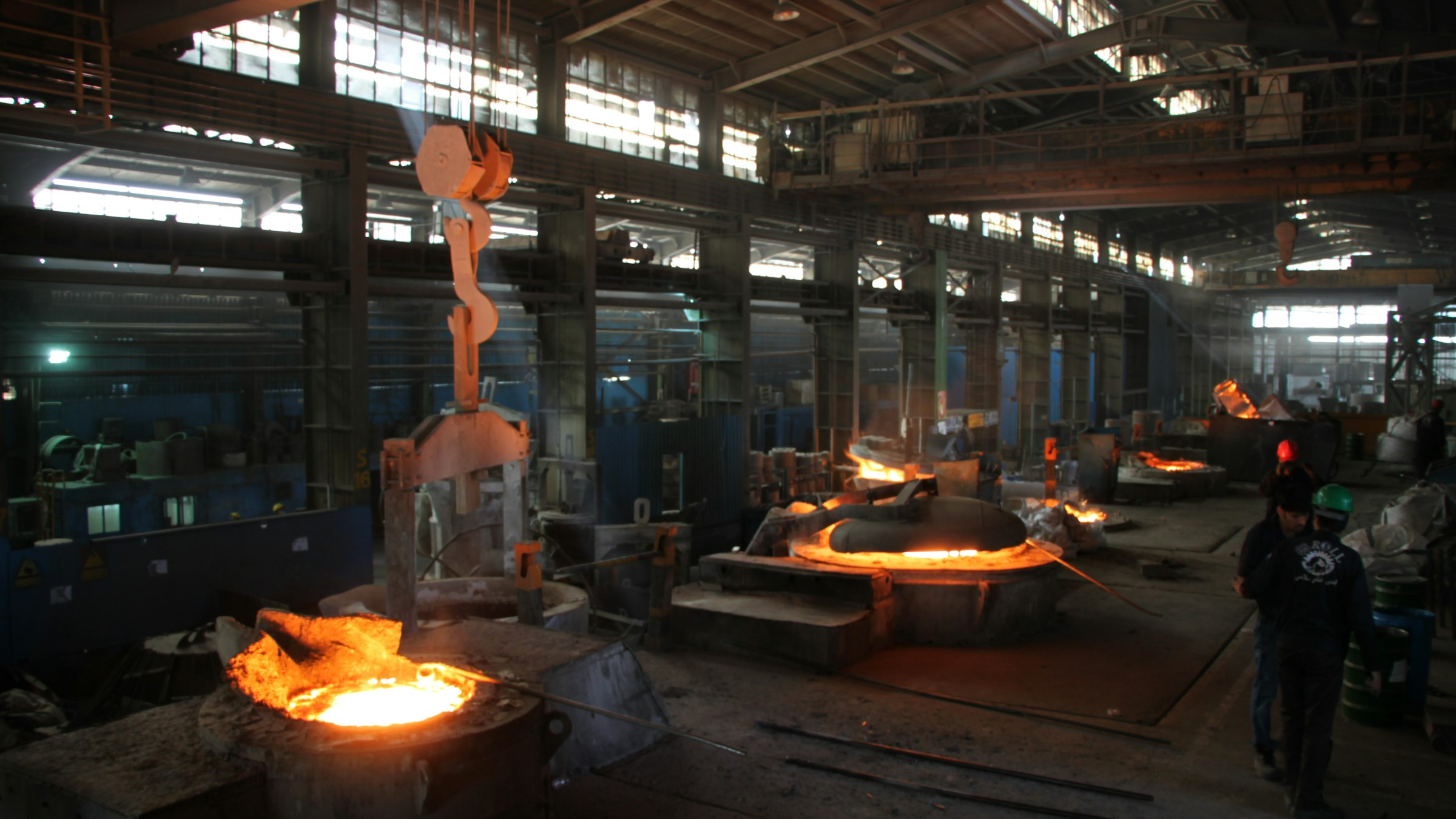
Salzgitter AG is taking full ownership of Hüttenwerke Krupp Mannesmann, after co-shareholders thyssenkrupp Steel Europe and Vallourec agreed to withdraw from the Duisburg-based steel joint venture.
The final agreement follows an earlier key issues paper signed between Salzgitter and thyssenkrupp Steel. HKM will become a wholly owned subsidiary of Salzgitter, with steel production continuing at the southern Duisburg site under a restructuring plan focused on long-term viability and the transition to lower-carbon production.
Salzgitter plans to invest in an electric arc furnace at Duisburg as part of a transformation expected to reduce carbon dioxide emissions from steel production by up to 90% over the long term. The transition will also involve a substantial workforce reduction, with HKM employment expected to move from around 3,000 people today to about 1,000 in the long term.
The company has described the job reductions as part of the plan to preserve steelmaking at the site rather than shut the integrated works completely. The decision places HKM inside a smaller, more focused operating model, with Salzgitter assuming sole responsibility for the site after years of shared ownership.
The acquisition captures the difficult economics of European steelmaking. Producers are trying to decarbonise blast furnace-based assets while facing weak demand, global competition, high energy costs, carbon exposure, and the capital intensity of new production routes. Electric arc furnaces offer a route to lower-emission steel, but only where raw material supply, grid capacity, electricity costs, product quality, and site configuration can be made to work together.
The Duisburg plan sits within a wider industrial tension across heavy industry. Manufacturers and chemical producers are being asked to decarbonise while staying competitive against regions with lower energy or regulatory costs. In Belgium, INEOS is advancing a hydrogen offtake route for a major ethane cracker, showing how process decarbonisation now depends on fuel supply, infrastructure, offtake, and credible project execution rather than isolated equipment upgrades.
Steel is under especially sharp pressure because it is both a high-emission industry and a foundational material for construction, vehicles, machinery, energy infrastructure, and defence. Demand for lower-carbon steel is expected to increase as customers seek to reduce embedded emissions in their own products, yet producers still have to finance the transition before premium markets are deep enough to absorb the full cost.
Moving HKM toward electric arc furnace production changes the engineering basis of the site. EAF operations rely heavily on scrap or direct reduced iron routes, electricity supply, furnace power systems, emissions control, material handling, ladle metallurgy, and downstream quality management. The process differs substantially from integrated blast furnace production and requires new operating skills, maintenance regimes, energy strategies, and raw material logistics.
The workforce impact is severe. A shift from traditional integrated steelmaking to a more compact production route can reduce labour demand, even where it preserves industrial activity. Duisburg’s long steelmaking history gives the decision political and social weight beyond a normal corporate restructuring.
The ownership change may simplify decision-making. Joint ventures can preserve shared investment and customer relationships, but they can become difficult when owners have different strategic priorities. With thyssenkrupp Steel and Vallourec leaving, Salzgitter will have clearer control over capital planning, restructuring, and technology choices, along with full accountability for whether the transition can be executed.
European steel producers are being pushed toward consolidation, specialisation, and lower-carbon investment at the same time. Not every site can be preserved in its current form, and not every transition plan will be commercially easy. The likely shape of the sector is already visible: fewer owners, smaller workforces, more electric furnace investment, and a continuing struggle to align industrial policy with market economics.
Manufacturers that depend on European steel will be watching the future mix of output, product grades, capacity, and decarbonised material availability. Buyers across automotive, machinery, energy, and construction increasingly need emissions data and secure regional supply, while remaining sensitive to price and quality.
Salzgitter’s move gives HKM a defined ownership path and avoids immediate closure of a major steelmaking site. The more difficult phase now begins inside the plant boundary, where production restructuring, furnace investment, energy supply, raw material strategy, and workforce change must be brought together into a viable operating model.