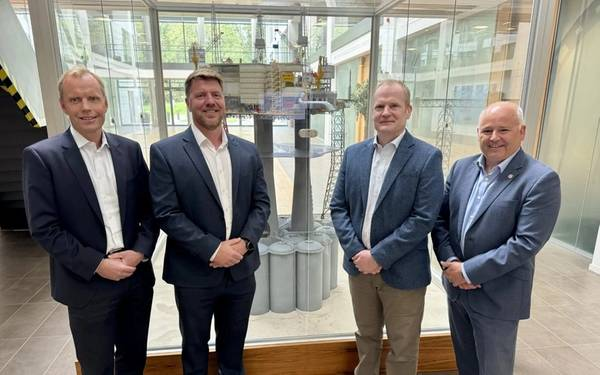
Well-Safe Solutions has been appointed lead contractor for Apache North Sea’s Beryl Field decommissioning project, expanding its combined Apache scope across Forties and Beryl to more than 260 wells.
The contract follows Well-Safe’s earlier Forties Field award and adds a substantial new programme across platform and subsea wells. Preparatory work is already underway across subsurface, well engineering, and project management, with offshore well operations due to begin on the Beryl Bravo platform wells during the summer.
Archer and NMC Energy will support the programme. Archer will provide plug and abandonment services, while NMC Energy has been awarded a contract covering integration, commissioning, and topside decommissioning services. The combined work brings together well engineering, offshore execution, platform preparation, subsea activity, and project control across mature North Sea assets.
The scale of the award reflects the changing workload on the UK Continental Shelf. Assets developed during earlier phases of North Sea production are moving through late-life operations and into decommissioning, turning a long-recognised liability into an active engineering market. Operators now have to manage safety, environmental compliance, cost certainty, specialist labour, vessel availability, and regulatory evidence across programmes that can run for years.
Well plug and abandonment is among the most demanding parts of that market. Wells must be isolated safely and permanently after decades of service, often with incomplete historical records, altered reservoir conditions, ageing equipment, and constrained platform access. Subsea wells add further complexity through vessel operations, remotely operated vehicle work, seabed access, cutting, retrieval, and environmental controls.
The Beryl award sits within a broader acceleration of North Sea decommissioning work. Subsea recovery contracts, including Ocean Installer’s work to recover infrastructure from TotalEnergies’ Byggve, Skirne, and Atla fields, show the range of activity now moving through the basin. Wells, topsides, subsea structures, pipelines, manifolds, and shore-based recycling routes all form part of the same industrial pipeline.
Large programmes create a different delivery challenge from isolated well abandonment campaigns. Contractors need repeatable methods, consistent documentation, reliable offshore logistics, and tight sequencing between subsurface teams, platform crews, service companies, and regulatory stakeholders. Repetition across a large well inventory can help improve cost and schedule control, but only if lessons are captured and applied quickly.
The supply chain will be tested as more fields move into decommissioning. Rigs, vessels, well services, engineering teams, marine contractors, inspection specialists, waste management providers, and onshore dismantling facilities will all face competing demands. Delays in one part of the chain can affect abandonment schedules, asset handover, and operator liabilities.
North Sea decommissioning is sometimes framed as the end of an oil and gas story. In engineering terms, it is a major industrial workload that will draw on many of the same skills that built and maintained the basin. Well integrity, lifting, subsea operations, structural assessment, process isolation, safety management, and logistics remain central, even as the commercial objective shifts from production to closure.
The Apache scope gives Well-Safe and its partners a prominent role in that transition. Delivering more than 260 wells across Forties and Beryl will require disciplined engineering and close control of offshore execution. The programme also adds to the evidence that decommissioning has become a core North Sea market rather than a peripheral activity waiting at the edge of production.