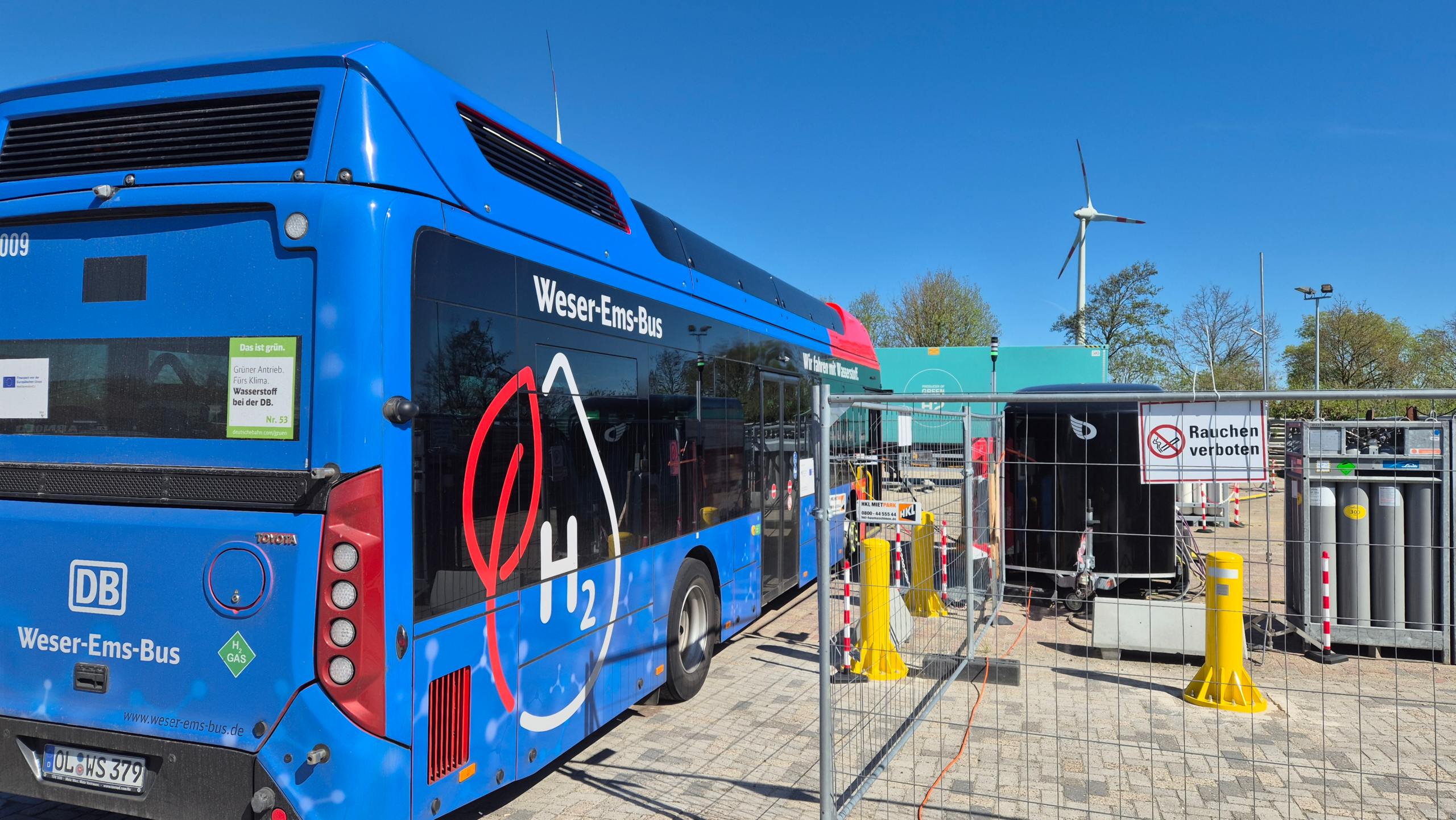
Lhyfe is supplying green hydrogen for a mobile refuelling station in Lower Saxony, allowing Weser-Ems-Bus to operate six fuel cell buses while permanent refuelling infrastructure is completed.
The project is running in Jever, in the East Frisia region of northern Germany. Weser-Ems-Bus, a subsidiary of DB Regio AG, deployed the buses in December 2025 for regular public transport services, working with the Friesland district as the local transport authority.
The mobile refuelling station is owned by Technologie-Transfer-Zentrum Bremerhaven, operated by MoviaTec, and supplied with RFNBO-certified green hydrogen by Lhyfe. It is being used as a temporary solution until a permanent hydrogen station in Schortens, within the JadeWeserPark industrial area, enters service later in 2026.
Fleet electrification depends on infrastructure arriving in the right order. Hydrogen buses can be delivered before a permanent refuelling station is ready, leaving operators with vehicles that cannot enter service. Mobile refuelling gives projects a way to bridge the gap between vehicle deployment, fuel supply, site readiness, safety documentation, and permanent station commissioning.
The station operates at 350 bar, the pressure level commonly used for hydrogen buses and commercial vehicles. Before commissioning, partners modelled refuelling scenarios based on expected hydrogen demand from the fleet. Early operations have shown faster refuelling than originally simulated, with the station meeting and, in some cases, exceeding expectations.
ttz Bremerhaven is providing the mobile station and carrying out scientific monitoring of the bus deployment, allowing operating data to be gathered under daily service conditions. MoviaTec is responsible for station operation at the Jever site, including explosion protection documentation, visual inspections, operational checks, commissioning support, and technical issue resolution.
Lhyfe’s role is fuel supply. The company operates RFNBO-certified green hydrogen production sites, Type IV hydrogen containers, and storage locations across Europe. Reliable logistics are essential because a mobile refuelling system depends on more than the dispenser itself. Production, transport, storage, compression, safety control, and operations support all have to function as a single chain.
Daniel Marx, managing director of Weser-Ems-Bus, said: “We are actively shaping the future of mobility and take our responsibility for climate protection seriously. With the help of funding from the Federal Ministry of Transport, around 10% of DB Regio Bus Nord’s fleet runs emissions-free, mostly on battery-electric. In close cooperation with the Friesland district, we were able to test the use case of hydrogen mobility and gained important experience for the future.”
Günther Schumacher, project manager at ttz Bremerhaven, said the station worked well under everyday operating conditions and exceeded expectations. Frank Rößler, managing director of MoviaTec, said the project showed hydrogen mobility could be implemented quickly and reliably when infrastructure, supply, and operation were closely coordinated.
Hydrogen deployment is a system engineering problem. Vehicles, storage, fuel production, bulk transport, compression, dispensing, safety documentation, site operations, and maintenance all influence whether a fleet can run reliably. A fuel cell bus cannot be assessed in isolation from the refuelling chain that supports it.
Mobile refuelling is not a replacement for permanent infrastructure, but it can reduce deployment risk. Operators can begin services, train staff, collect consumption data, refine refuelling routines, validate demand assumptions, and identify technical issues before fixed stations take over. That evidence can support better station sizing, maintenance planning, and operational procedures.
The Lower Saxony project gives municipalities and transport operators a practical sequencing model for hydrogen mobility. Permanent infrastructure remains necessary for long-term scale, but temporary mobile stations can prevent infrastructure delays from holding vehicles off the road. In early hydrogen fleet deployment, that operational flexibility may be as valuable as the vehicle technology itself.