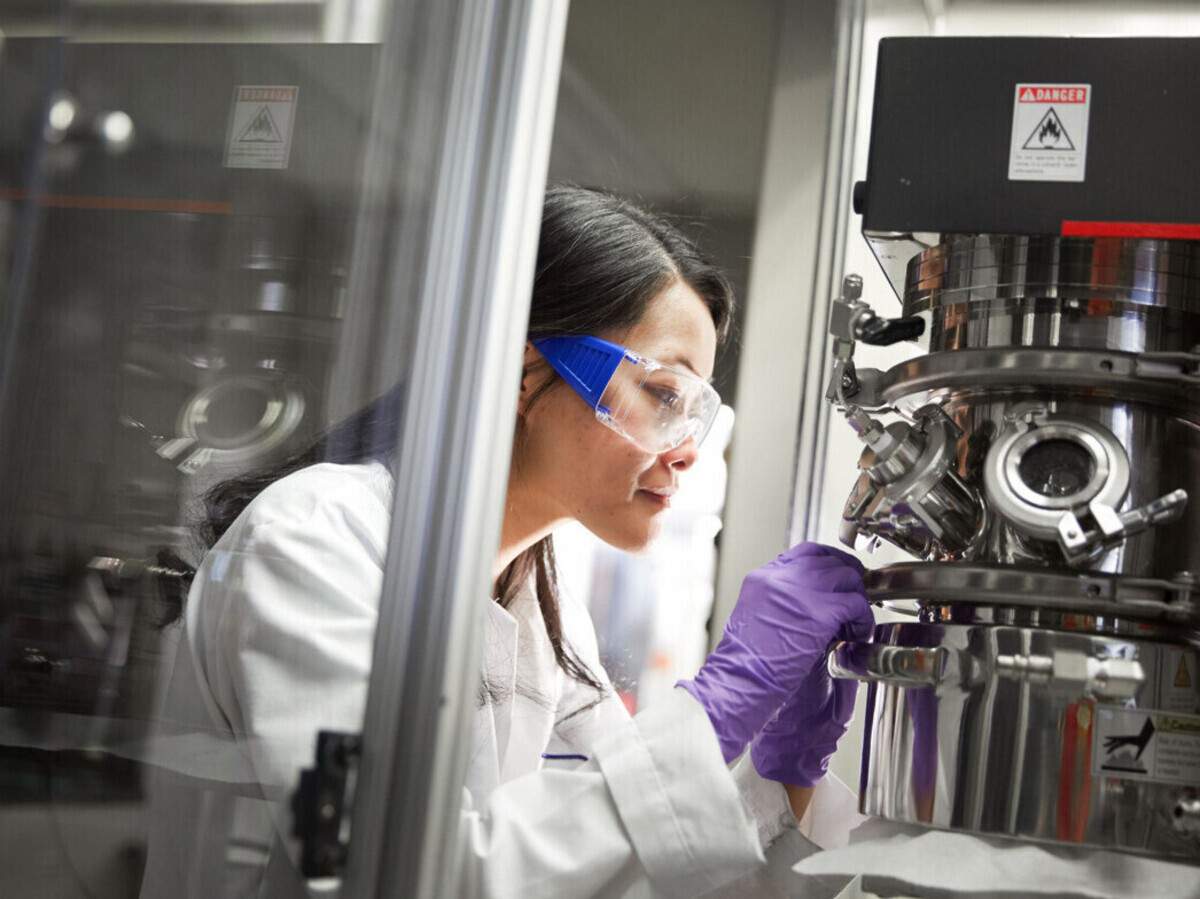
ViCentra has begun commercial-scale production of Kaleido consumables through Phillips Medisize, more than tripling manufacturing capacity for its insulin patch pump system.
The expanded production covers Kaleido consumables including infusion sets and insulin cartridges. Initial capacity is expected to support more than 17,000 users, giving the company additional supply headroom as it adds users across Germany, the Netherlands, and France during the second half of 2026.
ViCentra is a European medical device company commercialising the Kaleido insulin patch pump system. The company describes Kaleido as a small, lightweight insulin patch pump designed to deliver accurate dosing and hybrid closed-loop therapy through integrations with partner algorithms and continuous glucose monitors.
The manufacturing expansion follows a year of momentum for the company, including a $98m Series D financing round, growth of its user base to more than 5,000 people, commercial and leadership team expansion, and the launch of a smartphone-controlled Kaleido system integrated with Diabeloop’s DBLG2 algorithm.
Phillips Medisize, a Molex company, brings contract development and manufacturing capability in complex medical technology platforms, including insulin pumps and continuous glucose monitoring systems. Its role in scaling Kaleido consumables gives ViCentra access to high-volume precision moulding, assembly, validation, and quality-system infrastructure without requiring every stage of the manufacturing base to be built internally.
Drug-delivery devices often succeed or fail on manufacturing reliability as much as product design. A patch pump system depends on a recurring supply of consumables that must meet tight dimensional, material, sterility, compatibility, and quality requirements. Any weakness in consumables production can limit commercial growth even when the core device performs well.
Capacity carries particular weight in diabetes technology because adoption depends on continuity. Users, clinicians, distributors, and healthcare systems need confidence that cartridges, infusion sets, sensors, accessories, and support services will remain available after the initial device sale. A larger manufacturing base reduces the risk that demand growth outruns supply, especially when multiple European markets are being served at the same time.
The decision to work with an established CDMO also reflects a wider pattern in medtech manufacturing. Device companies are increasingly separating product ownership and system design from selected parts of industrial production, using specialist manufacturers for moulding, assembly, packaging, validation, and regulatory manufacturing support. That model can shorten scale-up time, but it depends on strong process transfer, supplier oversight, documentation discipline, and quality governance.
Wearable drug-delivery systems add further complexity because they combine mechanical components, fluid paths, adhesives, electronics, software, algorithms, and human factors. Manufacturing has to support device performance, comfort, reliability, usability, and compatibility with digital control systems. As devices become smaller and more personalised, tolerances often become tighter rather than easier.
Germany’s position as the world’s second-largest insulin pump market gives the expansion additional commercial significance. Pump adoption depends on reimbursement structures, clinician confidence, patient training, supply reliability, and support infrastructure. Scaling consumables capacity therefore underpins market access as much as production output.
The broader diabetes technology market is moving toward more integrated systems, with pumps, continuous glucose monitors, algorithms, and smartphone interfaces working together to automate parts of insulin management. That trend raises the importance of manufacturing platforms that can support repeatable product quality while systems evolve through software and algorithm upgrades.
Commercial-scale production through Phillips Medisize gives ViCentra a stronger operational base for European expansion and future market entry. The company still faces a demanding field shaped by established pump suppliers, reimbursement scrutiny, and high user expectations. With consumables capacity more than tripled, the manufacturing constraint becomes less of a bottleneck and the commercial test becomes sharper: scaling through healthcare channels while maintaining reliability, quality, and supply continuity.