The Estée Lauder Companies is strengthening its UK manufacturing network by integrating selected luxury candle and home fragrance capabilities into its Whitman operations in Petersfield, Hampshire.
The investment comes as the Whitman facility marks 60 years of production, with the site continuing to serve as a strategic part of the group’s global manufacturing footprint. Established in 1966, Whitman produces skincare and fragrance products for brands including Jo Malone London, Estée Lauder, Clinique, and La Mer, with annual output now exceeding 90 million units for the UK, Europe, and selected global markets.
Under the latest expansion, the company will bring selected luxury candle and home fragrance production closer to its own manufacturing network, including the assumption of the lease for one of Contract Candles’ two UK facilities. Around 50 employees are expected to join the organisation over time as the work is integrated, adding production, research and development, and quality capability to the UK operation.
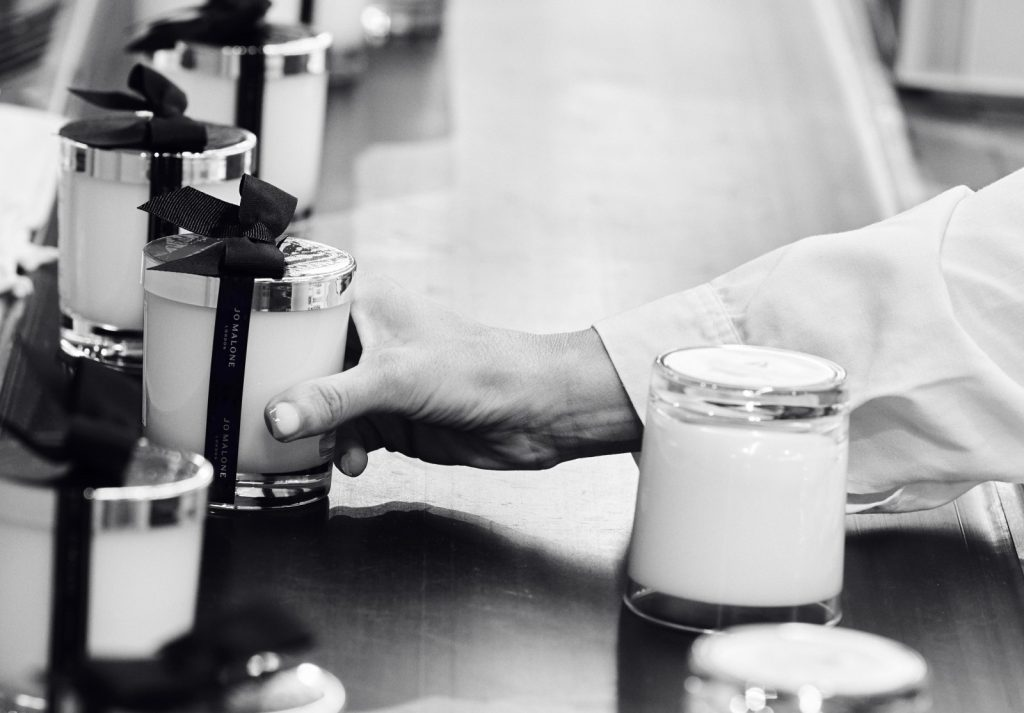
Once the integration is complete, the UK will become the company’s primary manufacturing base for candles across its prestige brand portfolio worldwide, including Jo Malone London, TOM FORD, and AERIN. Candle and home fragrance production may sit behind a consumer-facing luxury category, but the manufacturing requirements are exacting, spanning wax handling, fragrance consistency, decorative finishing, vessel preparation, filling, cooling, packaging, inspection, and batch traceability.
Whitman has received $72m of investment since fiscal 2020 across automation, quality systems, sustainability projects, advanced manufacturing capability, apprenticeships, and STEM outreach with local universities. The additional home fragrance capability extends that investment pattern, strengthening a site that has already moved well beyond its original 1960s operating model.
Premium fragrance manufacturing depends on a combination of process discipline and craft knowledge. Products have to deliver consistent sensory performance, appearance, packaging quality, and shelf-life across multiple markets, while production teams manage raw material variability, supplier lead times, changeovers, and increasingly demanding sustainability requirements. Bringing more of that work under direct control can reduce exposure to supplier capacity constraints and improve the link between product development, quality assurance, and manufacturing execution.
The decision also reflects a broader reassessment of high-value manufacturing within global supply chains. UK sites have often been judged against lower-cost production regions on labour and overhead alone, but that comparison is too narrow when product quality, brand assurance, regulatory familiarity, and rapid development loops form part of the commercial value. Where manufacturing is closely tied to premium positioning, proximity and control can carry as much weight as headline cost.
For Whitman, the latest expansion strengthens a facility that has survived several generations of manufacturing change by continuing to evolve. The plant now sits at the intersection of automated production, skilled craft, technical quality management, and sustainability-driven process improvement. That combination is increasingly visible across UK manufacturing, where long-established sites remain competitive when they can modernise without losing the experience embedded in the workforce.
The fragrance and home fragrance sector also faces a more complex operational environment than its retail presentation suggests. Ingredient sourcing, packaging availability, energy cost, waste reduction, product personalisation, and international demand patterns all affect production planning. As luxury brands broaden their home fragrance ranges, factories have to absorb greater variety without allowing complexity to erode throughput or repeatability.
By expanding the role of Whitman, The Estée Lauder Companies is placing more strategic weight on a UK manufacturing site with a long production history and a growing technical remit. The investment adds capacity in a category where quality and consistency are inseparable from brand value, while giving the company greater control over a manufacturing process that combines automation, formulation discipline, and skilled finishing.