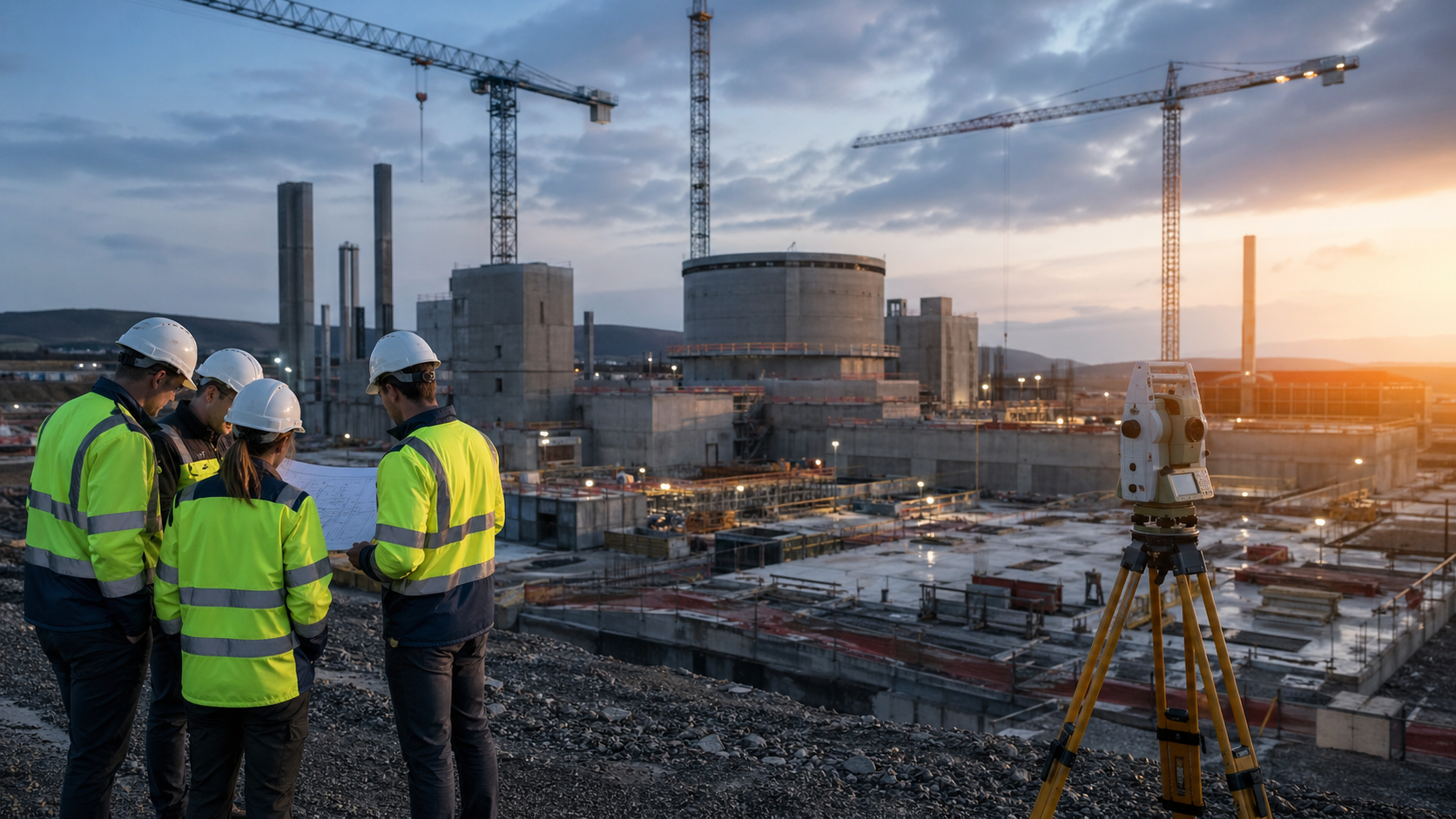
Rolls-Royce SMR has signed an Early Works Contract with ČEZ Group, allowing preparatory work to progress on the Czech Republic’s first small modular reactor at the Temelín nuclear site in South Bohemia.
The agreement covers site-specific design and documentation for consents, environmental assessment, permitting, nuclear licensing, and preliminary infrastructure activity. It follows geological studies at Temelín and forms part of a wider strategic partnership between Rolls-Royce SMR and ČEZ to deploy up to 3GW of SMR capacity in the Czech Republic.
The contract gives Rolls-Royce SMR a second European programme with contractual commitments, following the UK agreement with Great British Energy – Nuclear for the first three Rolls-Royce small modular reactors at Wylfa in North Wales. ČEZ also holds an approximately 20% stake in Rolls-Royce SMR, making the Czech programme both a deployment project and an industrial partnership.
Temelín adds another layer to a Czech nuclear strategy already built around large reactors and renewables. SMRs are being positioned as dispatchable low-carbon generation that can be added in smaller increments than conventional nuclear units, with licensing, supply chain capacity, and serial manufacture now becoming the decisive tests for the sector.
Tufan Erginbilgic, CEO, Rolls-Royce plc, said: “This is a critical milestone for Rolls-Royce, for Rolls-Royce SMR and for Czechia. It unlocks a significant programme of work, which will be delivered alongside our strategic partner CEZ Group.
“It is an important vote of confidence in our unique nuclear capabilities and builds on the momentum being generated by Rolls-Royce SMR in the UK, where the contract to start work was signed earlier this month. It is also further evidence that the strategic choices we have made in the transformation of Rolls-Royce are delivering.
“Rolls-Royce SMR is the only company with multiple contractual commitments to deliver SMR units in Europe and is well placed to become a market leader globally.”
The Czech contract does not represent a final investment decision or the start of construction. It moves the project into the engineering and regulatory phase required before deployment can proceed, with documentation, infrastructure planning, and licensing evidence now forming the main workload.
Daniel Beneš, Chairman of the Board of Directors and CEO of ČEZ, said: “ČEZ’s cooperation with Rolls-Royce SMR offers a unique opportunity for growth and prosperity in the nuclear power industry, including through our participation in the technology’s development. The Czech Republic and Czech industry can utilise and further deepen its traditional nuclear know-how thanks to the small modular reactors project.”
The programme now moves from technology selection into the harder work of adapting a reactor design to a specific site, regulatory framework, and industrial delivery chain. Europe’s SMR market is beginning to leave the brochure stage; schedules, licensing evidence, and manufacturing repeatability will decide how quickly it becomes an operating fleet.