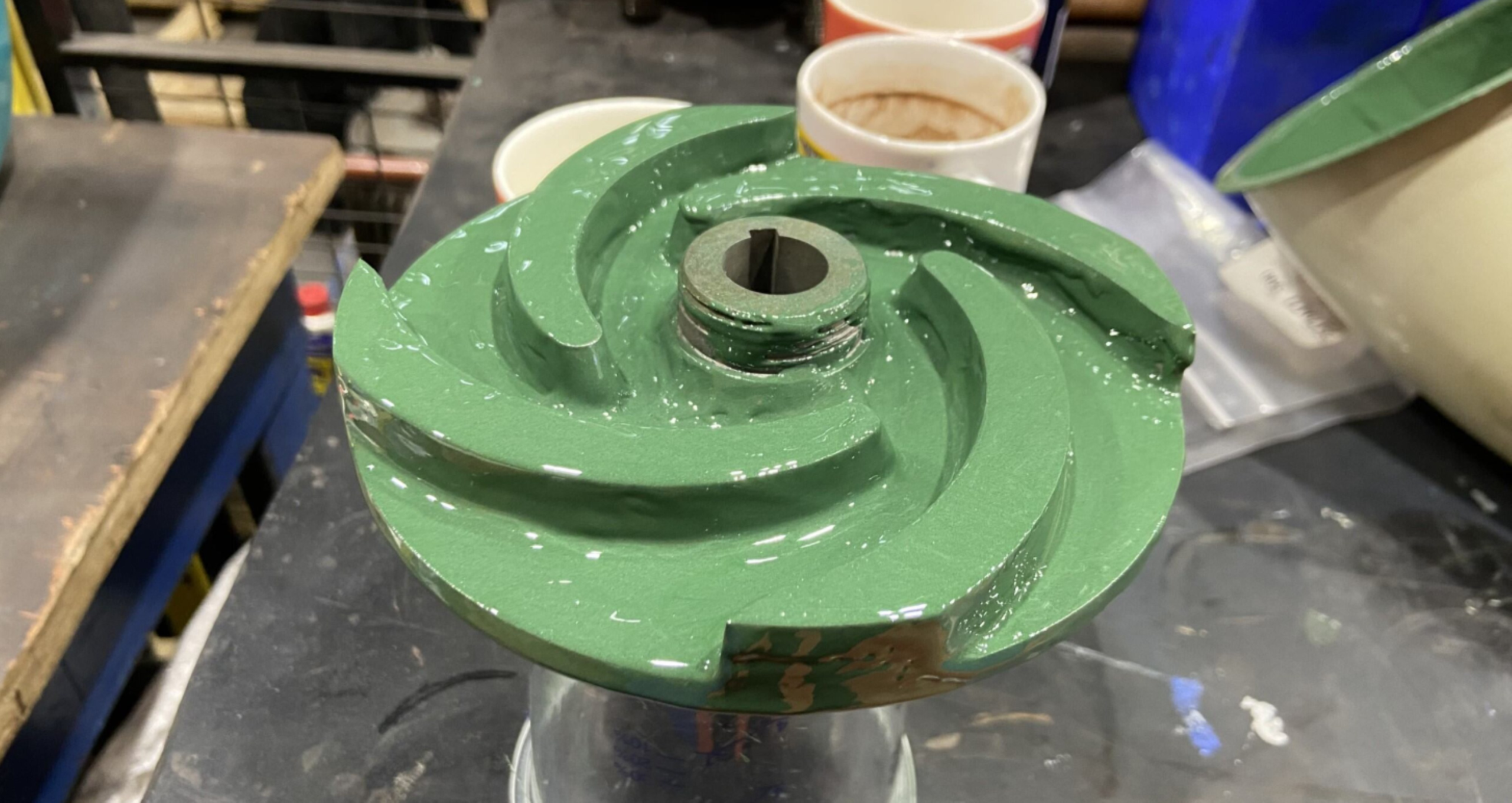
A public swimming facility in the North West of England has significantly reduced its energy consumption and carbon emissions after upgrading its circulation pumps using LOCTITE® PC 7255, a ceramic-filled epoxy protective coating developed to protect metal surfaces from corrosion, erosion and chemical attack in demanding operating environments.
The facility, operated by a local authority, relies on multiple high-capacity pumps to circulate chlorinated water across its swimming pools. These pumps operate continuously and are critical to maintaining water quality and hygiene standards. Over time, exposure to aggressive chemicals combined with sustained flow rates had led to internal surface degradation within the pump casings. This wear increased internal turbulence, reduced hydraulic efficiency and placed additional strain on the equipment.
As a result, more energy was required to maintain the required flow rates, driving up operating costs and increasing the facility’s carbon footprint. The degradation also raised concerns around long-term reliability, with the risk of unplanned maintenance and downtime becoming increasingly difficult to manage. With budgets under pressure and sustainability targets becoming more stringent, the authority sought a solution that could restore pump performance without the cost and disruption associated with full equipment replacement.
Rather than replacing the pumps, the decision was taken to refurbish and protect the existing assets using LOCTITE® PC 7255. The ceramic-filled epoxy coating was applied to the internal metal surfaces of the pump casings during planned maintenance, allowing the work to be carried out with minimal disruption to pool operations. Once cured, the coating restored a smooth internal surface profile while providing long-term protection against further corrosion and chemical attack.
While this project focused on swimming pool circulation pumps, the same protective coating technology is widely used across industrial maintenance environments where efficiency losses are caused by surface wear. Typical applications include pumps handling process water, wastewater or chemicals, pipework and valves exposed to erosion or corrosion, heat exchangers, tanks and chutes and other fluid-handling equipment where surface degradation can lead to increased energy consumption and premature failure. In these applications, restoring smooth internal surfaces helps reduce flow resistance, improve efficiency and extend asset life.
Following the application, the pumps at the swimming facility operated more efficiently, requiring less energy to circulate the same volume of water. Reduced surface roughness inside the pump casings helped lower flow resistance, improving hydraulic efficiency and reducing mechanical stress on critical components. Performance was monitored over a 12-month period to assess the impact of the upgrade.
For each 15 kW pump treated, the facility achieved energy savings of approximately £2,500 per year. In addition, each pump delivered a reduction of around four tonnes of CO₂ emissions annually. The improved efficiency also contributed to reduced wear on internal components, lowering ongoing maintenance requirements and supporting more stable long-term operation.
With three pumps upgraded at the site, the total annual energy saving reached £7,500, while carbon emissions were reduced by approximately 12 tonnes per year. The results delivered a clear return on investment and demonstrated how targeted maintenance interventions can deliver meaningful operational and environmental benefits.
Daniel Aspey, Sales Engineer at LOCTITE said “Projects like this show how targeted maintenance can deliver real, measurable benefits. By restoring internal surfaces and improving hydraulic efficiency, protective coatings such as LOCTITE® PC 7255 help operators reduce energy consumption, extend equipment life and support long-term sustainability goals without the need for costly asset replacement.”
The project highlights how proactive maintenance strategies can play a key role in helping organisations manage ageing infrastructure more sustainably. By improving efficiency at source and protecting critical assets, operators across a wide range of industries can reduce operating costs, improve reliability and support environmental targets without major capital expenditure.
For organisations managing energy-intensive processes, protective coatings such as LOCTITE® PC 7255 offer a practical and scalable approach to improving performance while reducing both costs and environmental impact.