WITT Gas Controls has outlined the integration of electronic gas mixers, dome-loaded pressure regulators and gas safety valves for industrial processing lines. Its technical presentation was published on 23 October during FABTECH 2026 in Las Vegas, which ran from 21 to 23 October. The equipment covers three separate functions: controlling the proportions of constituent gases, holding supply pressure near a selected operating point, and protecting pipework from defined pressure or flow faults. WITT did not announce a new MEM+ product family or a production contract with the presentation.
The MEM+ range uses motor-driven proportional valves to prepare mixtures of two or three non-flammable gases, including nitrogen, oxygen and carbon dioxide. Users can enter a nominal mixture in 0.1 percentage-point increments, with pre-set formulations available through the control system. WITT claims a target response within three seconds and mixing precision better than ±1 percentage point absolute. A fine setting increment describes the resolution of the command, not proof that every delivered mixture remains within 0.1 percentage points of its nominal composition.
Each gas enters the mixer through a controlled valve, and the required relative flow must be maintained as withdrawal from the plant changes. A manually fixed valve ratio can drift when gas supply conditions alter. MEM+ instead changes the motor-driven valve positions in response to its configured operating parameters and monitors the pressure of incoming gases. This permits the controller to call up repeatable settings, while correct operation still depends on adequate supply pressures, valve capacity and a mixer selected for the expected demand.
The distinction between continuous and intermittent withdrawal shapes installation design. Some production equipment consumes mixed gas continuously; other machines draw it in bursts, including when a package is flushed or a chamber is filled. WITT offers MEM+ configurations intended to work with a receiver vessel that holds a volume of prepared mixture between these demand events. The receiver provides a buffer, although the mixer still needs sufficient capacity to restore its pressure between withdrawals and the vessel must meet the applicable pressure and gas requirements.
Remote control is available through a programmable logic controller, machine controller or computer, allowing mixture settings and valve information to be brought into an existing automation system. WITT lists 4–20mA analogue, Ethernet, CAN bus and OPC UA connections as standard interface choices, with PROFINET, RS232 and 0–10V analogue options. The interface provides a route for setpoints and diagnostic data, but an integrator must still configure alarm handling, communication loss responses and the way a supervisory system authorises changes to recipes.
For its KM100-2MEM+ and KM100-3MEM+ variants, WITT’s technical sheet specifies maximum inlet pressure of 20 bar, maximum outlet pressure of 10 bar and maximum differential pressure between incoming gases of 3 bar. These are model-specific ratings; the supplier’s higher-pressure regulators and safety devices have separate pressure envelopes. The highlighted mixers are designated for non-flammable gases. A proposed gas combination must be assessed against material compatibility, oxygen service requirements and the equipment’s intended service, rather than assumed suitable because the controller can adjust the requested ratio.
Dome-loaded pressure regulators address fluctuating gas demand by controlling the pressure available to downstream equipment. A pilot gas acts on a diaphragm and controls the movement of the regulator valve, unlike a conventional regulator that depends primarily on spring loading. WITT’s own-medium arrangement uses the regulated gas as the pilot supply and incorporates a pilot pressure regulator. The device can maintain a selected outlet pressure as conditions vary within its rated range; its pressure-control performance cannot be inferred from the stated mixing accuracy of MEM+.
An integrated gas supply may place a regulator upstream of a mixer to limit the effect of supply variations, while separate controls manage the pressure delivered at the point of use. WITT also describes retrofit options for selected pilot regulators. The installed body, available adjustment range and gas seals determine whether an upgrade can be fitted. Changing the regulator without checking downstream restrictions, maximum working pressure and relief capacity could leave a line with the wrong operating margin despite apparently stable pressure readings.
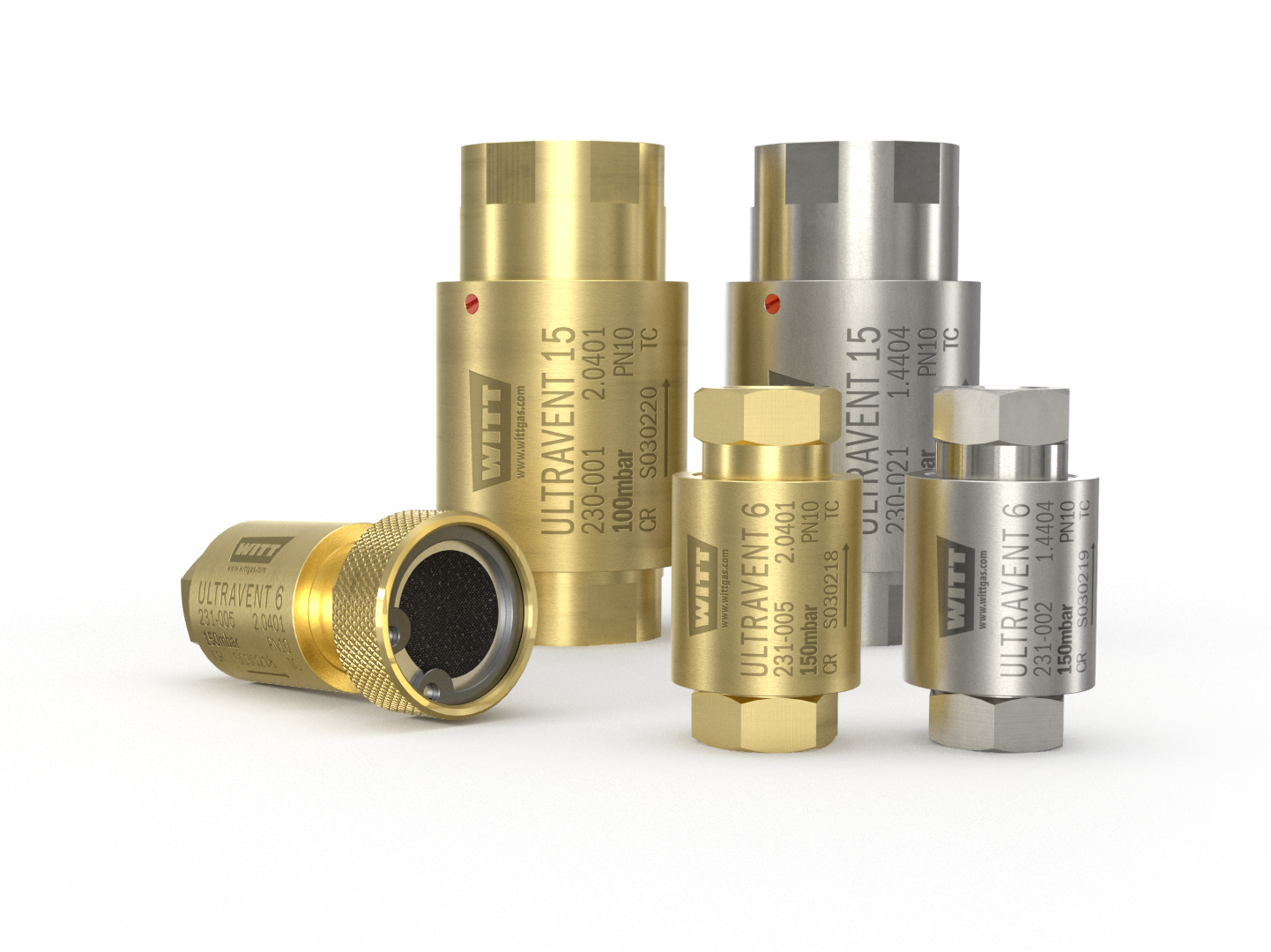
Reverse-flow and pressure protection require different devices. WITT’s ULTRA non-return valves are designed to inhibit gas travelling backwards along a line, whereas ULTRAVENT millibar valves relieve excess pressure or perform other defined low-pressure regulating duties. ULTRAVENT variants cover nominal settings from 5 to 500 mbar; the supplier identifies TÜV safety-valve type approval for specified configurations in the 100–500 mbar range, not every version and setting. Selection must account for gas, relief capacity, seal material and the pressure rating of the protected equipment.
A supply line can have a correct mixture setpoint yet deliver a different composition after a gas cylinder empties or a process withdrawal exceeds the available flow. Monitoring the inlet pressure and valve positions can identify a supply fault, but those signals do not constitute an independent measurement of the final gas composition. WITT offers gas analysis as an additional function where the application requires verification. The distinction is relevant to welding atmospheres, packaging and controlled industrial processes in which mixture composition and pressure must both remain within defined limits.
WITT’s October presentation brought existing MEM+ mixing, dome regulation and safety-valve capabilities together for equipment builders assessing integrated gas control. It did not include a newly commissioned installation, measured scrap reduction or an independently demonstrated productivity improvement. For a proposed production line, the outstanding engineering decisions remain the gas specification, instantaneous and average withdrawal rates, pressure margins, process alarms and the tests needed to establish stable delivery under the intended operating conditions.