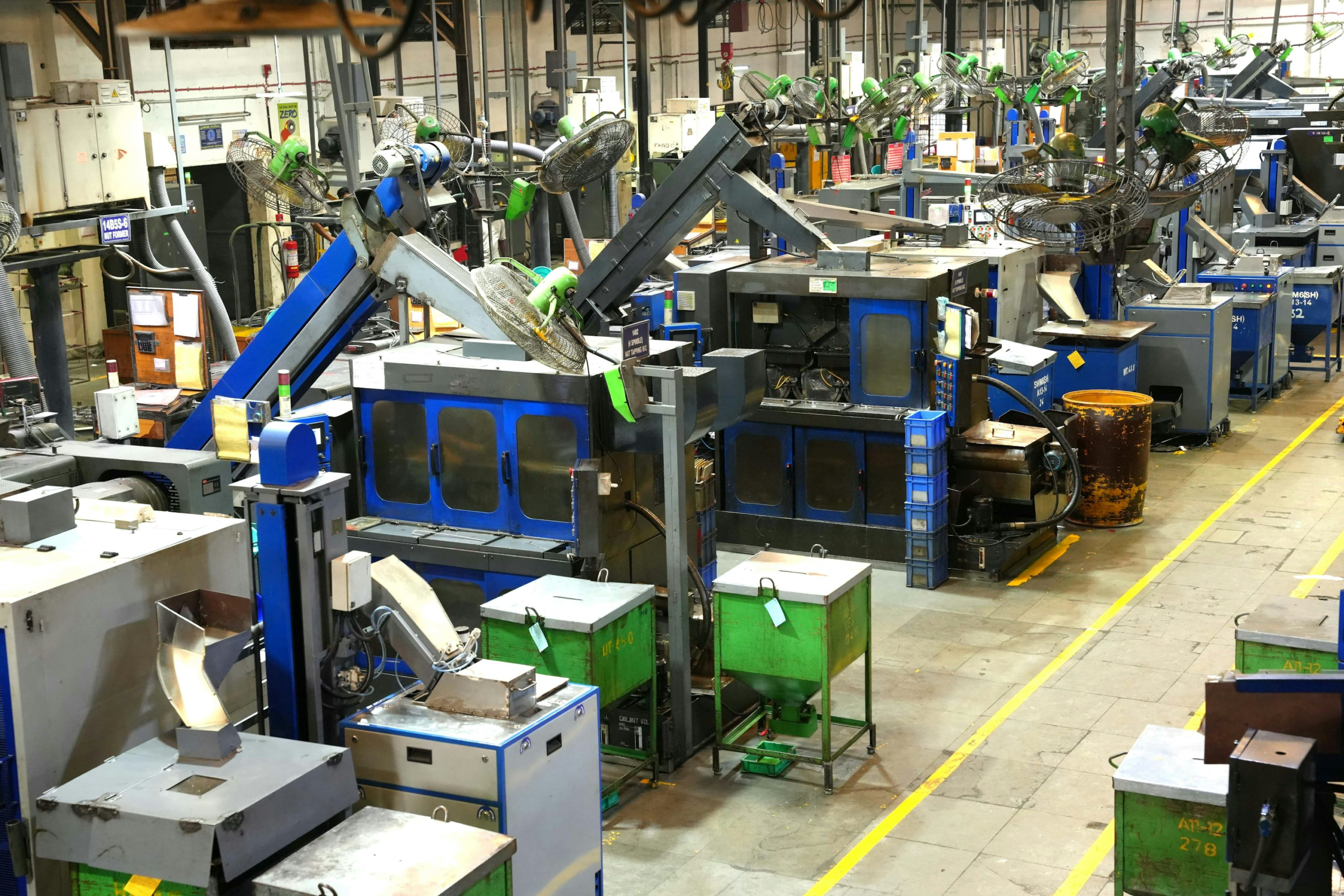
Welsh businesses and research organisations can apply for grants of £50,000 to £250,000 towards machinery and technology under a new capital funding round aimed at productivity, efficiency, competitiveness, and more resource-efficient operation.
The Welsh Government has opened the latest SMART Flexible Innovation Support Capital Equipment Fund to businesses, universities, research organisations, further-education colleges, third-sector organisations, and NHS health boards operating in Wales. Applications close at 23:59 on 25 September 2026.
The scheme supports purchase and installation of machinery and equipment rather than general operating expenditure. Successful projects must show how new technology will improve productivity and bring wider benefits to Wales, while proposals that reuse materials or make better use of resources are specifically encouraged.
Since 2023, SMART Flexible Innovation Support has awarded more than £20.1m to 171 organisations. The latest round extends that programme through direct capital spending, reducing part of the financial hurdle involved when organisations want to introduce new production equipment, automation, research machinery, or other technology with a measurable operating effect.
Capital grants can influence industrial investment differently from broad research funding. A machine tool, robot, inspection system, automated handling cell, process line, or piece of laboratory equipment becomes part of the organisation’s productive capacity once installed, and its performance can be measured through output, labour utilisation, quality, energy use, material yield, or the new products and services it enables.
The government highlighted REECO Automation as an example of earlier SMART support. The company received a £100,000 research and development grant in 2025 and has worked on an equipment-agnostic robotic palletising system together with humanoid robotics for industrial applications. Those projects sit close to the type of automation and advanced technology the new equipment fund is intended to help organisations deploy.
The challenge starts after a grant is awarded. Buying equipment does not guarantee a productivity improvement if the new asset is poorly integrated, operators are not trained, upstream and downstream processes remain constrained, or production volumes are too low to use the available capacity efficiently.
Installation can also carry costs beyond the headline machine price. Foundations, guards, electrical supplies, compressed air, extraction, networking, software, controls, tooling, commissioning, and production trials can all be required before equipment becomes useful. Organisations applying for support therefore need a credible implementation plan rather than a shopping list of technology.
The fund’s broad eligibility creates another route for equipment to enter Welsh industry indirectly. Universities and research centres can install specialist machinery for applied development and testing, while further-education colleges can build training capability around processes already appearing in factories. That can shorten the distance between experimental work, workforce skills, and commercial production where facilities are shared effectively.
Resource efficiency adds a second investment test alongside productivity. Modern manufacturing equipment is increasingly evaluated on scrap, energy consumption, water use, material recovery, process control, and data collection as well as cycle time. A project that reduces waste or lowers energy use can improve operating cost without necessarily increasing nominal production capacity.
That becomes more valuable when manufacturers face volatile input prices. Better process control can reduce rejected parts and rework, variable-speed systems can cut unnecessary energy consumption, and automated inspection can identify defects earlier in a production sequence before more material and labour have been added to a component that will ultimately be scrapped.
The £50,000 to £250,000 grant range puts the programme above very small business-support schemes but below the scale of major industrial investment packages. It is large enough to cover a meaningful share of robotics, inspection, processing, digital-manufacturing, and laboratory equipment, particularly for small and medium-sized organisations that might otherwise delay capital expenditure because of uncertain payback.
Applications will be assessed after the September deadline, with funding decisions expected from the week beginning 26 October. That gives organisations a relatively short period to define the technical problem, select equipment, quantify the expected productivity or resource benefit, and demonstrate that the project can be delivered within the fund’s requirements.
The stronger applications will be those that connect the equipment to an operating constraint rather than relying on novelty alone. Wales has no shortage of technologies that can be bought; the industrial return will come from installations that remove a bottleneck, improve yield, reduce resource consumption, or create a capability that customers are prepared to pay for.