Britain’s long duration electricity storage programme faces renewed scrutiny over the sourcing of battery equipment and associated operational technologies, raising questions about the security requirements governing procurement for critical energy infrastructure.
The Office of Gas and Electricity Markets (Ofgem) provisionally selected 16 electricity storage developments in June under its cap and floor framework, which is designed to support investment in facilities capable of supplying electricity over extended periods.
The portfolio represents approximately 7.6GW of power capacity and 137GWh of electricity storage, encompassing technologies including pumped storage hydropower, compressed air energy storage, lithium-ion batteries, and vanadium redox flow batteries.
The Guardian reported on 25 November that developers Field Energy and Statera Energy, associated with seven shortlisted battery projects, have previously purchased equipment from Chinese manufacturers.
China’s substantial share of international battery manufacturing has made its industrial suppliers important participants in the development of utility-scale electricity storage. Its manufacturing networks encompass battery materials, cells, assembled storage systems, and associated electrical equipment.
However, the technical and commercial relationships established during procurement extend beyond the geographical origin of the battery cells.
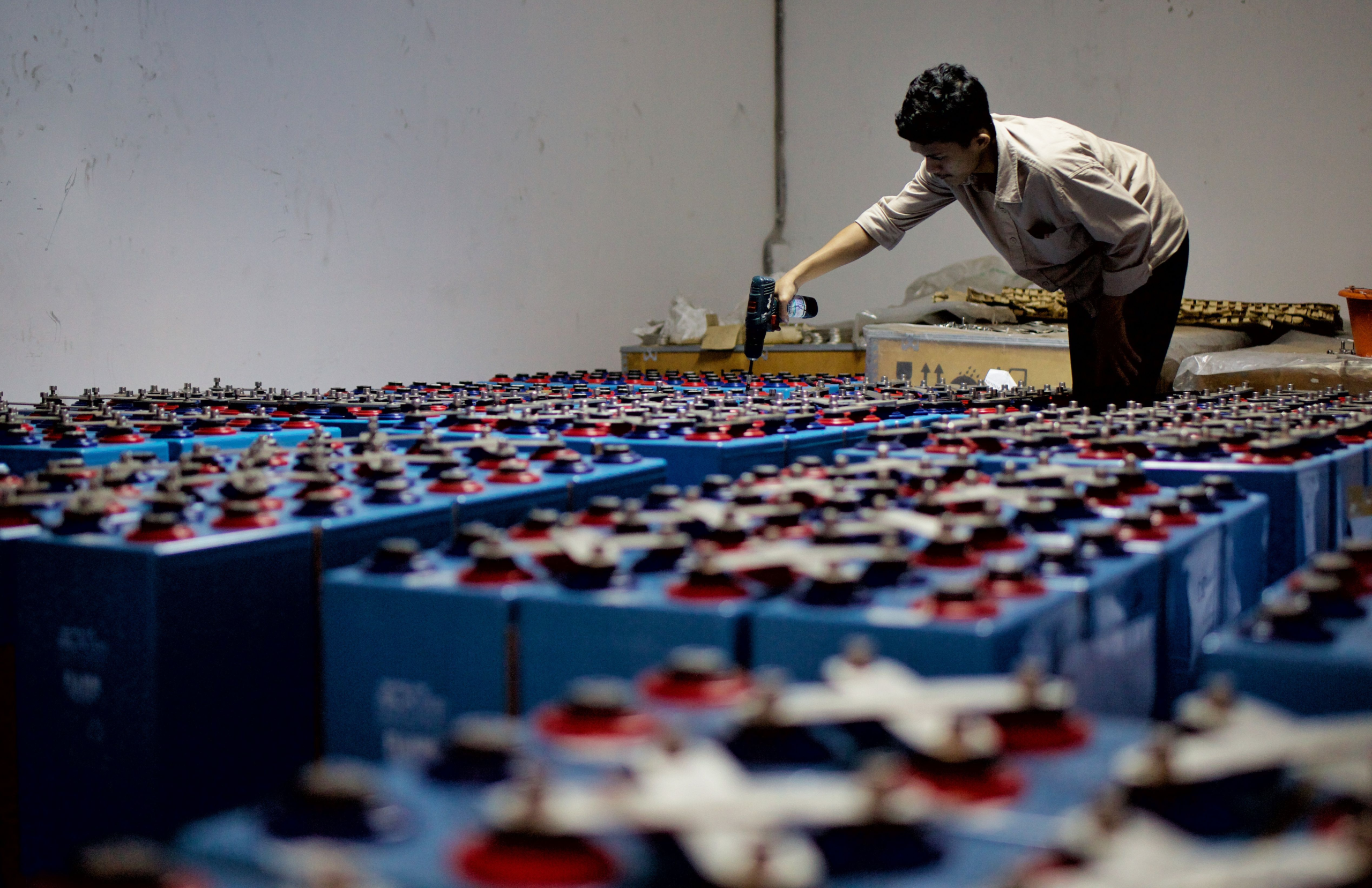
Utility-scale battery installations combine electrochemical storage with electrical protection, thermal management, instrumentation, power conversion, and several layers of operational control. Individual suppliers may provide different elements of the completed system, with their responsibilities continuing into commissioning, maintenance, and subsequent equipment modifications.
Battery management systems monitor cell voltages, current, and temperature, allowing protective functions to respond to conditions that could damage components or compromise system safety.
Their operation must be coordinated across multiple cells and modules, since variations in electrical or thermal conditions can affect the performance of individual elements within a much larger installation.
Power conversion equipment connects the direct current battery system to the alternating current electricity network, regulating the transfer of electrical energy during charging and discharging.
A wider energy management system coordinates these activities with the operating requirements of the site, electricity market conditions, and the network services for which the installation has been contracted.
The geographical origin of an electrochemical cell does not necessarily determine who supplies the operational software or has access to the systems controlling its use. An installation may incorporate cells, power conversion equipment, and control technology sourced from several different countries.
Security assessments consequently require examination of the relationships between individual equipment packages, including how operational information is exchanged and which organisations retain access to the associated systems throughout their service lives.
Remote connectivity can support diagnostics, fault investigation, software maintenance, and technical assistance. Managing those connections requires appropriate authentication, access restrictions, monitoring, and procedures for authorising changes to operational equipment.
Software maintenance arrangements also influence lifecycle security. Operators must establish how updates are supplied and validated, whether essential functions can remain available during interruptions to external communications, and which parties are authorised to modify equipment configurations.
Those requirements apply regardless of the nationality of individual suppliers. Actual exposure depends on the architecture of the equipment, the access arrangements established during integration, and the effectiveness of the controls maintained throughout operation.
The scale of Britain’s proposed storage programme increases the commercial importance of these procurement decisions. Long duration projects must combine adequate electrical output with sufficient stored energy to sustain that output over several hours.
Ofgem’s framework addresses storage technologies capable of delivering electricity for at least eight hours, distinguishing the proposed developments from many shorter duration battery installations currently operating on the network.
Increasing the amount of stored energy relative to a site’s power capacity affects the quantity of battery equipment required, the physical arrangement of the facility, and the associated electrical and thermal infrastructure.
The resulting demand could provide opportunities for industrial suppliers across several stages of the battery storage value chain. British businesses could participate through electrical distribution equipment, instrumentation, systems integration, installation, testing, and maintenance, irrespective of where the battery cells themselves are manufactured.
However, establishing alternative sources of complete battery systems requires suppliers capable of delivering the specified quantities while meeting equipment performance, safety, and lifecycle support requirements.
Procurement must also account for manufacturing lead times and overall project costs, particularly where the commercial viability of a development depends on the financing arrangements established under Ofgem’s framework.
The cap and floor mechanism is intended to improve investment certainty by providing a regulated revenue floor under specified conditions while limiting returns retained above an established cap.
That framework does not determine the origin of equipment used within individual developments. Supplier selection and the integration of operational technology remain separate engineering and commercial activities.
Ofgem’s provisional portfolio establishes the potential scale of the next phase of British electricity storage investment. Final project decisions, equipment procurement arrangements, and the security requirements applied to their operational systems will determine how the programme translates into industrial contracts.