Tokamak Energy has been appointed magnet systems partner for the UK’s STEP fusion programme under a £70 million contract running from March 2026 to March 2029, giving the company a direct role in one of the most demanding parts of Britain’s prototype fusion power plant effort.
UK Fusion Energy said the agreement will make Tokamak its first engineering systems partner for next-generation magnet technologies. The scope covers magnet architecture, tokamak systems engineering, and plasma-facing integration, with the private fusion company working inside the integrated programme team as STEP moves out of concept development and into the next stage of whole-plant engineering.
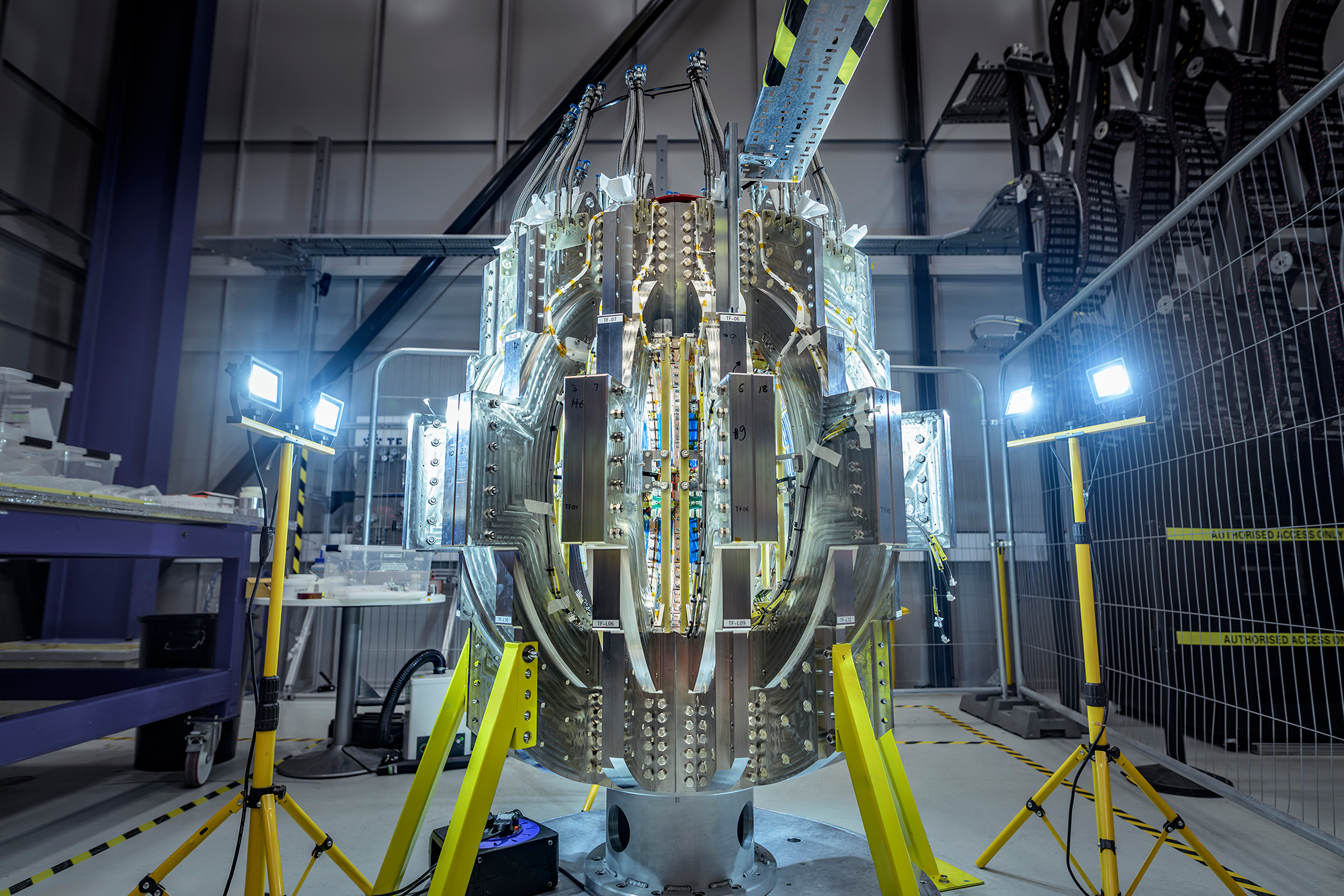
The award matters because superconducting magnet performance is one of the hardest technical constraints in any commercial fusion pathway. STEP needs very strong, stable, and manageable magnetic fields, and the design challenge goes well beyond coil strength alone into cooling, structural integrity, quench behaviour, integration, and manufacturability. Tokamak Energy’s case for the role rests on its combination of live fusion hardware and magnet development infrastructure, including the ST40 spherical tokamak and its Demo4 high-temperature superconducting magnet system.
That capability gives STEP access to something more useful than presentation-grade confidence. Tokamak says ST40 and related magnet platforms can be used to test magnetic configuration, coil forces, plasma stability, and quench behaviour under conditions closer to integrated operation than simulation-only work can offer. That does not remove the scale-up risk, but it can compress validation cycles at a point when the programme is trying to translate physics and subsystem advances into an engineered plant architecture.
The appointment lands alongside wider movement in UK fusion policy. Government this week confirmed fresh programme milestones and restated support for STEP through UK Fusion Energy’s next phase, with the prototype power plant still targeted for West Burton in Nottinghamshire by 2040. Fusion has a habit of making even optimistic timelines look fragile, but magnet engineering is one of the places where progress either becomes tangible or stalls in public.