Tata Steel and Utility Global will undertake front-end engineering and design studies for a proposed hydrogen production facility at the Kalinganagar steelworks in Odisha, India, using gases generated during existing steelmaking operations.
The project would apply Utility Global’s H2Gen technology to produce high-purity hydrogen, with a planned capacity of 10 tonnes per day.
The engineering programme will provide information needed for Tata Steel’s board to consider a final investment decision. Neither company has confirmed construction approval, a capital cost or a commissioning date.
The proposal was disclosed on 18 November 2026 and would represent the first announced industrial deployment of H2Gen in India if the project proceeds.
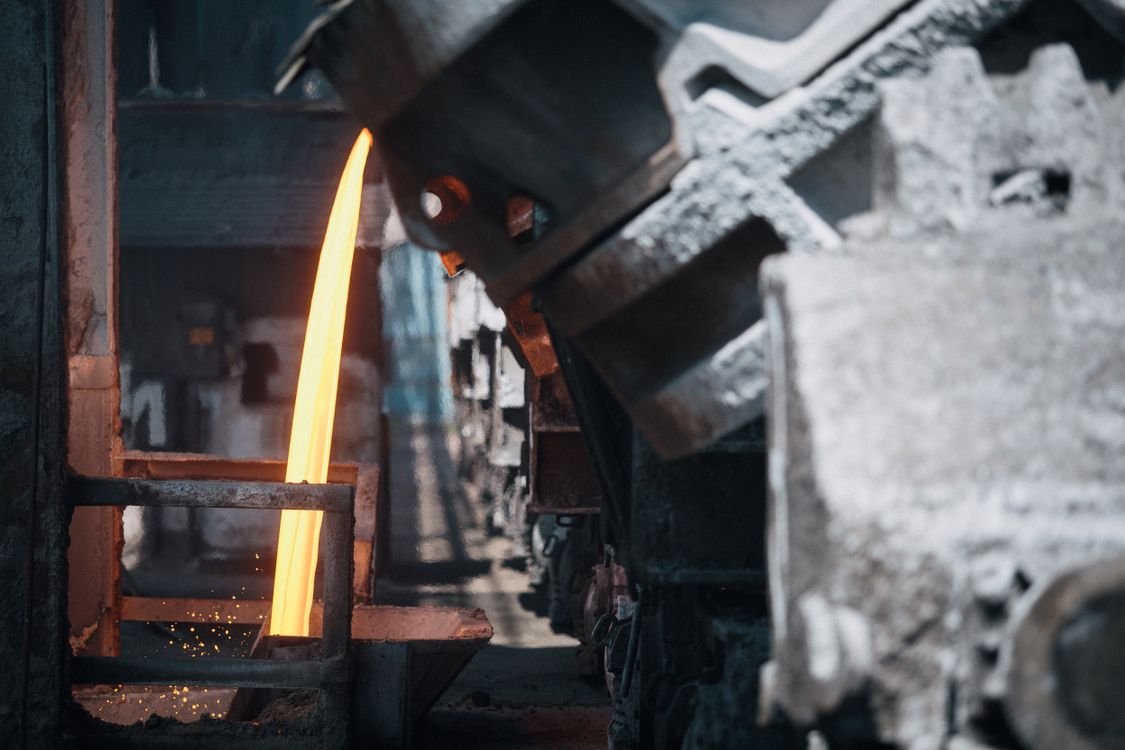
The planned installation would use a mixture of blast furnace gas and basic oxygen furnace gas, both generated during the integrated steelmaking process.
These gases arise at different stages of production and contain components with recoverable chemical energy.
Blast furnace gas is produced during the conversion of iron ore into molten iron, while basic oxygen furnace gas is generated when oxygen is introduced during the refining of molten iron into steel.
Their compositions depend on the process and its operating conditions.
Both gas streams may contain carbon monoxide and other constituents requiring controlled handling because of their chemical properties and potential hazards.
Steelworks commonly recover process gases for use as fuels in other parts of the operation.
The availability of these streams can reduce the need for externally purchased energy, although their use depends on the requirements of the equipment and processes consuming them.
The proposed hydrogen project would introduce another potential use for material already circulating through the steelworks.
Utility Global’s H2Gen technology is designed to produce hydrogen from water by making use of chemical energy available in industrial off-gases.
The company describes the process as avoiding the electricity input normally required for conventional water electrolysis.
That comparison concerns the principal hydrogen production mechanism. It does not establish that every item of equipment in a complete industrial installation will operate without electricity.
Pumps, instrumentation, process controls and supporting systems may still require energy, depending on the final engineering configuration.
Conventional electrolysis uses electrical energy to split water into hydrogen and oxygen.
Its energy consumption depends on the technology, operating conditions and the overall system design.
H2Gen approaches the production problem differently by using energy contained in selected industrial gas streams.
The detailed process configuration proposed for Kalinganagar has not been disclosed publicly, so its operating characteristics cannot yet be compared quantitatively with a specified electrolysis installation.
The engineering study will need to establish the availability and properties of the gases supplied to the proposed plant.
A steelworks does not produce identical quantities of process gas under every operating condition.
Gas flow and composition can vary with production rates, feedstock properties and the way the steelmaking equipment is operated.
A new hydrogen facility must therefore accommodate the conditions expected during normal production, as well as defined changes in operating state.
The proposed project also needs to account for existing uses of the off-gases.
Material directed towards hydrogen production may otherwise have been used for heating, power generation or other processes within the works.
Changing that allocation can affect the energy balance across the wider site.
The benefits of a hydrogen installation must consequently be assessed against the complete system rather than the quantity of hydrogen produced in isolation.
Gas preparation is another engineering consideration.
Industrial process gases can contain particles or constituents that are unsuitable for particular downstream equipment.
Depending on the requirements of H2Gen and the condition of the available streams, treatment or cleaning may be needed before the gases enter the hydrogen production process.
The required equipment will influence capital expenditure, maintenance requirements and the overall arrangement of the facility.
Hydrogen product quality also needs to be established.
Different industrial applications impose different limits on impurities, pressure and delivery conditions.
A facility producing high-purity hydrogen must therefore include suitable arrangements for controlling the finished gas and demonstrating that it meets the intended specification.
Tata Steel has not disclosed the complete destination of the hydrogen generated by the proposed installation.
It has also not confirmed that the project will directly displace a particular quantity of fossil fuel in an identified production process.
Hydrogen could potentially support industrial activities where its properties are suitable, but the practical application depends on the equipment and process requirements.
The stated capacity of 10 tonnes per day represents the planned maximum daily output under appropriate operating conditions.
It is equivalent to approximately 3,650 tonnes over a year of uninterrupted operation at that rate.
That annual figure is a mathematical conversion, not a production forecast. Actual output would depend on equipment availability, operating hours, the supply of suitable process gases and any production interruptions.
The project will also require an assessment of its environmental performance.
Hydrogen production is often discussed in connection with industrial decarbonisation, but the carbon impact of an individual process depends on its feedstocks, energy inputs and the fate of carbon-containing material.
The use of steelmaking off-gases does not automatically make the resulting hydrogen emissions-free.
A meaningful comparison must consider the emissions associated with the process and the activities it replaces or changes elsewhere within the steelworks.
Utility Global has positioned H2Gen as a technology intended to support lower-carbon industrial production.
Its proposed installation at Kalinganagar would provide an opportunity to assess that approach within an operating integrated steelworks, rather than under isolated development conditions.
Such integration creates practical requirements associated with process safety, equipment availability and the coordination of manufacturing activities.
The hydrogen facility cannot be evaluated independently of the blast furnace and steel refining operations supplying its feedstock.
The companies intend to use front-end engineering and design to establish the configuration and technical basis for an investment decision.
This stage normally involves defining the principal process requirements, major equipment, utility connections and estimated project costs before detailed construction commitments are made.
Tata Steel has undertaken other work involving hydrogen and alternative gases within its manufacturing operations.
The company has previously demonstrated selected gas injection technologies and commissioned a carbon dioxide capture facility associated with blast furnace gas at Jamshedpur.
Those projects provide background to its wider work on steelmaking processes, but they do not establish the performance or commercial viability of the proposed H2Gen installation.
The Kalinganagar project remains at the engineering assessment stage.
The next substantive milestone will be completion of the studies and consideration of the resulting investment proposal by Tata Steel’s board, ahead of any construction or commissioning programme.