Rockwell Automation has signed a definitive agreement to acquire Austrian autonomous mobile robot manufacturer AGILOX from Carlyle, extending its industrial automation portfolio with equipment designed for automated material handling inside factories and warehouses.
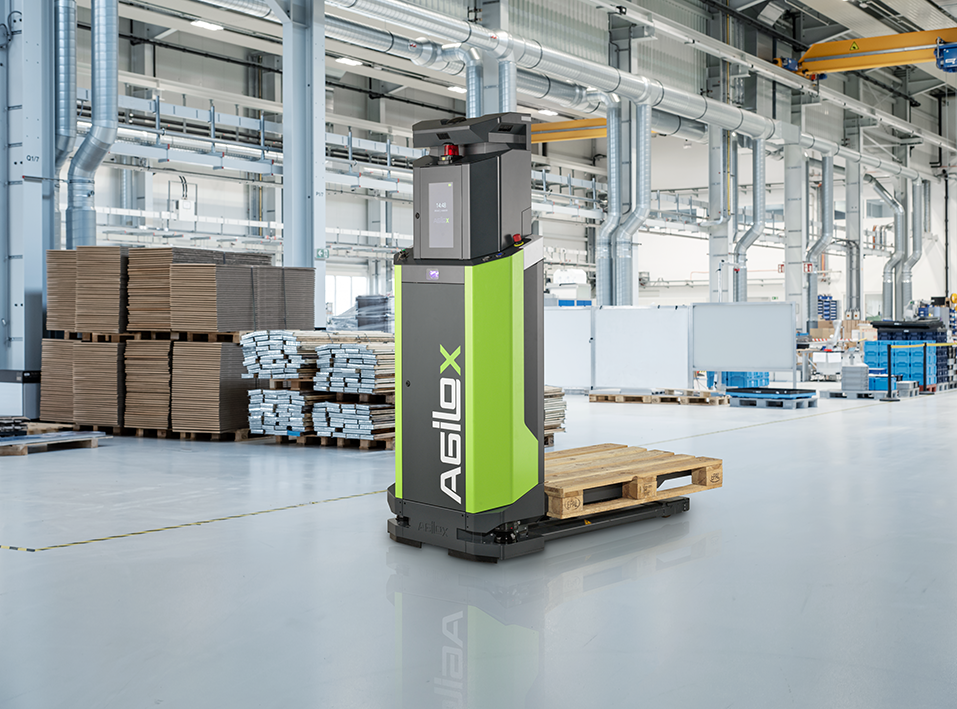
The proposed transaction would bring AGILOX’s autonomous forklift vehicles together with Rockwell’s existing OTTO mobile robotics platform, which includes flatbed vehicles used to transport materials between locations within industrial facilities.
Rockwell expects the acquisition to close during the second quarter of its 2027 financial year, subject to regulatory approval and customary closing conditions. Financial terms have not been disclosed.
AGILOX is headquartered in Neukirchen bei Lambach, Austria, and employs more than 250 people worldwide. It has subsidiaries in Europe, the United States and China.
The company reports deploying more than 2,500 autonomous mobile robots and serving more than 400 customers, with a network of over 40 partners across more than 35 countries.
Its customers operate in sectors including automotive manufacturing, consumer goods, pharmaceuticals, food and beverage, and industrial logistics.
These figures describe AGILOX’s existing operations rather than equipment orders secured by Rockwell through the proposed acquisition.
The strategic rationale centres on combining different methods of moving material within a production facility.
OTTO’s flatbed mobile robots carry loads on a platform, allowing materials or assemblies to travel between designated collection and delivery locations.
The loading and unloading arrangement depends on the equipment and infrastructure installed at each location. A flatbed robot may interact with conveyors, transfer stations or other mechanisms that place and remove its load.
AGILOX’s forklift-style autonomous mobile robots address applications in which the vehicle must also lift and position compatible loads.
This can include transporting pallets and other load carriers between storage areas, production operations and material handling stations.
A lifting mechanism introduces requirements different from those associated with a flatbed transport vehicle.
The robot must manage the position of its forks or other handling equipment, identify the load and maintain suitable stability while lifting or moving it.
The weight and geometry of a load influence how it can be transported. Centre of gravity, handling height and the characteristics of the floor can affect the operating conditions permitted for a particular vehicle.
Automated handling also depends on the design of the environment in which the robots operate.
Factory floors contain pedestrians, fixed equipment, manually driven vehicles and materials that may temporarily obstruct a route.
An autonomous mobile robot must navigate within that environment while observing the safety arrangements established for its intended use.
AGILOX uses navigation and proprietary swarm networking technology to coordinate vehicle activity. Its systems are designed to allow robots to operate without requiring every transport decision to be directed through a conventional central fleet management architecture.
Rockwell describes the technology as complementary to OTTO’s established flatbed platform.
The proposed combination could give customers access to different robot configurations through a wider supplier portfolio, although the companies have not confirmed that all existing vehicles will immediately operate under one software system.
Integration of the two platforms will require decisions about how transport tasks are generated, assigned and monitored.
A production line may request components from a storage area when a workstation is approaching the end of its current batch. The material handling system must identify the required load and arrange delivery to the appropriate location.
Where several vehicles are operating, task allocation also needs to consider their availability, carrying capability, location and battery condition.
The movement of equipment through shared routes can create further constraints. Robots may need to negotiate intersections, avoid temporary obstacles or wait for another vehicle to complete an operation.
Adding more vehicles does not necessarily increase throughput if routes, loading stations or destination equipment are already operating at capacity.
The design of an autonomous transport system therefore depends on the entire material flow, including collection points, delivery stations and the production schedules the movement is intended to support.
Such coordination becomes important in factories using automated machinery. A machine with adequate processing capacity can still become idle if components fail to arrive when required.
Finished products also need to be removed from workstations, particularly where accumulation would prevent the next production cycle from beginning.
Mobile robots can address some of these movements without requiring the same fixed conveyor infrastructure used in other forms of automation.
Their flexibility is nevertheless bounded by the loads they can handle, the routes they can traverse and the safety conditions established within the facility.
Rockwell intends to incorporate AGILOX into its Intelligent Devices operating segment after completion of the acquisition.
The company has an extensive industrial automation business encompassing control systems, drives, software and connected production equipment.
Combining robotics with existing automation infrastructure may offer opportunities to coordinate material movement and manufacturing operations more closely.
Those opportunities depend on practical system integration rather than ownership of the two businesses alone.
The transaction does not establish that customers will receive a fully integrated AGILOX and OTTO operating platform immediately after closing.
Rockwell has not disclosed a timetable for product integration, new combined models or the additional manufacturing capacity it intends to establish.
Carlyle acquired a majority interest in AGILOX in 2021 and supported its expansion into additional markets.
The investment firm says the business quadrupled its revenue during Carlyle’s ownership while broadening its product range and introducing a Robots-as-a-Service offering.
Those historical growth figures do not provide a forecast of Rockwell’s revenue or the financial return from the proposed transaction.
AGILOX has also invested in international operations and production infrastructure, creating a business with an established European manufacturing and customer base.
Rockwell expects the acquisition to strengthen its industrial material movement business, including opportunities involving customers in consumer packaged goods and life sciences.
The next formal milestone is completion of the necessary approvals and closing conditions during the expected fiscal second quarter of 2027.
Subsequent product and operational decisions will determine how the acquired robots are incorporated into Rockwell’s wider manufacturing automation offering.