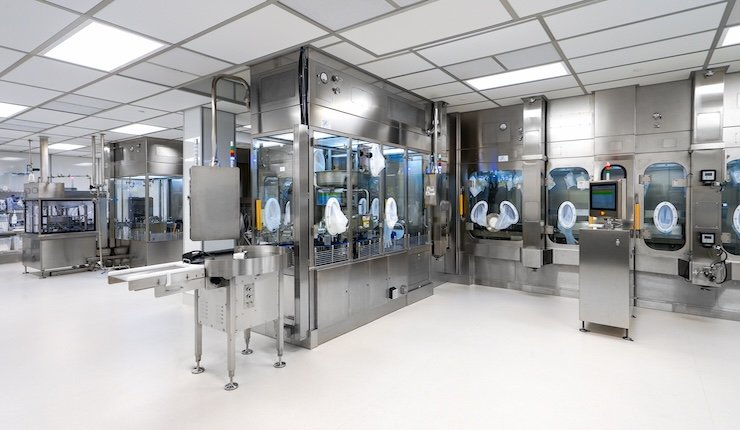
Steriline has introduced two artificial intelligence technologies intended to combine image analysis, process monitoring, and predictive maintenance across aseptic fill finish equipment.
OmniAI Vision uses camera images to monitor products and operations, while OptiLAIN analyses information from the wider machine and its installed sensors. Together, the systems provide complementary views of product handling and equipment behaviour.
Conventional machine vision designs often assign a dedicated camera or sensor to each inspection function. Steriline’s approach uses fewer cameras positioned away from critical process areas, with algorithms extracting several types of information from the same image stream.
Reducing the number of devices within an isolator or other containment system can simplify surfaces and improve access. It can also limit physical obstructions around laminar airflow, cleaning operations, maintenance, and sterilisation processes.
OmniAI Vision processes images in real time to monitor the correct execution of operations and assess product related conditions. The architecture is intended to support increasingly autonomous machine functions without adding unnecessary equipment inside the controlled area.
OptiLAIN examines machine status through other sensor data, recording significant events and changes in operating performance. Continuous monitoring can identify behaviour associated with deterioration before a failure interrupts production.
The combined platform links product quality observations with information about equipment condition and efficiency. A vision system may identify an incomplete operation, while process and maintenance data can help determine whether the cause lies in timing, motion, wear, pressure, temperature, or another machine variable.
Steriline developed the technologies through a research programme involving the Politecnico di Milano and associated centres. The company has installed around 700 systems across more than 50 countries, providing a substantial base of operating applications.
Alessandro Caprioli, product development director at Steriline, said: “This approach makes it possible to reduce the number of devices installed inside the isolator or any other containment system, improve laminar flow, simplify cleaning operations and make the machine even more accessible for maintenance work.
“This flexible monitoring method also represents the first step towards creating an increasingly autonomous system.”
Aseptic filling places unusual demands on automation because a mechanical intervention can become a contamination control event. Equipment must perform reliably while limiting operator access, particle generation, difficult surfaces, and disturbances to the protected environment.
The consequences of component failure can extend far beyond the repair itself. A rapid replacement of a failed pneumatic cylinder showed how the availability of one engineered component can determine whether pharmaceutical output resumes or a lengthy stoppage develops.
Predictive maintenance can reduce that exposure where sensor data provides a reliable warning of deterioration. Changes in motor current, cycle time, pressure, vibration, temperature, position, or actuator performance may indicate a developing fault before product handling is affected.
Maintenance recommendations still need traceable data, approved procedures, equipment history, and a defined decision process. False alarms create unnecessary interventions, while missed warnings can give operators misplaced confidence.
Machine vision faces similar validation requirements because lighting, reflections, transparent containers, product variation, camera contamination, vibration, and component replacement can alter image quality. The system must continue to detect relevant conditions across the approved operating range.
Algorithm governance will form part of implementation. Manufacturers must establish whether a model remains fixed after validation, how updates are assessed, who can change settings, and how the software version is linked to batch and equipment records.
EU GMP Annex 1 has already increased attention on contamination control strategy, intervention reduction, and barrier system design. Artificial intelligence may support those objectives, but it does not remove the requirement for documented process understanding and qualified equipment.
Integration with manufacturing execution, batch records, and maintenance systems could allow events to be reviewed against the precise product, recipe, equipment state, and intervention history. That connection must preserve data integrity and prevent uncontrolled changes to approved records.
Combining vision, control, alarm, and maintenance data can help engineers determine whether a recurring quality event is associated with gradual mechanical change rather than an isolated product anomaly.
Steriline’s systems move fill finish digitalisation further into the machine itself. Adoption will depend on whether manufacturers can validate the outputs, integrate them with maintenance and quality systems, and show that greater automation reduces operational risk without making the equipment harder to understand, validate, maintain, audit, repair, or service reliably in production.