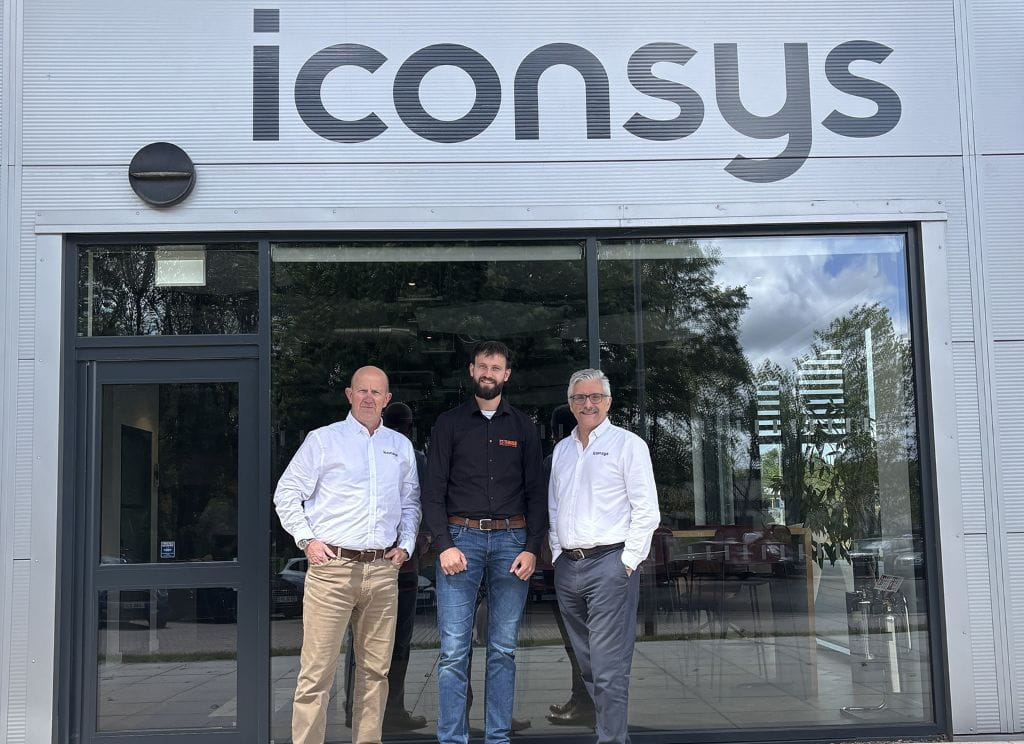
Soraluce has opened a dedicated UK subsidiary, bringing sales, application engineering, technical support, and after-sales services closer to manufacturers using large-format milling, boring, turning, multitasking, and automated machining systems.
The operation will serve customers across Britain and Ireland, with managing director Graeme Thomas leading the local team. Soraluce’s equipment is used in aerospace, energy, rail, capital equipment, and general engineering, where components are often too large, complex, or valuable for conventional production machinery.
Owned by Danobatgroup, the machine-tool division of Mondragon Corporation, the company supplies travelling-column machines, horizontal and vertical machining centres, boring systems, vertical lathes, and turn-mill platforms. Many installations are configured around individual parts or product families rather than sold as standard standalone machines.
A direct subsidiary changes the support structure around those systems. Large machine tools are commonly purchased as part of a wider production package involving foundations, workholding, tooling, probing, simulation, coolant management, extraction, inspection, automation, and operator training, so local engineering input can influence output long after installation.
Process prove-out is particularly demanding when parts carry substantial material and machining value before the final operations begin. Aerospace structures, turbine components, dies, moulds, rail equipment, and energy-sector parts may remain on a machine for many hours or several days, leaving little tolerance for vibration, thermal drift, fixture weakness, or programming error.
Machine availability also weighs heavily on investment decisions. When one asset carries a large proportion of a factory’s capacity, an extended breakdown can disrupt several customer programmes at once, while spare-part delays or remote diagnostic bottlenecks can turn a manageable fault into a missed delivery.
By placing sales and service responsibility within the UK, Soraluce can shorten the route between machine users and its factory engineering teams. The arrangement should also give the manufacturer a clearer view of recurring applications, maintenance requirements, and investment patterns across British industry.
That feedback is becoming more valuable as companies automate lower-volume work. Pallet systems, robotic loading, tool monitoring, probing, and digital scheduling are no longer confined to automotive production; subcontractors and specialist manufacturers are combining them with five-axis machining to extend productive hours without relying on continuous manual attendance.
An automated medical machining cell installed in Leeds shows how the model is spreading into regulated, high-mix production. Two five-axis centres, robotic handling, and integrated storage allow the manufacturer to increase output while preserving the process control required for medical components.
Large-part machining presents a more difficult version of the same problem. Components may exceed standard pallet dimensions, loading systems need greater payload and reach, and low annual volumes can weaken the case for fixed automation, which increases the importance of adaptable handling, in-cycle measurement, and reliable digital process data.
Manufacturers are also trying to capture work linked to defence, aerospace, nuclear, offshore, and power programmes, but capacity alone does not secure those contracts. Customers require traceability, repeatability, inspection evidence, controlled processes, and confidence that the equipment and technical support will remain available throughout long programme lives.
Skills remain the limiting factor around many advanced machines. Programmers, applications engineers, maintenance specialists, metrology staff, and experienced operators determine whether a high-value platform reaches its intended utilisation, and the shortage of those capabilities can leave expensive equipment performing routine work below its design potential.
Machine-tool suppliers are responding by taking a broader role in process development, training, remote support, and lifecycle service. Digital twins and simulation can reduce commissioning risk, while condition monitoring and connected diagnostics can identify developing faults, but those systems still depend on engineers who understand the physical process.
The investment cycle remains exposed to interest rates, energy costs, export demand, and programme visibility. Customers may postpone orders even when existing machinery is becoming less productive, which forces suppliers to support application studies and financing discussions over long periods before a project reaches factory acceptance.
A stronger local presence should help Soraluce compete on response time and production knowledge rather than machine specifications alone. International manufacturers increasingly pair central research and development with regional engineering teams that understand local sectors, standards, and operating pressures.
British customers will judge the subsidiary by the quality of application support, spare-part availability, service response, and production performance after commissioning. Those measures are less visible than spindle power or axis travel, but they determine whether a large machining investment becomes dependable capacity or an expensive constraint.