SolutionsPT will hold Xchange 2026 at the Lyrath Estate Hotel in Kilkenny on 4 November, with its fifth annual UK and Ireland event concentrating on the systems needed to connect industrial control, operational data, analytics and AI without treating existing plant infrastructure as disposable.
The one-day programme divides its technical sessions between monitoring and control and an Industrial Intelligence Forum, alongside plenary presentations covering data, cloud services, cybersecurity and IT/OT convergence. SolutionsPT is marking its 40th year during the event, while AVEVA executives and product specialists will present development plans across HMI, SCADA, industrial information management and connected operations.
Sue Roche, general manager at SolutionsPT, will open the technical agenda with a session on industrial intelligence and business performance before Doug Warren, senior vice president of AVEVA’s Monitoring & Control business, examines the development of HMI and SCADA platforms beyond the traditional control room. His session includes cloud connectivity, AI, cybersecurity and IT/OT integration, placing control-system modernisation within a wider architecture rather than treating the HMI as an isolated operator interface.
The monitoring and control track retains a strong brownfield focus because most industrial sites already contain controllers, networks, HMIs and supervisory systems with years of engineering work invested in them. Andy Graham, solutions manager at SolutionsPT, is scheduled to examine movement from HMI to SCADA without a complete system replacement, using KPI-led upgrades and more structured data lower in the technology stack to support additional visibility and analytics.
Rickard Norin, senior product manager at AVEVA, will present the 2026 roadmap for Operations Control Edge, Communication Drivers and InTouch, including Python scripting, before a separate System Platform session covers real-time visibility, workflow integration, AI-assisted engineering and IIoT readiness. Roadmap presentations describe planned product direction rather than guaranteeing that every capability discussed at the event is already generally available.
Brownfield integration places particular pressure on data structure because older control systems frequently contain tags, naming conventions and asset hierarchies created for local operating requirements rather than enterprise analytics. Moving more information into historians, data platforms or AI services without resolving those inconsistencies can increase the volume of accessible data while leaving engineers with the same difficulty establishing what each signal represents.
The Industrial Intelligence Forum approaches that problem from the information layer. Ken Molloy, technical success manager at SolutionsPT, will discuss data curation for AI readiness, including the preparation and contextualisation needed before predictive systems can be applied reliably to operating data. The programme also covers a unified namespace approach, under which information from different machines and systems is organised around a consistent structure instead of remaining isolated inside individual applications.
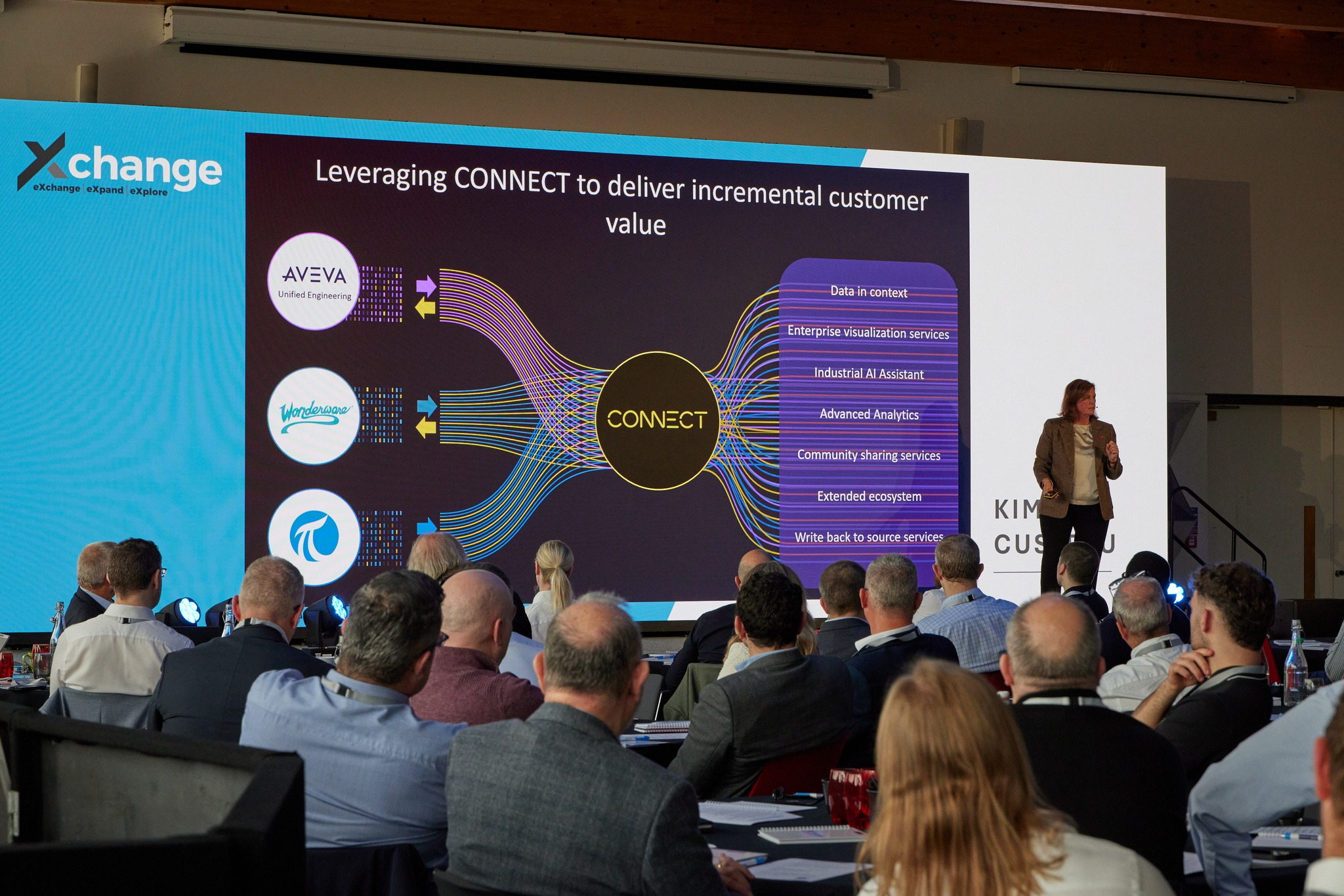
AVEVA’s PI System receives a separate session led by Ellery Murdock, director of product management, while the wider programme includes industrial data platforms, cloud technology and industrial knowledge graphs. Andrea Magnago will cover the company’s CONNECT platform and its use in contextualising information across an organisation, extending the discussion from time-series collection towards the relationships between assets, processes and business information.
Those layers increasingly overlap as manufacturers attempt to extract more value from information already generated by production equipment. A controller may create the original measurement, an HMI displays it to an operator, SCADA combines information across an area, a historian records its development through time, and a data platform adds enough context for maintenance, energy or production applications to interpret the signal outside the control room.
Cybersecurity runs through the same architecture because every additional connection creates another path between systems that may previously have been separated. HMI and SCADA modernisation can improve visibility and remote access while simultaneously increasing the number of interfaces that require authentication, patching and network controls, leaving IT/OT convergence dependent on engineering decisions as much as software capability.
Applied AI and machine learning appear later in the agenda through discussions of predictive maintenance and asset health. Paul Alcock of AVEVA’s Lighthouse Program will examine the use of operating history with Advanced Analytics and Ultimo, while a separate round table is intended to distinguish production-ready AI applications from technologies that remain difficult to deploy consistently.
Predictive maintenance provides a useful example of the gap between analytical possibility and plant implementation. A model can identify an unusual temperature, vibration or operating pattern, yet the result is only useful when the underlying sensor data is dependable, equipment history is understood and the engineering team receives enough warning to change the maintenance plan without creating unnecessary intervention.
Xchange 2026 remains an event programme rather than a product launch, and the individual roadmap sessions should be read on that basis. Its agenda nevertheless provides a useful view of the technologies SolutionsPT and AVEVA are placing around industrial control during 2026: brownfield HMI and SCADA upgrades, cleaner operational data, contextualisation, cybersecurity, cloud connectivity and AI applications that depend on those foundations being engineered properly before higher-level software is added.