Swansea University is leading a new UK-East Africa research programme to develop all-perovskite tandem solar cells for African operating conditions, linking next-generation photovoltaic research with longer-term ambitions for regional manufacturing. The SOLACE project brings together researchers in the UK, Kenya, Rwanda, and Tanzania, and is funded by the Science and Technology Facilities Council through the UK Research and Innovation International Science Partnerships Fund.
The programme centres on all-perovskite tandem devices, which are being developed as an alternative to conventional silicon-based solar technologies. Perovskite cells can be processed at lower temperatures using solution-based methods, offering a manufacturing route that could reduce both production energy demand and capital intensity. Tandem architectures, which combine two perovskite absorbers, are also being pursued for their potential to deliver higher efficiencies than single-junction devices.
SOLACE will focus on charge transport, recombination, device stability, and fabrication methods suited to equatorial heat and humidity. Those issues remain among the main barriers between laboratory performance and dependable deployment, particularly in climates where temperature, moisture, and operating conditions put additional pressure on device lifetimes.
The work also carries an industrial dimension. Silicon solar manufacturing remains concentrated in a relatively small number of regions, and large-scale production has yet to take hold across most of Africa. If all-perovskite tandem cells can be developed with scalable, lower-temperature processing routes, they offer a possible path toward local manufacturing capacity, shorter supply chains, and more value retained within regional energy markets.
Professor Matthew Davies, project lead at Swansea University’s Chemical Engineering Department, said: “SOLACE brings together complementary expertise across Africa and the UK to deepen our understanding of next-generation perovskite solar devices while building long-term research capability. By combining advanced characterisation, modelling and fabrication, we aim to develop the understanding needed to deliver efficient, stable solar technologies suited to deployment in African climates.”
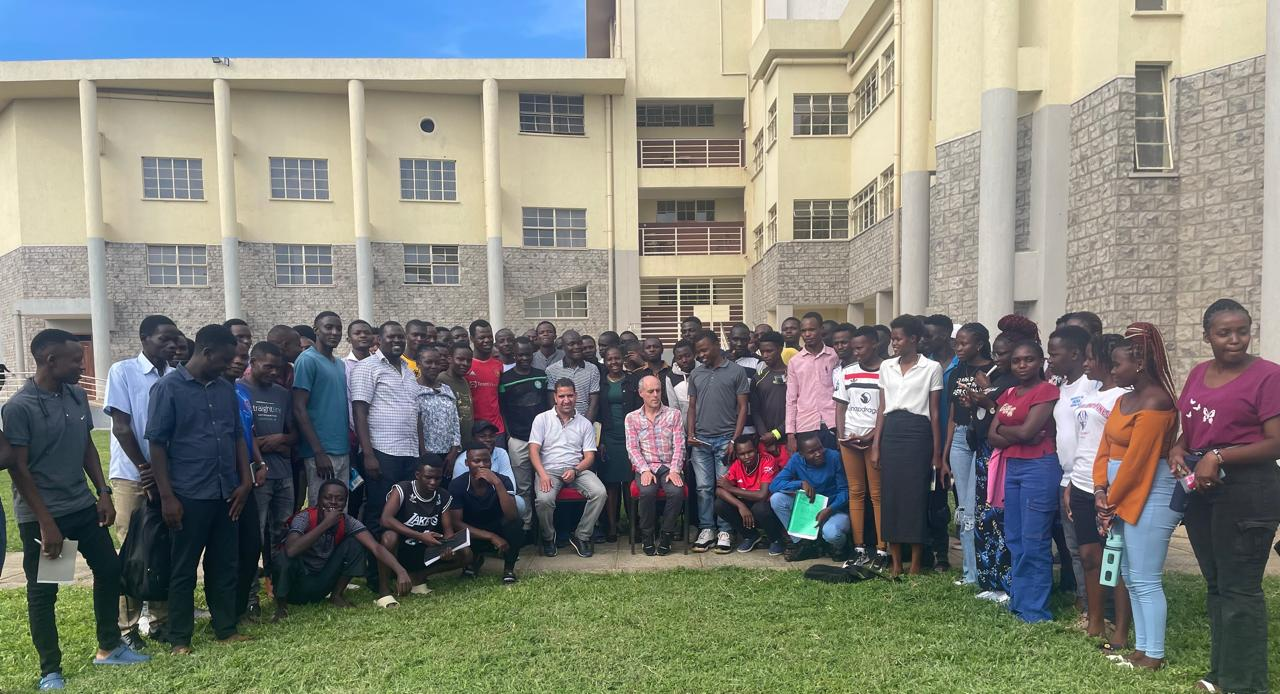
Training and technical exchange form a substantial part of the programme. Researcher exchanges, training schools, and a UNESCO Campus Africa bootcamp are intended to build expertise in solar device physics, fabrication, and characterisation across the partner institutions. The project also places emphasis on gender equity and the development of early-career researchers.
Dr Francis Otieno, project co-lead at Maseno University, said: “The SOLACE project represents a powerful platform for advancing research collaboration between the UK and Africa, fostering deep scientific exchange and capacity building. By strengthening expertise in fundamental studies such as charge transport and material dynamics, the initiative is cultivating a new generation of skilled researchers while laying the groundwork for scalable, low-cost solar technologies. For Maseno University, Kenya, this is an opportunity not only to participate in cutting-edge innovation, but to co-create solutions with strong potential for local manufacturing, widespread deployment, and long-term energy sustainability.”
SOLACE builds on earlier UK-Africa collaborations including TEA@SUNRISE and sits alongside other perovskite-focused initiatives such as REACH-PSM, which is examining pathways for local module manufacturing in Nigeria, Rwanda, Kenya, and South Africa. For Swansea and its partners, the next stage is to show that tandem perovskite devices can combine efficiency, stability, and manufacturability under the conditions where they are expected to operate.