Siemens Mobility has won a contract worth more than €2 billion to supply 113 battery-electric regional trains in Germany, build two maintenance facilities and provide a 30-year service programme. The Lower Saxony order, announced on 15 October, covers three-car Mireo Plus B units that can operate over both electrified and non-electrified lines, with passenger services expected to begin at the end of 2031.
The agreement brings together two public transport authorities. The Lower Saxony Transport Authority, LNVG, will receive 83 vehicles, while the Greater Braunschweig Regional Association, RGB, has ordered another 30. Options cover up to 132 additional trains, but these are not confirmed purchases and are excluded from the 113-unit total.
The value of the procurement is not simply a price for rolling stock. Siemens will also establish Rail Service Centres at Soltau and Goslar, supporting the battery fleet throughout a three-decade maintenance agreement. The company expects the facilities to support up to 100 jobs, although recruitment and depot operations remain prospective.
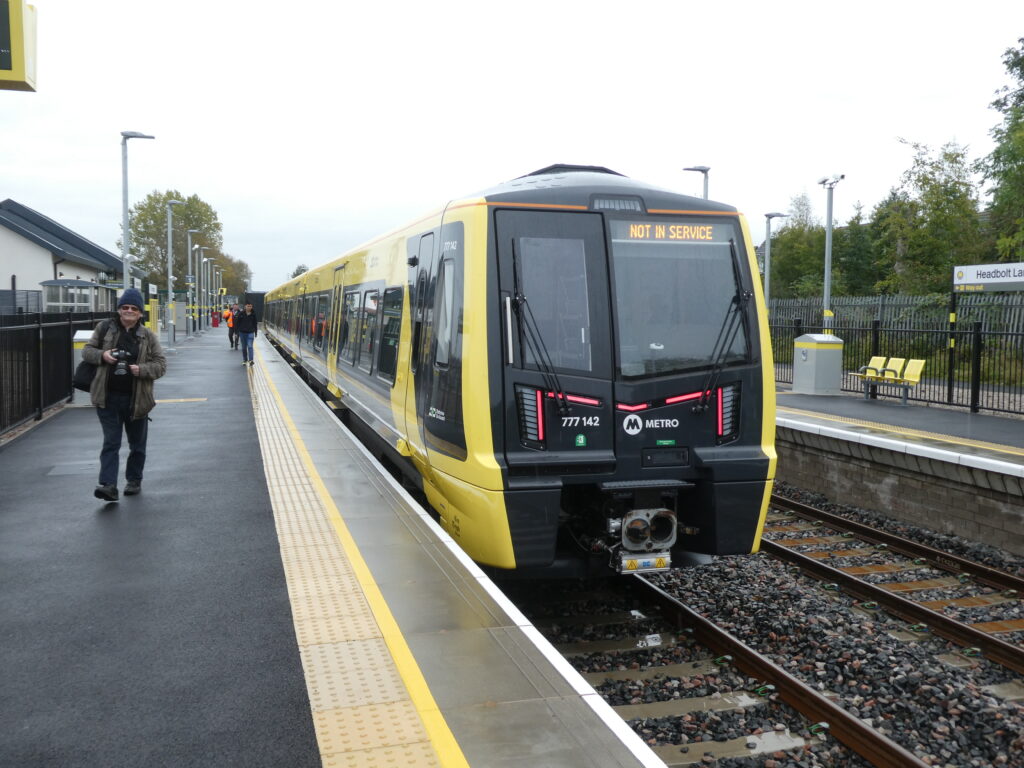
Battery-electric trains offer an alternative to diesel services on railway networks where the cost or complexity of installing continuous overhead wiring makes conventional electrification difficult. The Mireo Plus B uses overhead electricity when it is available and carries onboard energy storage to supply the traction system on sections without an external supply.
Unlike a diesel-electric train, which produces electricity using an onboard combustion engine, a battery-electric unit can move under electric traction without burning diesel in normal service. The batteries must nevertheless be charged, and the resulting environmental performance depends in part on the electricity used to replenish them.
Where a route includes electrified sections, the train can draw electricity through a pantograph while also charging its battery system. Some energy can be recovered through regenerative braking, when the traction motors operate as generators during deceleration. The amount recovered varies with the stopping pattern, available battery capacity and operating conditions.
Planning the operation of battery trains requires detailed consideration of the distance between charging opportunities. Energy consumption changes with acceleration, gradients, passenger loading, auxiliary equipment and temperature. A timetable that works with a newly commissioned battery must also allow for operational margins and the gradual changes in usable capacity that occur as the storage system ages.
Charging cannot be treated independently from the rest of the route. The available power from overhead lines, the time spent beneath them and the duty cycle of each train influence whether sufficient energy can be restored before it reaches an unelectrified section. Vehicle and infrastructure design therefore have to be evaluated as a combined system.
The Lower Saxony procurement is intended to renew regional services currently reliant on diesel traction. Trains are expected to operate initially on the Weser-Leine and Harz-Heide networks, while subsequent deployment could extend to other routes as vehicles, facilities and operating arrangements become available.
Siemens identifies the Mireo Plus B as a platform capable of accommodating different route requirements. Earlier versions have already entered passenger service in Germany and Denmark, providing operational experience with traction batteries and charging arrangements. Performance figures for an earlier two-car unit should not, however, be assumed to apply directly to the three-car Lower Saxony specification.
Passenger accommodation forms another part of the new order. Siemens describes more than 170 seats per train, including at least six first-class seats, together with two wheelchair spaces, multipurpose areas, onboard passenger information and Wi-Fi. Bicycle accommodation starts at six spaces and can be expanded to as many as 18, according to the vehicle arrangement.
The trains will also have doors suited to different platform heights, allowing largely level boarding at a greater range of stations. The practical accessibility of any individual stop still depends on its platform geometry and the interaction between the station and the particular vehicle.
Over a 30-year service life, maintenance arrangements can influence both operational reliability and the cost of the fleet. Siemens plans to use its Railigent X digital maintenance technology to collect and interpret information about equipment condition, supporting decisions about when components require inspection or attention.
Condition monitoring can identify changes in the behaviour of selected systems before they develop into failures. It does not eliminate routine inspections or guarantee that faults will always be detected in advance. Diagnostic reliability depends on the quality of measurements, the interpretation of operating conditions and the availability of technicians who can investigate an alert.
Battery equipment creates additional maintenance considerations because individual components do not necessarily have the same useful life as the train body or mechanical systems. Replacement, refurbishment and software management have to be planned across decades, with component availability and suitable technical documentation forming part of the service obligation.
The proposed service centres will provide a physical base for those activities. Their location must support fleet movements, access to maintenance equipment and the staffing required to keep vehicles available for scheduled passenger work. The depots are part of the awarded programme but have not yet been completed or commissioned.
The scale of the order also creates a manufacturing programme extending beyond final train assembly. Electric traction equipment, energy storage, controls, vehicle structures and passenger systems must be integrated into complete units that can meet railway acceptance requirements. Production schedules must be coordinated with testing and the later introduction of the trains into passenger service.
Siemens describes the award as the largest order for battery-powered trains worldwide. That characterisation is the manufacturer’s claim relating to the procurement as announced; the confirmed scope remains 113 vehicles, two depots and long-term maintenance, with potential additional units subject to future decisions.
Starting passenger operations at the end of 2031 leaves several years for vehicle manufacture, infrastructure development and the testing required before the fleet can enter service. The subsequent 30-year maintenance period will provide the longer measure of whether the battery trains can sustain the availability and operating performance expected by Lower Saxony’s transport authorities.