German energy group RWE has won contracts covering three proposed hydrogen-compatible gas-fired power stations in North Rhine-Westphalia, providing approximately 2.1GW of capacity recognised under a new German electricity security tender. The awards concern projects at Voerde, Weisweiler and Werne and give the company a route towards investment in dispatchable generation intended to support electricity supply when wind and solar output remain insufficient for extended periods.
The German Federal Network Agency made the awards under the Electricity Supply Security and Capacity Act, known by its German abbreviation StromVKG. The three projects carry tender-recognised capacities of approximately 730 reduced megawatts at Voerde and 700 reduced megawatts each at Weisweiler and Werne. These values total around 2,130 reduced megawatts, which RWE rounds to 2.1GW. They should not be read as identical to the full installed nameplate capacity of the proposed gas-fired equipment.
The auction counts only 85% of installed capacity at gas-fired power stations, a reduction factor set by the legislation governing the tender. RWE therefore reports the contracts in reduced megawatts rather than confirmed nameplate ratings for the new plants. Dividing the awards by that factor suggests installed capacity of approximately 2.5GW across the projects, but RWE has not formally specified a combined equipment rating or final turbine configuration. The 2.1GW tender figure should consequently remain distinct from the capacity eventually recorded after commissioning.
The awards secure long-term capacity arrangements over a 15-year period. Capacity procurement pays for the availability of generation when the electricity system requires it, while the actual energy produced depends on dispatch instructions, demand and fuel supply. RWE says its three projects were among the successful bids able to provide capacity at relatively low cost. The tender outcome supports investment decisions and future security of supply, but the stations must still obtain the necessary approvals, be built and pass commissioning before delivering electricity.
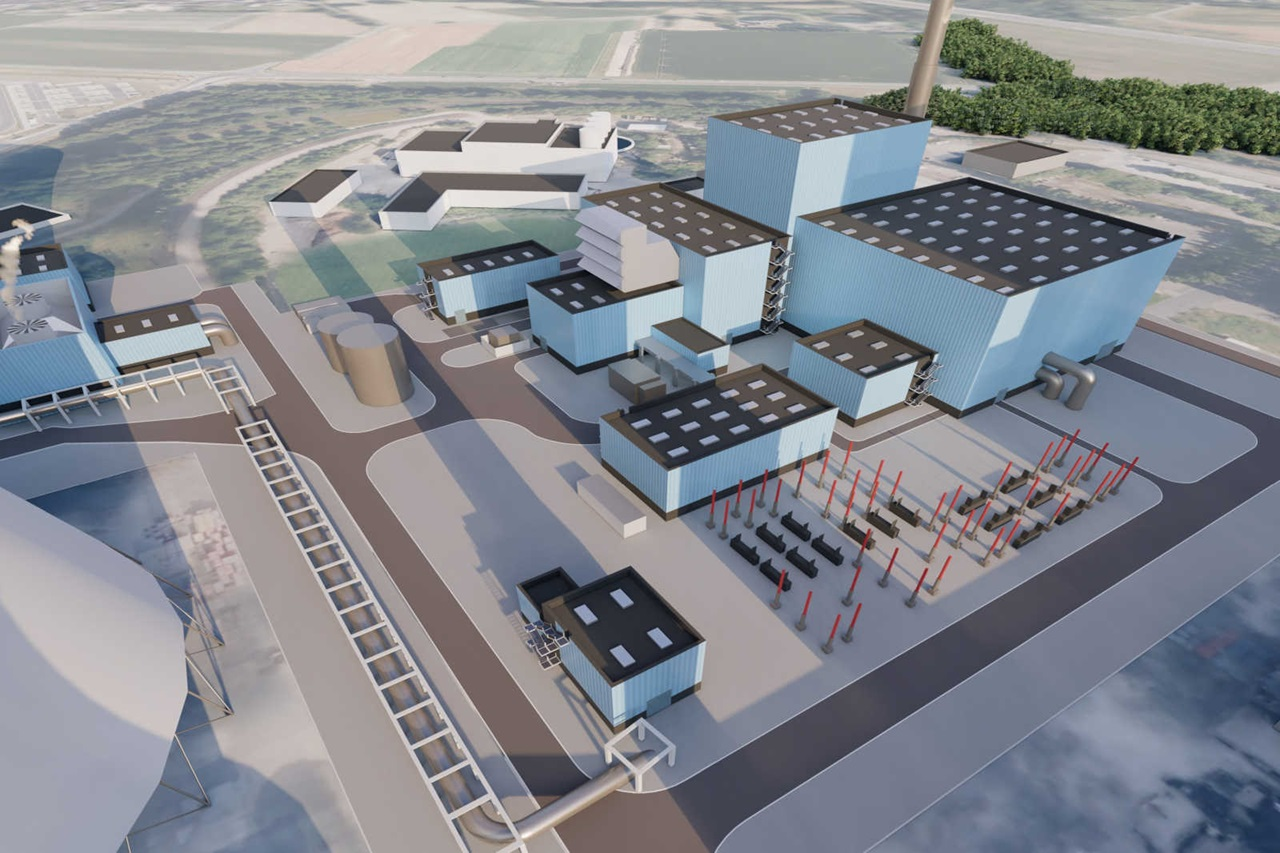
RWE is pursuing combined-cycle gas and steam technology. In a combined-cycle arrangement, fuel drives a gas turbine to generate electricity, while heat in the turbine exhaust is used to raise steam for a second turbine. Recovering energy that would otherwise leave as hot exhaust can improve conversion efficiency relative to producing electricity with a simple-cycle gas turbine alone. The arrangement requires substantial process equipment, including heat recovery boilers, turbine generators, cooling and water systems, gas supply and high-voltage connections.
RWE describes the designs as hydrogen-compatible, without specifying an initial share of hydrogen fuel or confirming that a hydrogen connection is already in place. The usable hydrogen proportion depends on turbine certification, the combustion system, fuel supply characteristics and the plant’s associated safety and control arrangements. The new stations are therefore planned as gas-fired generators with the potential to use hydrogen under suitable future conditions, rather than operating hydrogen power stations already connected to a dedicated fuel network.
All three projects are located in North Rhine-Westphalia, where large industrial sites, transport systems and households draw electricity from the same wider network. Wind and solar generation can leave extended periods when dispatchable plants or storage must meet residual demand. A combined-cycle station can contribute power during those periods, although the economic case will depend on capacity payments, the frequency of dispatch, fuel and carbon prices, and maintenance required after repeated changes in operating load. RWE has not published site-specific dispatch assumptions for the projects.
Before the tender result, RWE had commissioned international consortia to prepare approval documentation, reserved manufacturing capacity for key components and started permitting work. That advance engineering provides a starting point for procurement and construction mobilisation, but it does not replace the permissions or detailed designs each site will need. RWE expects to begin construction of the first station within weeks of the awards; a completion or first-generation date for any of the three plants has not been confirmed.
Integrating the turbines with new electrical infrastructure will require control of start-up sequences, steam system temperatures and the connection to the high-voltage network. Combined-cycle machinery contains components that expand and contract as temperatures change; repeated cycling influences inspection intervals and equipment life. The eventual operating envelope will depend on selected turbine packages, heat recovery equipment and permitted environmental conditions. Neither ramp-rate specifications nor plant efficiency figures have been released for the three projects.
RWE currently operates around 4.2GW of gas-fired generation capacity in Germany. Its wider investment ambition is approximately €9bn by 2031 across flexible power generation, battery storage and hydrogen production. That figure is not the announced cost of the three newly awarded power stations; the company has not provided individual project capital expenditure or confirmed commissioning dates for Voerde, Weisweiler and Werne. The tender awards establish a commercial basis for projects whose final engineering and investment profiles will emerge through development.
The tender awards provide a commercial foundation for three planned stations, with site permitting, procurement and construction mobilisation still ahead. RWE has commissioned international planning consortia, begun approval work and reserved manufacturing capacity for key components, enabling it to aim for construction of the first plant within weeks. The company has not given confirmed commissioning dates or project-by-project investment costs. Their contribution to German electricity supply will be established only after the facilities are completed and able to dispatch power into the grid.