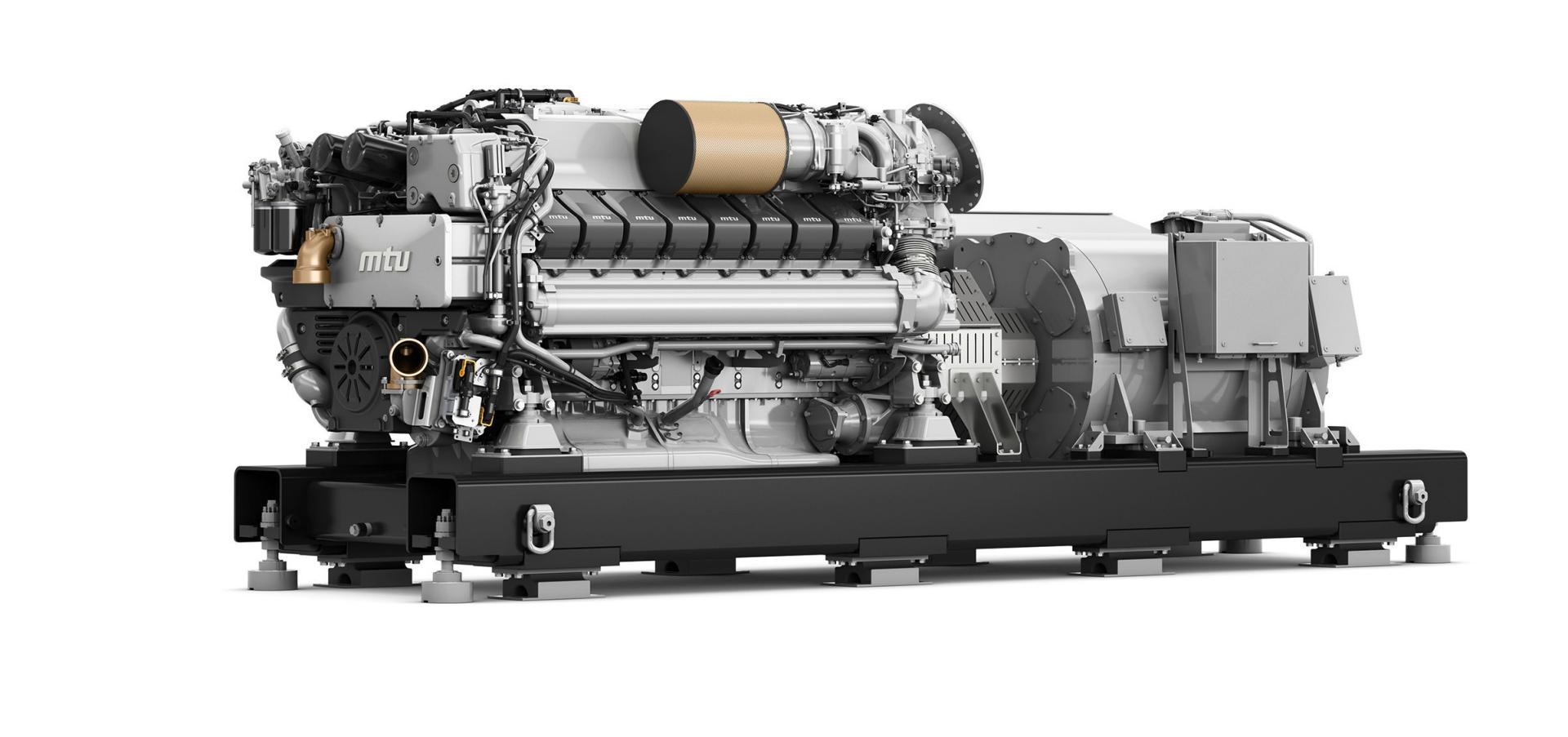
Rolls-Royce Power Systems has introduced standardised variable-speed mtu Series 2000 generator sets for workboats, expanding its equipment range for electric and hybrid propulsion systems. The company says the units can reduce fuel consumption and carbon dioxide emissions by as much as 15% compared with constant-speed generator sets.
The product family covers 8V to 16V engine configurations and is intended for passenger ferries, search-and-rescue vessels, offshore support vessels, yachts, and patrol boats. Rolls-Royce will present the equipment at SMM 2026 in Hamburg alongside a flexible selective catalytic reduction system, mtu NautIQ automation, data analytics, and lifecycle service packages.
Marine generator sets commonly operate at fixed rotational speed so their alternators can maintain the electrical frequency required by a vessel’s distribution system. The arrangement is established and predictable, but an engine may spend long periods away from its most efficient operating point as propulsion, hotel, pump, and deck-equipment loads change.
Variable-speed generation allows engine speed to follow electrical demand more closely. The potential benefit is greatest on vessels with irregular duty cycles, where standby, manoeuvring, low-speed transit, and dynamic operations are interrupted by shorter periods requiring higher power.
The engine no longer needs to remain at nominal speed merely because demand may increase later. Lower operating speed at reduced load can cut fuel consumption, noise, and vibration, although the savings depend on the complete powertrain and the vessel’s actual operating profile.
Rolls-Royce describes the Series 2000 units as compact systems with high power density. Space and mass are critical on workboats, where machinery competes with passenger accommodation, cargo, fuel, batteries, and mission equipment, while access for inspection and maintenance must still be retained.
The generator sets are particularly relevant to diesel-electric and hybrid architectures. Propulsion motors and auxiliary loads can draw from an electrical network combining several gensets with batteries or other sources, allowing control software to decide which units should run and how their loads should be shared.
Stored energy can absorb short peaks or support low-load operation, reducing the need to start another engine for a brief demand increase. The control strategy can also keep running engines closer to favourable operating points, although battery size, power electronics, cooling, and redundancy requirements add equipment, weight, and integration work.
The balance differs between new vessels and retrofits. A newbuild can position engines, batteries, converters, cooling, and switchboards around the selected architecture, while a retrofit must work within existing machinery spaces, weight distribution, cable routes, ventilation, and structural limits. Installation cost can therefore vary considerably even where the same generator set is specified.
The new range is accompanied by an SCR exhaust after-treatment system intended to meet IMO Tier III nitrogen oxide requirements in regulated areas. After-treatment becomes more difficult when engine load and exhaust temperature vary, so claimed compliance will depend on matching the genset, control strategy, catalyst, and operating duty rather than treating the SCR unit as an independent accessory.
Rolls-Royce is also linking the propulsion package with bridge systems, automation, and fleet analytics. Greater integration can improve visibility of fuel use, engine loading, maintenance condition, and equipment availability, but it raises requirements for software validation, cybersecurity, sensor reliability, and support throughout the vessel’s service life.
Dr Lukas Köhler, Senior Vice President Global Marine and Mining at Rolls-Royce Power Systems, said: “As a company within the Rolls-Royce Group, we actively evaluate, research and invest in future technologies to offer our customers the right propulsion technology for their fleets – both today and in the future – and support them with the expertise of our engineers and our service team throughout the entire service life of their vessels.”
The company is coupling the launch with longer maintenance intervals, in-situ service, and warranty options. Those provisions are commercially important for vessels whose revenue or operational readiness depends on availability, particularly where access to specialist technicians and replacement equipment is limited.
Fuel savings can be erased quickly if a more complex power system produces additional downtime or requires frequent intervention. Standardising the generator family around established Series 2000 engines should give shipyards and integrators a repeatable starting point, while supporting parts planning and training across fleets containing several vessel classes.
Installation design will still determine much of the outcome. Electrical conversion losses, cooling demand, cable runs, battery cycling, exhaust back pressure, and the number of engines kept online all influence fuel use, while poor control calibration can leave efficient equipment operating in an inefficient system.
The first useful comparisons will come from vessels working representative duty cycles rather than steady test loads. Owners will need verified figures for fuel consumption, emissions, maintenance, noise, and availability across complete seasons.
A claimed 15% reduction is material in commercial marine operations, but it will carry weight only where the system continues to deliver after commissioning has given way to salt, vibration, variable weather, and ordinary crewing. Marine efficiency is rarely defeated by a shortage of promising equipment; integration and long-term operation usually provide the less flattering arithmetic.