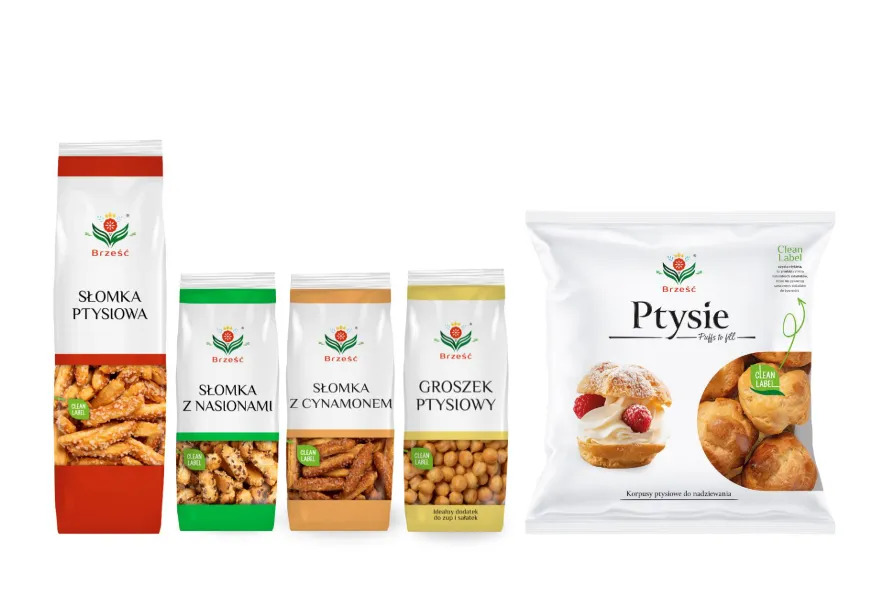

Coveris Rypin has partnered with the Polish company Brześć to package their “puffs” snacks in recyclable film to increase shelf appeal and reduce packaging waste.
The Polish confectionery market, including sweets, chocolate and baked goods, reached about €4.7 billion in 2024, ranking fifth in Europe. According to the Market Monitoring Centre, the largest value is driven by discounters (46%), small format stores (30%) and supermarkets (15%). These retail shops have a decisive influence on driving packaging material innovation, as exemplified by the success story of Brześć puffs which are available since 2024 on Polish and foreign shelves in a new recyclable film developed by Coveris Rypin.
“The demand for recyclable packaging materials is aligned with the European Union Packaging and Packaging Waste Regulation, which requires that all packaging placed on the EU market is recyclable by 2030. Our new packaging responds to this regulation and supports the reduction of packaging waste,” explains Arkadiusz Drążek, CEO of Brześć Sipa Sp.k., one of the major confectionery manufacturers in Poland.
Brześć has specialised in the production of sweet and savoury confectionery products for over four decades, but its flagship steamed dough products are puffs – mini eclairs (or crunchy puffs), mini puffs and puffs to fill. Popular among customers in Poland, Germany, the Czech Republic, Slovakia, Lithuania, they can also be found in Dubai, Canada and the USA. The company has long-standing ties with Hadepol Flexo, now operating as Coveris Rypin, following its acquisition by the Coveris Group in June 2024. This partnership enabled the roll-out of recyclable monomaterial film into full-scale production.
“We are very pleased with the successful launch of puff products in recyclable BOPP films, produced at our Rypin facility,” said Wojciech Jankowski, head of sales at Coveris Rypin. “This sustainable alternative to non-recyclable materials offers the same protective performance while saving resources and helping both suppliers and food chains in meeting their sustainability goals.”
The film boasts high transparency, allowing consumers to view the product directly on shelf, enhancing shelf appeal. It is also optimised for eight-colour flexographic printing with optional matt or gloss finishes, highlighting the brand identity.
By embracing sustainable packaging for its hero products, Brześć is well-positioned to grow its presence in Western Europe and the MENA region. This is further supported by the company’s Halal certifications granted to Brześć products suitable for consumption by Muslims.
“Thanks to the trust and support of Coveris Rypin, we are planning to expand the production of monomaterial packaging across additional products in the near future,” Arkadiusz Drążek concluded.