
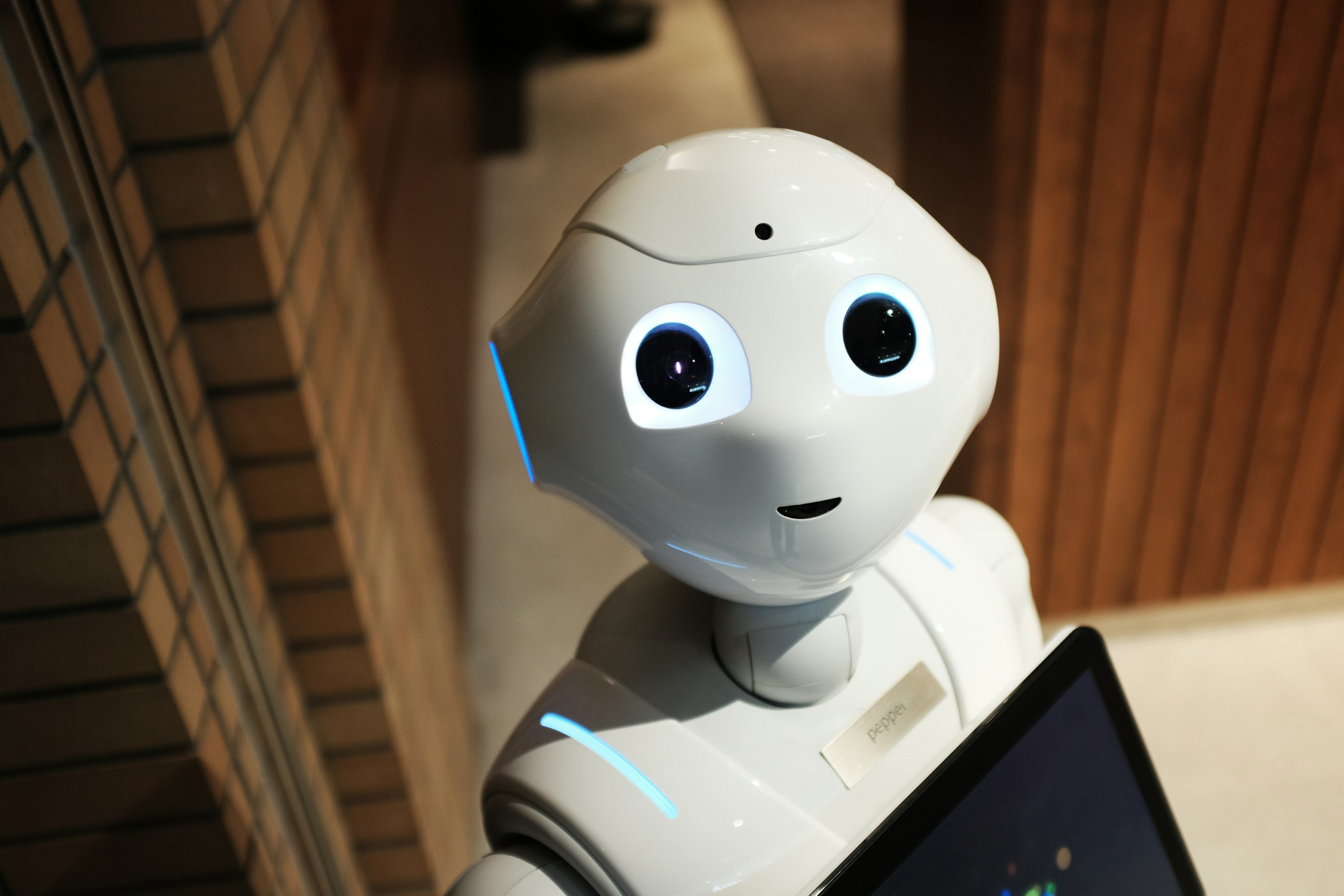
NEURA Robotics is showcasing its cognitive robotics portfolio and Neuraverse platform at Automate 2026, expanding its work around physical AI systems that can be trained, validated, and deployed across industrial environments.
The German robotics company is presenting collaborative robots, mobile autonomous transports, humanoids, the Neuraverse ecosystem, and NEURA Gyms at the Chicago event. The appearance follows a major Series C financing round and comes as manufacturers reassess automation strategies around labour availability, flexibility, and AI-enabled machine capability.
NEURA’s proposition is built around cognitive robotics rather than conventional fixed-function automation. The company is presenting a broad portfolio intended to support industrial users across different stages of automation, from collaborative handling and mobile transport to humanoid systems and open ecosystem development.
The Neuraverse platform is intended to connect robots, developers, integrators, OEMs, and applications within a shared robotics ecosystem. NEURA Gyms are presented as real-world training and validation environments, reflecting the need to test physical AI outside simulation before deployment in production settings.
Simulation has become a powerful tool for robotics development, but factories are full of variation: reflective surfaces, inconsistent parts, changing lighting, human movement, space constraints, and unexpected interruptions. Physical AI systems have to cope with that variation if they are to move beyond controlled demonstrations.
Robotics adoption moves from pilots to proof
Manufacturers have heard automation promises for years, yet adoption still depends on risk, payback, integration, and skills. A robot that performs a task in a trade show cell does not automatically fit into a plant with legacy equipment, mixed product flows, operators, safety requirements, and maintenance constraints.
Test and demonstration environments are becoming more important as companies move from curiosity to capital commitment. The Manufacturing Technology Centre’s Robot Experience Centre in Coventry was established around that practical need, giving manufacturers a place to see how robotics behaves against real production conditions before major deployment decisions are made.
NEURA’s focus on physical AI also reflects the changing shape of robotics hardware. Cobots, autonomous mobile robots, humanoids, and specialised actuators are all developing in parallel. Component-level innovation, including frameless motors for compact geared actuator systems, is feeding into more power dense and mechanically integrated robot designs.
The industrial case for humanoids remains more complex than the enthusiasm around them. Their attraction is clear: human-shaped machines could operate in environments designed around people rather than requiring a complete redesign of the workplace. The challenge is cost, reliability, safety, battery life, dexterity, perception, and maintenance. Factories buy uptime, repeatability, and reduced operational friction.
Collaborative robots and mobile autonomous transports have a clearer near-term route because their applications are already better understood. Material movement, machine tending, inspection support, packaging, kitting, and repetitive handling can all benefit from flexible automation if integration is well scoped. Cognitive features can then improve adaptability rather than trying to solve every production problem at once.
System integration will shape adoption. Most manufacturers do not want a collection of disconnected robots, each with its own tools, data structures, safety assumptions, and support requirements. They need systems that can be deployed, maintained, updated, and connected to wider production workflows. Platforms such as Neuraverse are aimed at that ecosystem problem.
Physical AI also raises governance questions. Robots that perceive, decide, and adapt in real space need safety cases, operator training, update control, cybersecurity, and clear responsibility when behaviour changes. Those requirements will become more important as robots move from fenced cells into shared spaces and mixed workflows.
NEURA’s Automate 2026 showcase reflects the direction robotics suppliers are trying to take the market. The next phase will not be defined by robot arms alone, or by humanoid prototypes alone. It will be defined by whether AI-enabled machines can be validated, integrated, and supported well enough to solve production problems at scale.
