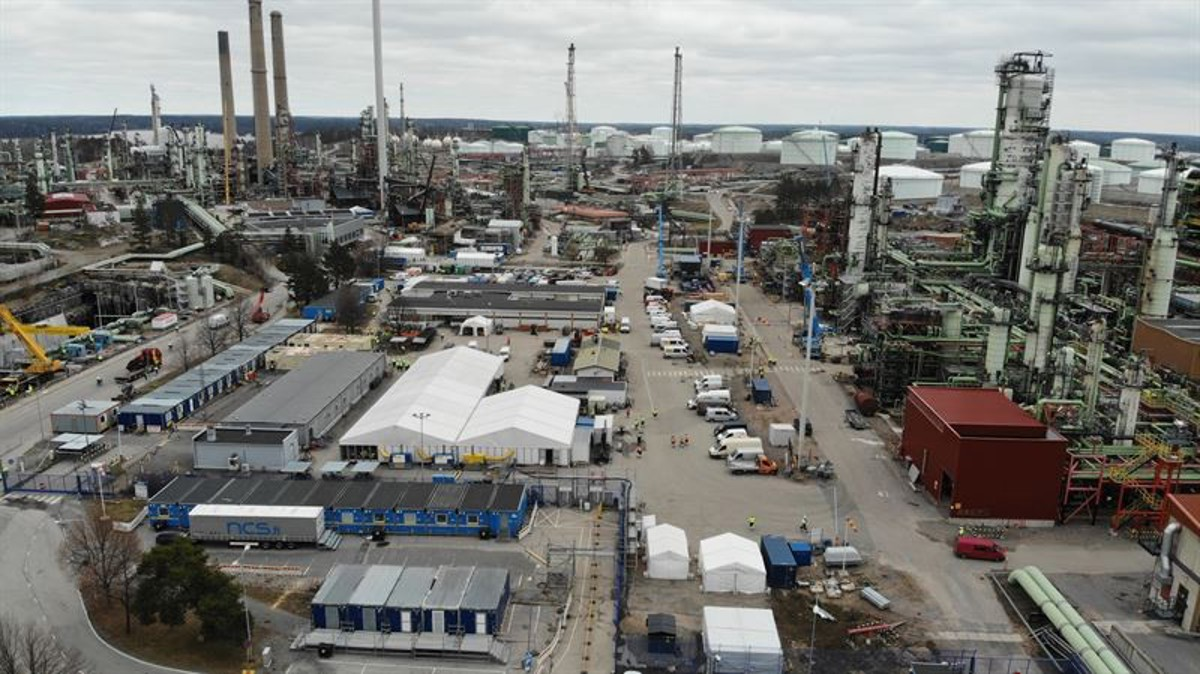
Neste will invest more than €400m in a major maintenance turnaround at its Porvoo refinery in Finland, with work scheduled to run for around nine weeks between August and October 2026.
The turnaround will focus on refinery tasks that require a full shutdown, including statutory inspections, routine maintenance, and asset improvement work. Neste says customer fuel deliveries will continue throughout the maintenance period, supported by advance production, storage, and normal operations at the Kilpilahti port and Porvoo distribution terminal.
Around 7,500 people are expected to participate, including approximately 1,000 Neste employees and specialists from more than 100 contractor companies. More than 80% of the selected contractor companies are Finnish, while specialist expertise will also arrive from countries including Germany, Poland, Spain, Sweden, the Netherlands, and the UK.
Maintenance turnarounds are a defining part of refinery operation because they bring together safety, statutory compliance, asset integrity, catalyst work, inspection, repair, cleaning, and modification. Although they temporarily remove production capacity, they are essential to maintaining safe and reliable operation across the next operating cycle.
Porvoo’s turnaround also shows the project management intensity behind large process assets. Work must be planned long before the shutdown begins, with detailed sequencing across pressure systems, rotating equipment, instrumentation, electrical systems, piping, tanks, heat exchangers, furnaces, process units, utilities, safety systems, and logistics. Once the asset is offline, delays can quickly affect cost, schedule, and restart certainty.
The contractor mobilisation is as important as the engineering scope. Thousands of people must be inducted, scheduled, supervised, and coordinated across a live industrial site where safety controls are strict and access windows are limited. Catalyst handling, non-destructive testing, confined space work, lifting, scaffolding, hot work, pressure testing, and recommissioning all have to be sequenced around plant conditions.
Large turnarounds also test supply chain readiness. Spare parts, temporary equipment, inspection resources, tooling, accommodation, transport, and permits have to be available at the right time. A missing component or delayed specialist team can disrupt multiple work fronts, particularly when restart depends on completion of interlinked inspections and repairs.
European process industries are balancing reliability, decarbonisation, and security of supply while working with assets that still underpin transport, chemicals, aviation, and industrial production. Refineries face changing fuel demand, renewable feedstock strategies, emissions requirements, and competitive imports, yet safe operation of existing infrastructure remains essential throughout the transition.
Neste has framed the project around safety, availability, and competitiveness. Those priorities are closely connected. A refinery that cannot run reliably loses margin, increases supply risk, and weakens the case for future investment. A refinery that defers inspection or maintenance increases safety and environmental exposure. Turnarounds therefore sit at the centre of operational discipline and long-term industrial strategy.
The project also shows how process engineering depends on international specialist capability even where most contractor companies are domestic. Catalyst experts, inspection teams, and technical contractors often move between major shutdowns across Europe. That mobile skills base is critical to maintaining large chemical, energy, and refining assets, especially as experienced labour becomes harder to secure.
Continuity of fuel supply will depend on the strength of Neste’s production and logistics planning before and during the shutdown. Producing and storing fuel in advance allows sales and distribution to continue, but the approach relies on accurate demand planning, storage management, terminal operations, shipping, and road distribution.
Porvoo’s turnaround is a reminder that maintenance is not a peripheral function in process industry. It is a capital-intensive, high-risk industrial operation that determines how safely and competitively assets perform. As plants age, regulatory demands tighten, and specialist labour becomes more valuable, turnaround execution will remain one of the clearest tests of process industry resilience.