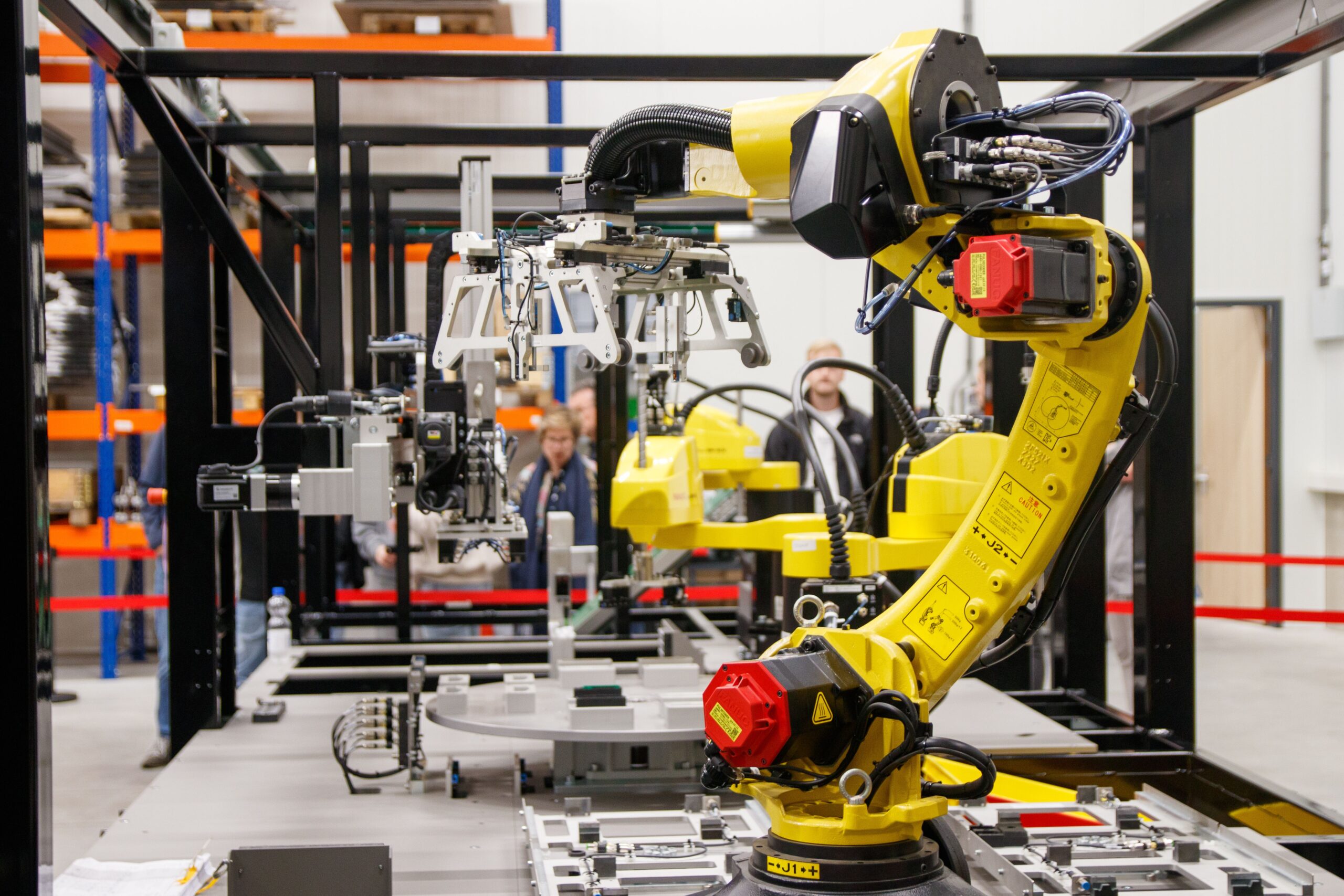
The Manufacturing Technology Centre has acquired a 5,000 square metre facility at Ansty Park in Coventry to expand its industrial research and manufacturing development capacity. The additional building, named the Shilling Building after engineer Beatrice ‘Tilly’ Shilling, is intended to accommodate research programmes, the development of new production methods and work with companies seeking to scale innovative products. The acquisition was disclosed as the organisation announced changes to its technology and innovation leadership.
MTC has not given a commissioning date, equipment list or initial project schedule for the Shilling Building. Its 5,000 square metres therefore represent additional research and development capacity, rather than a production line with declared throughput. The equipment needed to investigate a prototype can differ substantially from a pilot cell or a factory installation: the latter must accommodate component flow, inspection, maintenance access and repeated operation. The first uses of the newly acquired building have yet to be specified.
Moving a process beyond the laboratory requires engineers to test whether it behaves consistently across a larger number of components and a longer operating period. Fixtures must hold parts within tolerance, inspection must keep pace with production, and incoming materials may vary between batches. Applied research facilities allow manufacturers to test these interactions and revise the process before installing equipment at a customer’s site. MTC says the new facility will serve development work with members and industrial partners, although individual programmes have not yet been allocated publicly.
The expanded Coventry estate forms part of a broader restructuring of responsibilities. Dr Katy Milne has been appointed chief research and technology officer, with responsibility for long-term technology strategy and connecting emerging research with industrial needs. Dr Joe Darlington becomes chief innovation solutions officer, concentrating on nearer-term adoption, production scale-up and helping both established manufacturers and growing technology businesses deploy processes. The two positions replace the responsibilities previously held by Professor Ken Young, who is retiring after 15 years with MTC.
Milne joined MTC among its earliest engineers after completing an industry-based doctorate at Rolls-Royce. Her work has included supply chain and research programmes and secondments to the Aerospace Technology Institute and the High Value Manufacturing Catapult. Darlington began in MTC’s digital team before moving into broader technical leadership. Under the revised structure, Milne will direct the development and selection of longer-term technologies while Darlington will lead their transfer into industrial use, including the scale-up requirements of established manufacturers and growing technology businesses.
Pilot manufacturing frequently exposes constraints that are difficult to see in isolated laboratory trials. A fixture may allow accurate processing of one component yet take too long to reset, while an inspection method that works for samples may become a bottleneck at higher volumes. Engineers must also account for machine utilisation, material availability, handling and the compatibility of successive operations. The new research floor space could accommodate such investigations, but MTC has not yet described the facility’s equipment configuration or identified a first demonstrator.
MTC also appointed Professor Tom Rodden, pro-vice chancellor for research and knowledge exchange at the University of Nottingham, as a non-executive director. His previous role as chief scientific adviser to the Department for Culture, Media and Sport adds policy and research experience to the board. The organisation said the leadership changes are intended to connect long-term research priorities with deployment by manufacturers and the needs of the UK’s industrial strategy.
Beyond Coventry, MTC has opened a training operation at Cobalt Park in North Tyneside. MTC Training Tyneside is expected to develop capacity for more than 100 apprentices annually. The organisation also plans to relocate its North West team to Sci-Tech Daresbury in early 2027, expanding opportunities to work with businesses and research partners in the Liverpool City Region. These developments broaden the geographic footprint of its training and applied technology activities, although the training capacity and future relocation remain distinct from the acquisition at Ansty.
The acquisition price, programme allocation and proposed fit-out remain undisclosed. Without an equipment inventory it is not possible to determine whether the Shilling Building will accommodate dedicated pilot lines, laboratory functions or flexible demonstration space, or how soon the additional area will be used. These choices determine the experiments that can be undertaken and the type of industrial verification available to project partners. They do not, by themselves, demonstrate an increase in commercial manufacturing output.
Coventry will consequently gain a larger applied research estate alongside a leadership structure that separately assigns technology development and industrial implementation. MTC’s parallel investments in North Tyneside training and its planned Daresbury relocation extend the organisation’s reach, but each serves a different function. The next operational measures for Ansty will be the building’s fit-out, the programmes it houses and the production methods that progress beyond demonstration.