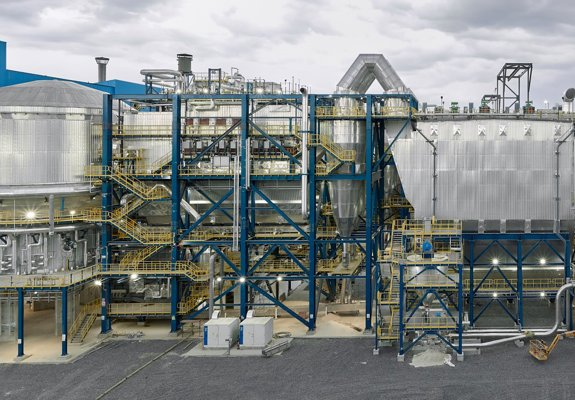
Metso has agreed to sell its roasting, sulphuric acid, gas cleaning and related fluidised-bed process technology businesses to MAIRE Group’s Nextchem unit, transferring a portfolio of industrial equipment, engineering knowledge and service activities used in metals and chemicals processing. The agreement has an enterprise value of €40 million, according to the buyer, and is expected to complete in mid-2027 after the required approvals.
Approximately 180 employees, primarily in Germany, India and Sweden, are expected to join MAIRE once the transaction closes. The acquisition will take place through a newly incorporated German business established by Metso, with headquarters planned in Oberursel, an R&D centre in Frankfurt and additional operations in Skellefteå, Gothenburg and Kolkata. Those arrangements concern the proposed future operating structure rather than an already completed transfer.
MAIRE values the transaction at €40 million on an enterprise-value basis. It describes €32 million as the upfront component, subject to customary adjustments at completion, and a further €8 million as a contingent earn-out. The buyer also identifies more than 60 patent families and over 1,000 industrial references in the portfolio. Those assets add an installed-base and intellectual-property dimension to a transfer that also involves specialist engineering teams and service obligations.
The operations being sold include fluidised-bed roasting systems, metallurgical off-gas cleaning, sulphuric acid process technologies and their associated service business. These processes sit alongside smelting, mineral treatment and chemical production, where the composition and temperature of feed materials determine how unwanted constituents are separated, recovered or converted. Process equipment often has to manage corrosive gases, entrained particles and substantial variations in operating conditions while maintaining reliable environmental controls.
In a fluidised-bed reactor, gas passes through a bed of solid particles at a velocity sufficient to suspend and mix them. The movement supports heat transfer and contact between material and reacting gas, which can be useful when treating particular mineral concentrates or other feedstocks. Reactor temperature, residence time, particle characteristics and the chemistry of the incoming material determine the result. A plant designed for one feed composition cannot be assumed to accept another without process assessment and, in some cases, engineering changes.
Roasting may convert sulphur-bearing minerals into forms suitable for further metallurgical treatment while generating off-gases containing sulphur compounds and particulate matter. Downstream gas treatment can recover useful constituents or remove contaminants before emissions reach the stack. Where sulphur dioxide is captured and converted into sulphuric acid, the acid can become a saleable product or a reagent for other industrial processes, depending on the plant configuration and applicable quality requirements.
The required gas cleaning train depends on particle size, aerosol loading, gas temperature, moisture and the contaminants targeted for removal. Metso’s existing technology range includes wet electrostatic precipitation, which uses an electric field to charge fine particles and droplets so they can be collected from a flowing gas stream. It can complement earlier scrubbing or dust separation stages, with performance governed by gas distribution, operating voltage, equipment condition and process-gas chemistry.
Mineral processing installations can use combinations of roasting, sulphur recovery and gas purification to produce target materials while controlling the by-products of treatment. Selecting an integrated process route requires balances of feed chemistry, energy use, corrosion protection and expected recovery performance. Environmental results still have to be demonstrated through the design and measured operation of individual plants, including their emission-control and monitoring arrangements.
Nextchem intends to combine the acquired expertise with its existing technology portfolio for mineral processing, inorganic chemicals and raw materials treatment. MAIRE also expects commercial opportunities with its Tecnimont engineering and construction business. The announced assets span licensing, proprietary equipment and aftermarket services, which means future work could include technology selection and plant design as well as upgrading and maintaining operating installations.
Metso says the disposal will sharpen its focus on minerals processing and metals refining. Its President, Minerals, Piia Karhu, described MAIRE as well placed to develop the businesses, while Nextchem Managing Director Fabio Fritelli linked the purchase to a broader offer in strategic raw materials. Metso does not expect a material financial impact from the transaction, although the operational transfer and eventual integration remain contingent on closing.
Customer plants will need uninterrupted access to equipment specialists, maintenance support and process knowledge while the businesses change ownership. Metso and MAIRE expect completion in mid-2027, after regulatory approvals and the formation and transfer of the German company. Until then, the announced transaction remains an agreement to transfer the portfolio, rather than a completed change to the service arrangements at operating installations.