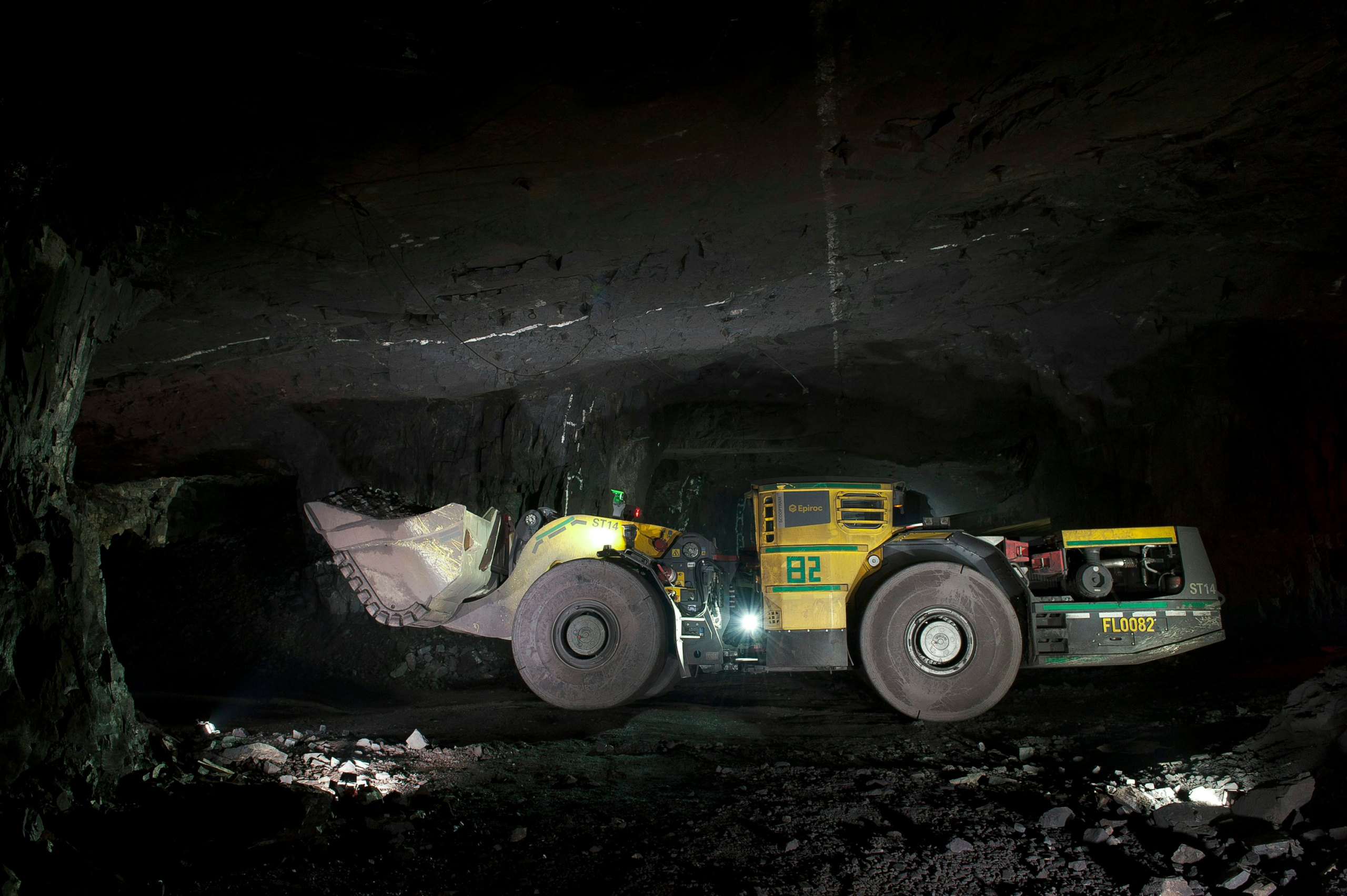
Magna Mining has formally approved the restart of its Levack copper and nickel mine in Ontario, Canada, with underground development and surface construction expected to increase as it works towards commercial production in mid-2028. The board’s decision follows a preliminary economic assessment estimating C$70.1 million of initial capital expenditure, although the restart is proceeding without a feasibility study establishing mineral reserves with demonstrated economic viability.
Located in the northern Sudbury Basin, Levack last operated in 2018 and retains underground workings that Magna intends to reuse. Returning those assets to service requires refurbishment of the production hoist, loading pocket and supporting equipment before sustained extraction can begin. Some infrastructure has continued to serve nearby workings, but the proposed production sequence places different demands on access, services and material handling.
The preliminary economic assessment envisages extracting approximately 5.75 million short tons over 7.3 years of commercial production, with average annual payable output of 12.9 million pounds of copper and 10.9 million pounds of nickel. Platinum, palladium and gold would contribute an estimated 21,400 ounces a year. Combining these products at assumed prices and recoveries yields a projected 36.8 million payable pounds of copper equivalent annually, a measure of relative metal value rather than the weight of copper physically produced.
To reach the proposed rate of approximately 2,141 short tons per day, underground crews must prepare working areas, remove ore and waste, and deliver material to the shaft without repeated interruptions. Ventilation, pumping, ground support, electrical distribution and communications underpin each stage. Even where excavation equipment is available, a restriction in ventilation capacity or a failure in the shared handling system can limit the amount of material moving through the mine.
Broken rock will pass through a refurbished loading pocket into the shaft conveyance, where the production hoist raises it under controlled mechanical and electrical operation. Magna must inspect the equipment, supporting structures and controls against the anticipated operating duty before bringing the system back into regular service. Underground development will proceed alongside this work to establish access to new extraction areas and exploration locations.
Reusing underground assets reduces the extent of new construction, although the initial capital estimate still includes C$27.8 million for underground development and C$10.3 million for mobile equipment after financing effects. The C$70.1 million total also contains C$12.6 million in contingency, with further provision for ventilation, power, backfill and shaft work. Spending will be distributed across development and commissioning activities as equipment becomes available for the proposed production sequence.
Ground control becomes more demanding as extraction advances through areas close to earlier workings. Excavated openings may need support or backfill before adjacent material can be removed, and Magna proposes infrastructure to prepare and distribute that material underground. The required sequence depends on the geometry of each opening and the surrounding rock conditions, including the location and state of any historical excavation.
Where historic workings are incompletely documented, the mining team must also account for uncertainties in dilution, recovery and stability. Waste rock entering the ore stream reduces the grade delivered for processing and increases the material handled for each unit of payable metal. Changes to the extraction sequence can then affect both the availability of working areas and the operating costs assumed in the assessment.
Those operating assumptions feed into the financial model, which calculates an after-tax net present value of C$227 million at a seven per cent discount rate, a 92.4 per cent internal rate of return and a payback period of 0.6 years. The figures are forecasts based on metal prices, mined grades, recoveries, production rates and expenditure. The mine will generate different returns if the geology or operating conditions depart from those assumptions.
Alongside the C$70.1 million restart budget, Magna anticipates C$168 million of sustaining capital over the commercial production period to maintain access, equipment and essential systems. It also estimates that refundable tax credits and cash generated before commercial production could bring the net funding requirement to C$8.6 million at the end of the restart phase. That financing calculation depends on the anticipated pre-production cash flows and leaves the initial capital expenditure itself unchanged.
As refurbishment progresses, three underground drill rigs are investigating the R2 Footwall Zone, including two positioned on an exploration drift approaching the target. R2 is excluded from the current production assessment, so any later contribution would depend on further geological evidence and revision of the technical mine plan. The drilling proceeds alongside development work without altering the production quantities in the existing forecast.
Approximately 2.1 million short tons in the planned extraction inventory are classified as inferred mineral resources, reflecting a lower level of geological confidence. Mineral resources of this kind are distinct from mineral reserves, whose economic viability must be demonstrated through appropriate technical studies. Magna authorised the restart without a completed feasibility study establishing reserves, increasing the risk that recovered grades, production rates and operating costs differ from the assessment.
Equipment recommissioning will provide evidence about the condition and capacity of the mine’s physical systems, while development drilling and extraction will provide further information about the rock actually encountered. Magna has drawn on experience at the adjacent McCreedy West operation when developing its estimates, although conditions at Levack must be established during its own restart. The condition of old workings and the reliability of shared services will influence how quickly productive areas can be brought into use.
With commercial production targeted for July 2028, underground development and surface construction are expected to increase as hoist work, access preparation and supporting infrastructure proceed. The next milestones are the return of the shaft handling equipment to service and the establishment of working areas capable of sustaining the planned mining sequence. Operating data from those stages will provide the first practical comparison with the assessment’s production and cost assumptions.